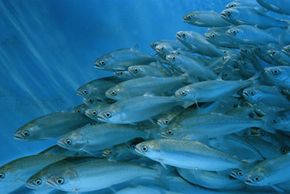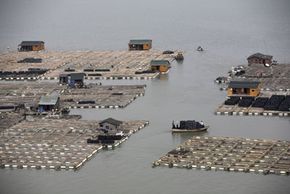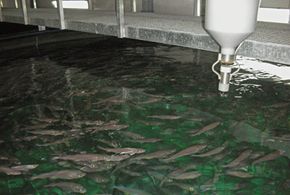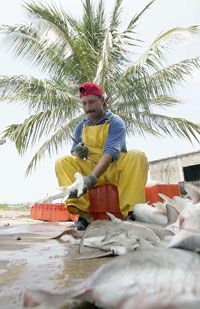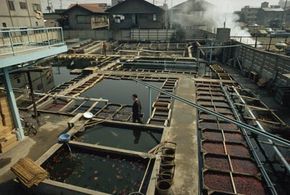
When you order a seafood dish at your favorite restaurant, you usually can't help but think of fishermen in old-fashioned wooden boats harvesting their catch from the local lake, river or sea. However, chances are that your delicious herb-crusted salmon or pan-seared tilapia actually came from a farm similar to those that produce other protein products such as beef or chicken. Aquaculture is fish farming, and a whole lot more. In fact, it's one of the fastest growing food industries in the world.
Aquaculture is the farming and husbandry of freshwater and marine animals and plants in controlled environments. Aquaculture goes way beyond food production. Hatcheries provide bait and game for both sport and commercial fishermen. How about ornamental plants and fish for those lovely koi ponds? You can thank aquaculture for them, too.
Advertisement
Although aquaculture serves many purposes, the most important one is to supply food for humans. It also supports the food chain at a lower level by producing algae and other plant organisms for animal feed.
Did you know that fish is one of the world's most important sources of protein? Because aquaculture products are relatively inexpensive, the world depends on fish products as a vital source of nourishment. For this reason, the world's poorest populations depend heavily on aquaculture, too. Since the 1950s, the demand for fish has doubled [source: Costa-Pierce, et.al.] Recently, the aquaculture industry around the world has boomed because certain aquatic organisms, like Atlantic salmon and Chilean sea bass, which have become scarce due to overfishing.
In this article, we'll explore the development of aquaculture and the issues facing this quickly growing industry. First, let's look at a few different types of aquaculture.
Advertisement