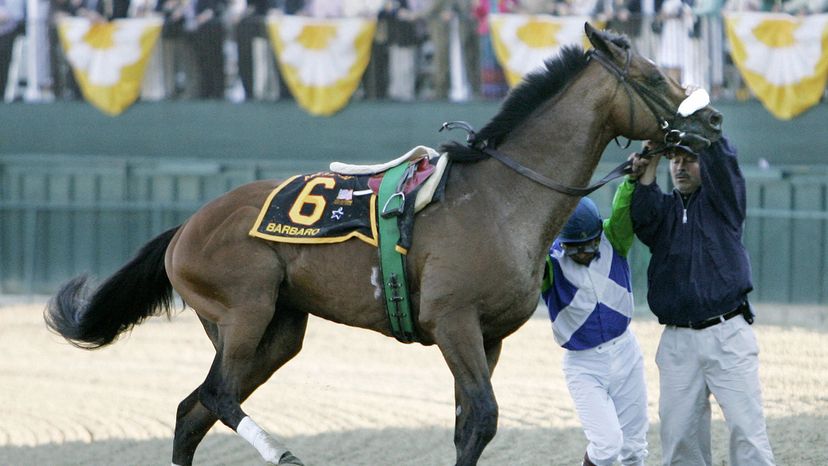
Back in the Wild West, a horse with a broken leg might have spent its final seconds staring down the barrel of a cowboy's gun. Horses were commonly shot after breaking their legs because they had a small chance of successful recovery. Even today, horses are often euthanized after a leg break.
Here's why: It's difficult for a horse's leg to heal due to a combination of factors. Their legs must absorb considerable shock as their powerful bodies gallop at high speeds. Horses engage in a lot of physical activity, and the consequences of this behavior can eventually lead to deteriorated leg bones and increased opportunities to fall.
Advertisement
Another thing to consider is how many leg bones horses have. Out of the 205 bones that make up a horse's entire body, 80 of them are located in its legs [sources: O'Brien and Sellnow]. The complex system of joints, bones, ligaments, tendons, cartilage, lubricant, laminate and hooves that contribute to a horse's amazing speed can also be the cause of its downfall. What's more, 58 percent of a horse's weight rests on its front legs — that's why most of its injuries occur there [source: Swann Equine Osteopathy].
Many problems can affect horses' legs, like inflammation, osteoarthritis, joint issues and diseases and of course, broken bones. Recovery is further complicated because horses can't lie down the entire time they recuperate. Horses are programmed to stand a good portion of the time — including while they sleep. As a prey species, they must be ready to flee as fast as possible, which is why horses stay on their toes (or hooves to be more accurate) [source: Tikkanen].
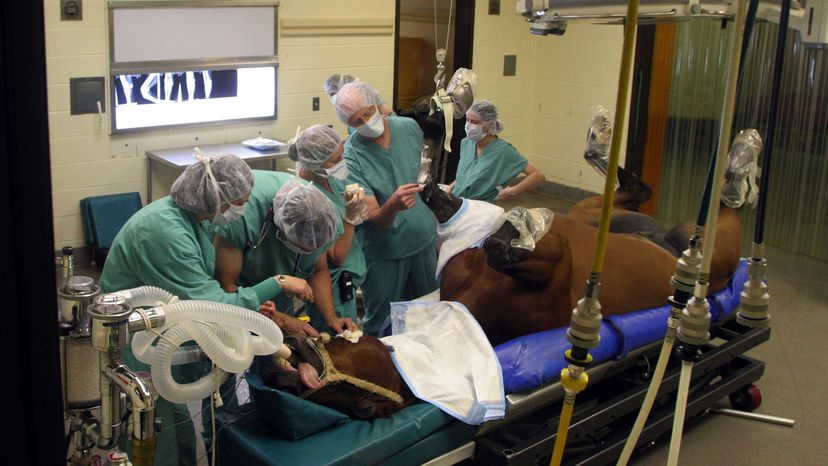
However, euthanasia is not always a certainty anymore. New surgical techniques and technology offer options that were once elusive to a horse in such a situation.
Advertisement