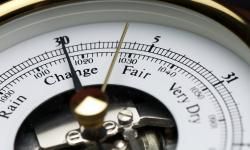
What happens to animals before storms roll in or at the onset of winter? Infrasonic sounds could still be the culprit because hurricanes and thunder produce sound waves at those frequencies. But there's also the matter of changes in barometric (air) and hydrostatic (water) pressure.
Normally, these pressures fluctuate slightly. Animals are highly tuned in to any changes beyond those natural fluctuations, which can signal big changes in the weather. These variations can trigger an animal's survival mechanism. The animals' instinctive reaction is to seek shelter in the face of potentially violent weather.
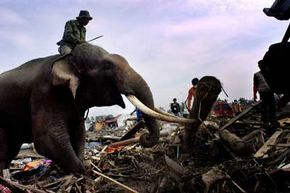
For example, abnormal conditions like hurricanes cause large decreases in air pressure and water pressure (at least in the more shallow depths). Animals exposed and accustomed to certain patterns can quickly sense these changes. And again, similar to the observed behavior of the animals during the tsunami, they flee for safety.
Researchers observed this type of behavior among a group of sharks as they tracked the sharks' movements during Tropical Storm Gabrielle and Hurricane Charlie. After the barometric pressure dropped just a few millibars -- an occurrence that causes a similar change in hydrostatic pressure -- several sharks swam to deeper waters, where there was more protection from the storm [source: Vatalaro].
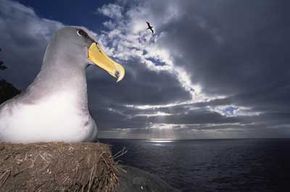
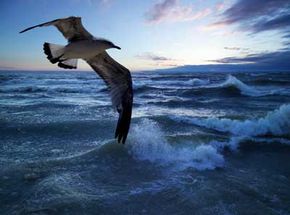
Birds and bees also appear to sense this drop in barometric pressure and will instinctively seek the cover of their nests or hives. Birds also use their ability to sense air pressure to determine when it's safe to migrate.
And what about long-term predictions, like how harsh winter will be? It seems that groundhogs aren't holding any cards. Hibernation appears to be related to an animal's biological clock and stored-up fat rather than any ability to gauge temperature trends.
There have been interesting proposals about the validity of some animal folklore. Some Native Americans believe black bears choose different sleeping spots in their caves depending on how cold the winter will be, or the fur on a hare's feet will grow fluffier if heavy snows approach. While there's a chance these are simply coincidences, some have pointed out that science is based on observation, and folklore is based on centuries of observation -- although the observations haven't been conducted in controlled circumstances.
In the end, these animal behaviors may not prove all that useful to humans. Animals frequently exhibit behavior changes, and there's no practical way of deciphering whether a change in behavior is related to an impending natural disaster or just a reaction to something completely unrelated.
Also, differences exist between species -- and between individuals of the same species -- in their sensitivity to weather fluctuations. While some animals may be great weather predictors, others within that same species might not get their spidey senses tingling.
But, if you ever find yourself in a forest reminiscent of the stampede scene in "Bambi," you still might want to follow the crowd and tag along at top speed.
For more information about animals and how they respond to weather, visit the links on the next page.