The African Clawed Frog and Early Pregnancy Tests

By: Nico Avelle  | 
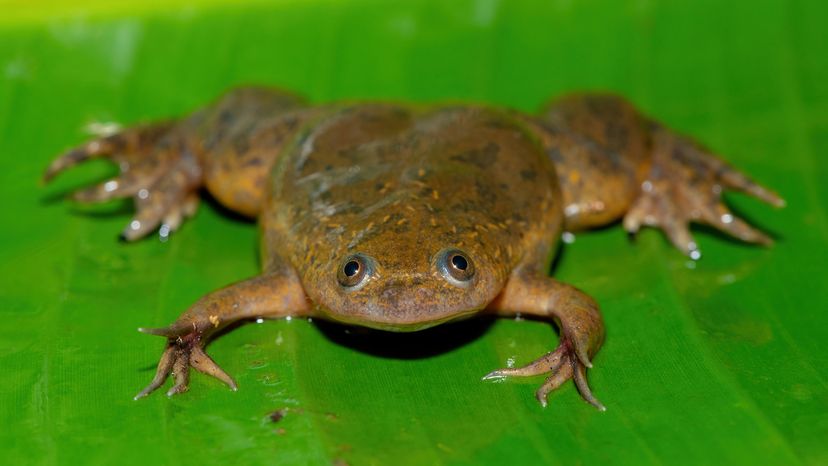
Female frogs of this species are a bit larger than the males (an example of sexual dimorphism). Craig Cordier / Getty Images

Meet the African clawed frog, a fully aquatic amphibian that's part living fossil, part lab legend, and part ecological wildcard.

Native to southern Africa, these amphibians have spread far beyond their original range—thanks to global science, the pet trade, and an appetite for just about anything that fits in their mouths.

Advertisement

You might know it by another name: Xenopus laevis. This species from the Pipidae family isn't just famous for its odd looks (smooth skin, powerful legs, and those trademark black claws on its hind feet). It was famously used as the first mainstream live pregnancy test—a pioneer in developmental biology, and now, a poster frog for invasive species.
What Makes African Clawed Frogs So Unique?

Female African clawed frogs are larger than male frogs, often reaching up to 5 in (12 cm) in length. They're easily distinguished by their size, brown coloration, and the visible cloacal opening under the tail.

frog
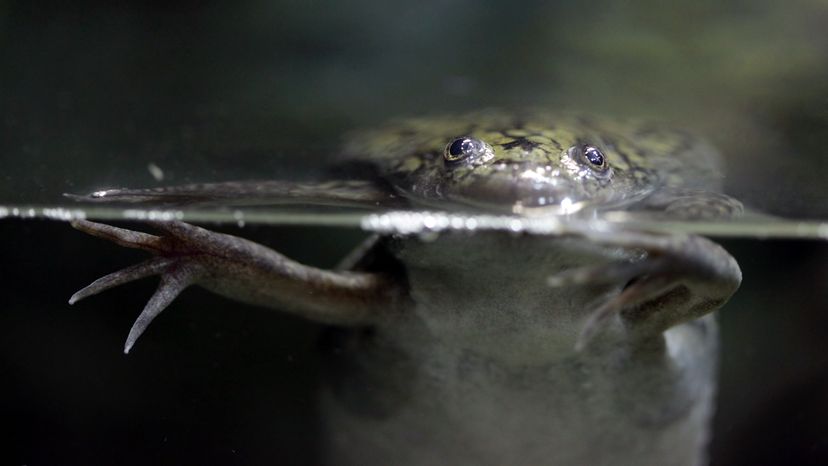
Even fully aquatic frogs need to come up for air.
tunart / Getty Images

Adult frogs lack a tongue and true ears but have a lateral line system that lets them sense water movement, helping them hunt prey.

Advertisement

Their name comes from those little black claws on their front feet. While most frogs use their tongues to grab food, clawed frogs use their claws to tear prey apart or shove food into their mouths.

They're opportunistic feeders, eating aquatic invertebrates, small mammals, fish, native amphibians, and even organic waste. In captivity, they’re often fed fish food and crustaceans.

They burrow into mud during droughts, survive in polluted water bodies, and thrive in both still and flowing water. This highly adaptable amphibian even has a rapping sound, similar to a slow ticking, which researchers believe may be a form of communication during mating.

Advertisement

Habitat and Behavior in the Wild

In the wild, African clawed frogs live in shallow, stagnant water bodies like ponds and ditches. They prefer habitats with soft mud where they can burrow during dry seasons.

Because they’re fully aquatic, they rarely venture onto land unless forced to by environmental changes.

Advertisement

frog
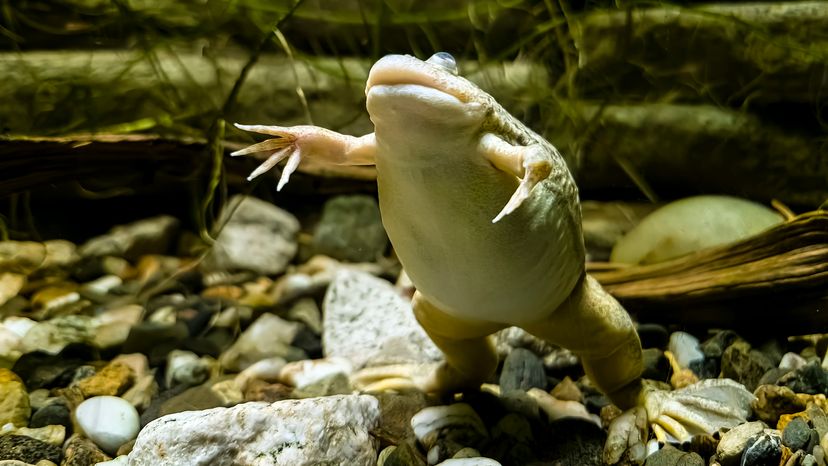
This frog isn't just floating; it's sensing every little movement in the surrounding water.
belizar73 / Getty Images

These frogs don’t have vocal cords, but they produce sounds by snapping muscles around their larynx. This makes them among the few frogs that can communicate underwater.

When they feed, they suck things into their mouth using a strong vacuum created by dropping the floor of the mouth.

Advertisement

From Lab Bench to Lakes: A Global Amphibian

Xenopus laevis gained international fame as a model organism in developmental biology. It was the first vertebrate to be cloned and remains a cornerstone of genetic and embryological research. Its smaller cousin, Xenopus tropicalis, is also widely used in labs.

Its role in science led to widespread distribution through the pet trade and laboratory networks. Many frogs escaped or were released, leading to nonindigenous populations in places like Southern California. These frogs often spread through irrigation pipes or floodwaters.

Advertisement

Ecological Impacts of an Ongoing Invasion

In their new environments, African clawed frogs disrupt ecosystems. They outcompete native species and prey on native amphibians and fish (including their eggs and tadpoles), and even on small birds. Their presence can even cause native amphibians to abandon habitats to avoid them.

The amphibian is not just a threat to native wildlife; it can devastate entire food webs. Because African clawed frog tadpoles are filter feeders, they likely compete with other filter-feeding aquatic animals, and the voracious adults also displace less aggressive native frogs.

Advertisement

They also spread chytrid fungus, a deadly pathogen that devastates amphibian populations globally.

Controlling the Spread of Clawed Frogs

Efforts to manage their spread include trapping, public education, and habitat control. Environmental agencies warn against releasing pet frogs into the wild.

Studies published in Amphibia-Reptilia, the South African Journal of Science, and the Zoological Society of London have detailed their impact on biodiversity and native habitats.

Advertisement

Strict regulation of the pet trade and better monitoring of wild populations are critical. Their adaptability, reproductive speed, and ability to survive in hostile environments make them a long-term challenge for conservationists.

We created this article in conjunction with AI technology, then made sure it was fact-checked and edited by a HowStuffWorks editor.

Advertisement

Advertisement

Loading...