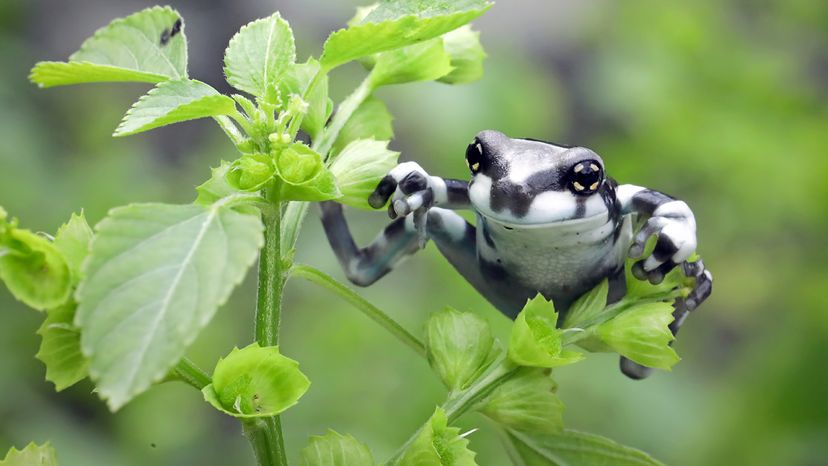
Amazon Milk Frog: Named for Its Defense, Not Its Color

By: Nico Avelle  | 
This tree frog lives in South America, where it can enjoy relatively high humidity. Kurit afshen / Shutterstock

With its striking colors and unusual name, the Amazon milk frog is one of the most charismatic amphibians in the rainforest. This tree-dwelling species lives high in the canopy, often in water-filled tree holes, and makes its home in parts of Brazil, Peru, Ecuador, and French Guiana.

Despite the name, Amazon milk frogs don’t produce dairy. The "milk" refers to the milky white secretions they ooze when they feel threatened.

Advertisement

This sticky substance may sound gross, but it helps repel predators, much like other frog toxins used across the amphibian world.
What Does an Amazon Milk Frog Look Like?

frogs
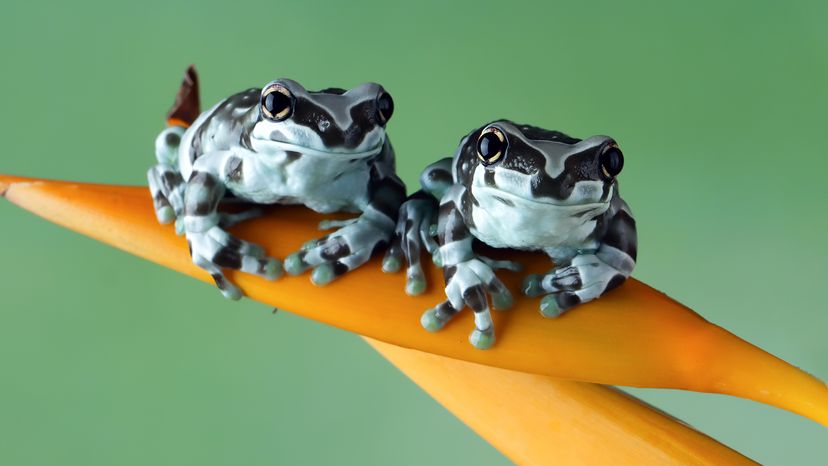
The adult size of these arboreal frogs is roughly the same as that of an apple. Kurit afshen / Shutterstock

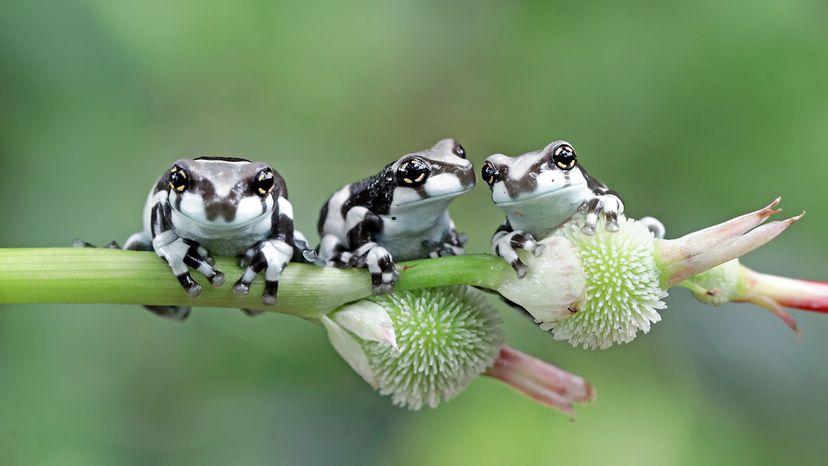
Adult frogs grow up to 4 in (10 cm) and have a light grayish skin with brown or black banding that becomes slightly bumpy with age.

Their distinctive golden eyes feature a black pupil and are one of their most recognizable features. These frogs also have large toe pads, which help them stick to tree branches, making them excellent climbers.

Advertisement

Males develop especially large vocal sacs during the breeding season.

How Do Milk Frogs Live in the Wild?

Amazon milk frogs are arboreal, meaning they spend most of their lives in trees. They breed in tree holes, where the male calls until a female arrives. She lays her eggs in the water-filled cavity, and the male fertilizes them externally.

Tadpoles develop in this mini-pond, feeding on detritus (such as algae) and unfertilized eggs of their own species.

Advertisement

frogs
These frogs enjoy warm water and thrive during rainy season.
Kurit afshen / Shutterstock

The species is most active during the rainy season, when humidity and temperature are high. These frogs are widely distributed and have large populations, which has helped them remain common despite habitat loss in the Amazon.

Advertisement

Are Amazon Milk Frogs Poisonous?

Yes, but only mildly. Their toxins are not as dangerous as those of poison dart frogs, but the milky secretions can irritate human skin. It’s best to wash your hands thoroughly after handling one in captivity.

In the wild, their natural defense likely protects them from birds, lizards, and other small predators.

Advertisement

Can You Keep a Milk Frog as a Pet?

Amazon milk frogs are a favorite in the exotic pet trade. In captivity, they need high humidity, warm temperatures, and a diet of feeder insects like crickets.

A well-set-up enclosure mimics their rainforest habitat with vertical space, plants, and water features. In captivity, these frogs rarely secrete their milky toxin.

Advertisement

We created this article in conjunction with AI technology, then made sure it was fact-checked and edited by a HowStuffWorks editor.

Advertisement

Loading...