The Bullfrog Is So Resilient, It's Invasive

By: Nico Avelle  | 
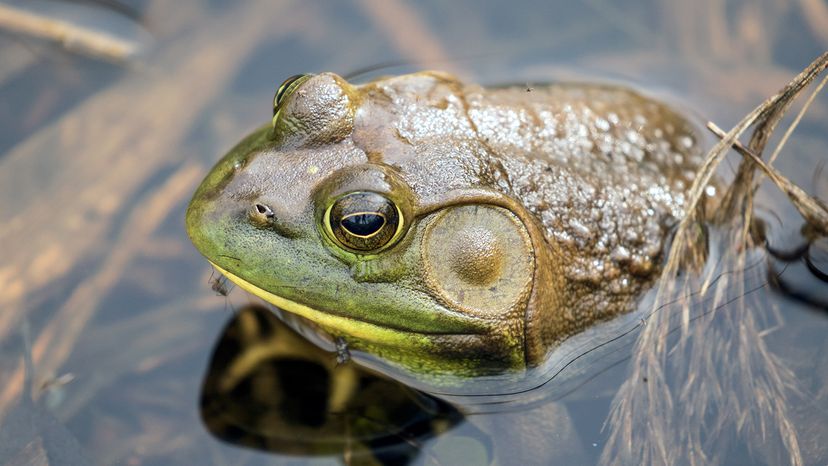
American bullfrog
A fully grown American bullfrog is about the same size as a small papaya or a really big mango. sdkim / Shutterstock

You’ve probably heard them before you’ve seen them. The booming "jug-o-rum" call of the bullfrog (sometimes spelled bull frog) is a signature sound in North American wetlands.

But these amphibians are more than just loud. Bullfrogs are the largest frog species in North America, and their impact on ecosystems can be just as oversized.

Advertisement
What Is a Bullfrog?

Scientifically known as Lithobates catesbeianus (formerly Rana catesbeiana), the American bullfrog is native to eastern North America but has since spread to the western U.S. and other continents. It thrives in warm, shallow water habitats like ponds, lakes and slow-moving rivers.

Bullfrogs have smooth skin, powerful hind legs and wide mouths that can swallow surprisingly large prey. Adult bullfrogs can grow up to about 8 in (20 cm) in body length and weigh over 1.1 lb (500 g), making them the largest frog in North America.

Advertisement

What Do Bullfrogs Eat?

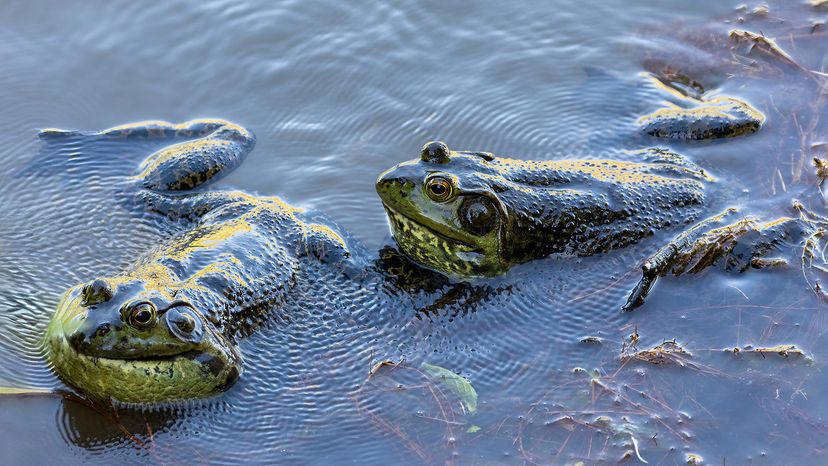
Two American Bullfrogs
Pretty much anything that goes in this frog's mouth is considered food. yhelfman / Shutterstock

Put simply, bullfrogs eat almost anything they can fit in their mouths. They eat insects, fish, reptiles, toads, and even other amphibians. Their voracious appetite includes native species like salamanders and smaller frogs.

They’ve also been known to consume small birds, giant water bugs and, yes, other bullfrogs.

Advertisement

Their wide diet helps them thrive but also puts them in direct competition with native amphibians. In fact, adult bullfrogs can even reduce biodiversity by preying on or outcompeting native species in shared habitats.

Life Cycle of a Bullfrog

Bullfrog mating begins in the warmer months. Male bullfrogs establish territory in shallow water and attract females using their deep, resonant calls. During breeding season, a single female can lay up to 20,000 eggs in floating egg masses.

Bullfrog tadpoles take longer than most to develop, sometimes spending up to two years in that stage depending on temperature and habitat. Once they metamorphose into adult frogs, they continue growing and may live up to 10 years in the wild.

Advertisement

Why Are Bullfrogs Considered Invasive?

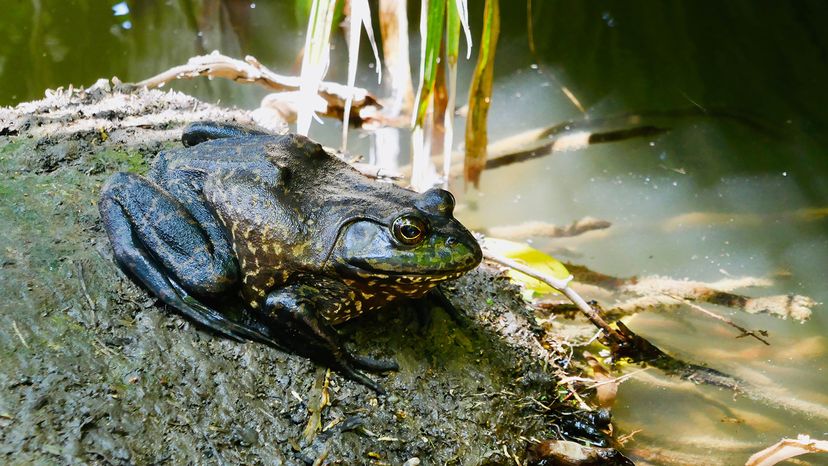
American Bullfrog
American bullfrogs are resilient—too resilient. Sue Bishop / Shutterstock

While they're native to parts of North America, bullfrogs have been introduced to regions far beyond their historical range.

According to the Invasive Species Specialist Group, bullfrogs are among the most harmful invasive species globally. They disrupt ecosystems by preying on native species and spreading disease.

Advertisement

In places like the western U.S., parts of Europe and Asia, bullfrogs are known to devastate natural resources and outcompete native amphibians for food and habitat. Their adaptability, long lifespan and broad diet make them particularly hard to manage.

Bullfrogs and Humans

Bullfrogs are often used in science classes, and their hind legs are considered a delicacy in some culinary traditions.

But their role as a food source for humans is a double-edged sword. Farming or transporting bullfrogs can unintentionally introduce them into new environments.

Advertisement

We created this article in conjunction with AI technology, then made sure it was fact-checked and edited by a HowStuffWorks editor.

Advertisement

Loading...