Coqui Frog: Beloved in Puerto Rico, Not So Much in Hawaii

By: Nico Avelle  | 
coqui frog
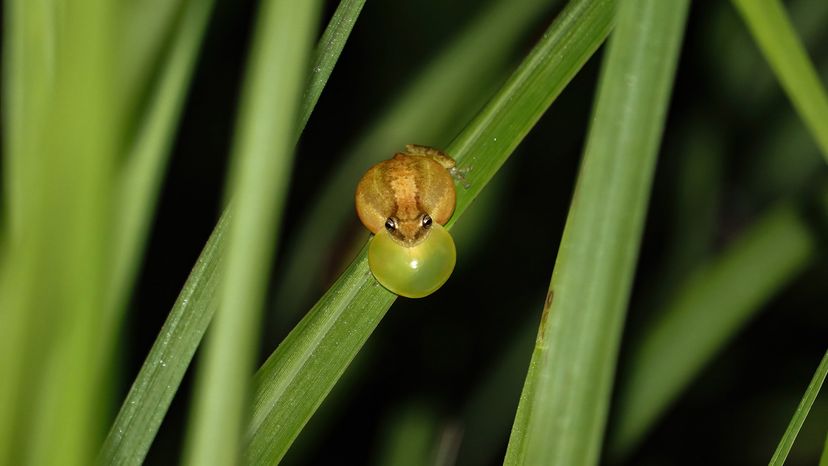
You'll hear these itty-bitty frogs long before you see them. calberto / Shutterstock

If you've walked through a warm, humid forest in Puerto Rico or parts of Hawaii at dusk, you've likely heard the high-pitched "ko-kee" call of the coqui frog.

Named for this distinctive sound, the coqui is a small amphibian with a big ecological footprint—and we don't necessarily mean that in a good way.

Advertisement
What Is a Coqui Frog?

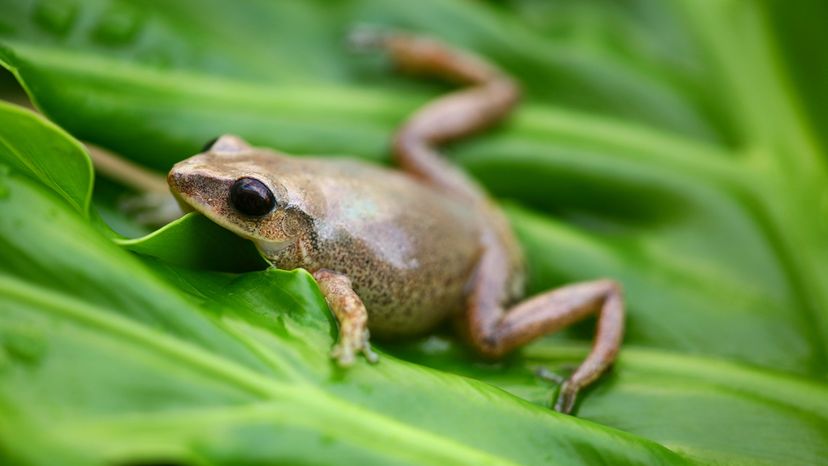
The Puerto Rican coqui, or Eleutherodactylus coqui, is a tiny tree frog native to Puerto Rico.

Unlike most frogs, it doesn’t have a tadpole stage. Instead, it hatches as a fully formed miniature frog, skipping the aquatic larval stage entirely.

Advertisement

Adults are usually 1 to 2 in (3 to 5 cm) long, with toe pads and free toes that help them climb vegetation and trees.

They are nocturnal, and males are known for their loud calls at night to attract females and warn other males. These calls are especially common during the wet season and can be heard from sea level to mountain forests.

Advertisement

Coqui Populations Beyond Puerto Rico

Coqui frog
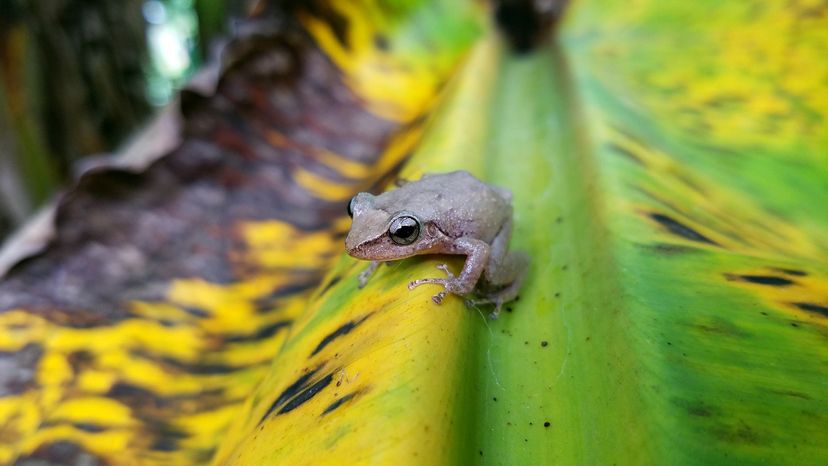
These tiny frogs are cute until they start impinging upon native species. Joseph / Shutterstock

While beloved in their native Puerto Rico, coqui populations have become a problem in places like Hawaii. They were accidentally introduced through potted plants, and their presence has caused issues for native ecosystems.

With no natural predators in Hawaii, coquis eat huge quantities of insects, competing with native spiders and birds.

Advertisement

Coqui infestations are also linked to decreased property values, especially in areas like Hawai‘i Island and Maui. Their loud, relentless calling has even impacted real estate transactions in heavily affected zones.

Habitat and Behavior

Coquis prefer moist, damp areas and can often be found near leaf litter, the forest floor, or under logs and rocks. Their egg clusters are usually hidden in these sheltered spaces. Males sit on the eggs to protect them until hatching.

Because they lack a tadpole stage, coqui frogs don’t need open water to breed, which allows them to thrive in many types of habitat, from greenhouses to gardens.

Advertisement

Controlling Coqui Infestations

coqui
Using citric acid to kill coqui frog eggs is one way to keep this invasive species in check. SATRIA NANGISAN / Shutterstock

In Hawaii, controlling coqui has become a public effort. The Hawai‘i Department of Agriculture recommends a citric acid spray solution as the only product labeled for frog control. This solution is effective at killing both adult frogs and coqui frog eggs on infested plants.

Chemical contact must be direct, so thorough spraying is necessary. Because frogs breathe through their skin, citric acid disrupts their physiology quickly, making it a reliable method of control.

Advertisement

Ecological Pros and Cons

In Puerto Rico, coquis serve as important insect predators and help naturally control insect populations by consuming insects and other small prey. In Hawaii, their population density is so high that they overwhelm local systems, threatening vulnerable native ecosystems.

Though they're seen as a potential food source for some snakes and birds, they reproduce quickly and remain a persistent challenge in non-native environments.

Advertisement

We created this article in conjunction with AI technology, then made sure it was fact-checked and edited by a HowStuffWorks editor.

Advertisement

Loading...