Frog Anatomy: A Simple Breakdown of How Frog Bodies Work

By: Nico Avelle  | 
frog
That feeling when you hear someone say "frog dissection." Peter Atkinson / 500px / Getty Images/500px Prime

Frogs might seem simple, but under the skin, they're biological marvels. When you dig into frog anatomy, you’ll find structures that support a life both in water and on land. That duality makes them excellent subjects for comparing vertebrate systems—including our own.

Their anatomy varies across frog families, but many species share a basic blueprint with some unique adaptations based on habitat. Let’s hop into the key features.

Advertisement
Muscles and Bones: Built for Leaping

The frog’s muscular system centers on powerful hind limbs that provide explosive force for jumping. These limbs are supported by a short, stiff vertebral column.

Forelimb muscles are smaller but essential for absorbing shock during landing, especially in arboreal species like tree frogs.

Advertisement

The spinal cord runs along the vertebral column, relaying signals between the brain and body.

The Skin: Thin, Moist, and Multifunctional

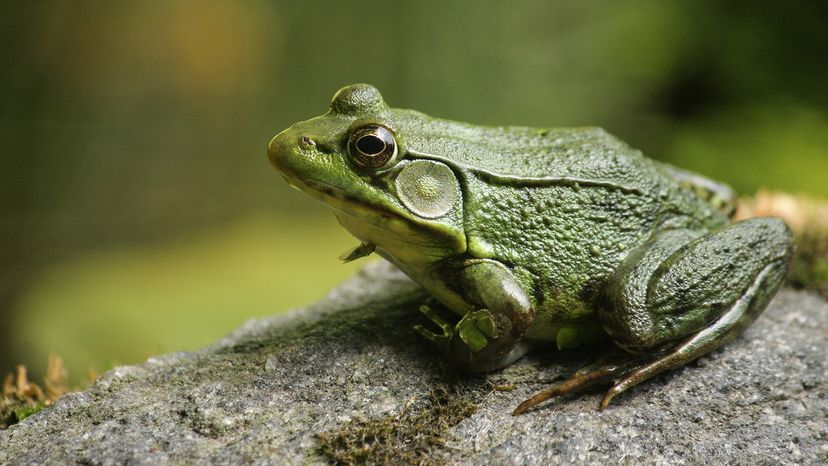
Bullfrog
The idea of breathing and drinking through your skin sounds pretty cool. Herman Bresser / Getty Images

Frog's skin is more than a covering; it helps them breathe.

With two layers and dense blood vessels underneath, frog skin allows gas exchange. In many species, oxygen diffuses directly through the skin into the bloodstream. Some aquatic species rely on this method more than their lungs.

Advertisement

Glands located in the skin produce mucus to keep the surface moist and may also secrete toxins to repel predators.

Frogs also absorb water through the skin, rather than drinking.

Advertisement

The Head: Mouth, Teeth, and Inner Ear

A frog’s head contains maxillary teeth on the upper jaw for gripping prey, while the lower jaw is toothless and wide.

The frog’s ear has a tympanic membrane (external eardrum) that transmits vibrations to the inner ear, where sound signals are processed by the brain’s auditory center.

Advertisement

Optic lobes process visual data, helping frogs locate prey and predators. Males have vocal cords and vocal sacs used to attract mates.

Digestive and Excretory Systems

Frog digestion begins in the mouth and continues in the stomach, where digestive enzymes break down food. The small intestine handles nutrient absorption, and the large intestine stores waste.

The liver produces bile, which is stored in the gallbladder and aids fat digestion.

Advertisement

Kidneys filter the blood, removing waste into the ureters. The adrenal glands, located on the kidneys, regulate stress and metabolism.

Waste is expelled through the cloaca.

Advertisement

The Circulatory and Respiratory Systems

Frogs have a three-chambered heart that pumps both oxygenated and deoxygenated blood, a feature seen in many amphibians. Blood vessels run throughout the body cavity, delivering oxygen and removing waste.

The respiratory system includes lungs, but many species—especially fully aquatic frogs—also use their skin and mouth lining to absorb oxygen. The broad surface area of the lungs and skin maximizes oxygen exchange.

Advertisement

The Brain and Nervous System

The frog brain includes the medulla oblongata, responsible for basic functions like breathing and heart rate, and the optic lobes, which process visual input. The spinal cord links the brain to the body, coordinating movement and reflexes.

Advertisement

Reproductive Anatomy: Male vs. Female Frogs

Male frogs are typically smaller but have stronger forelimbs, enlarged thumbs, and vocal sacs for mating calls. Female frogs are larger in body length and produce eggs stored in the body cavity.

During breeding season, eggs are laid singly or in clusters, depending on the frog species.

Advertisement

Development and Life Cycle

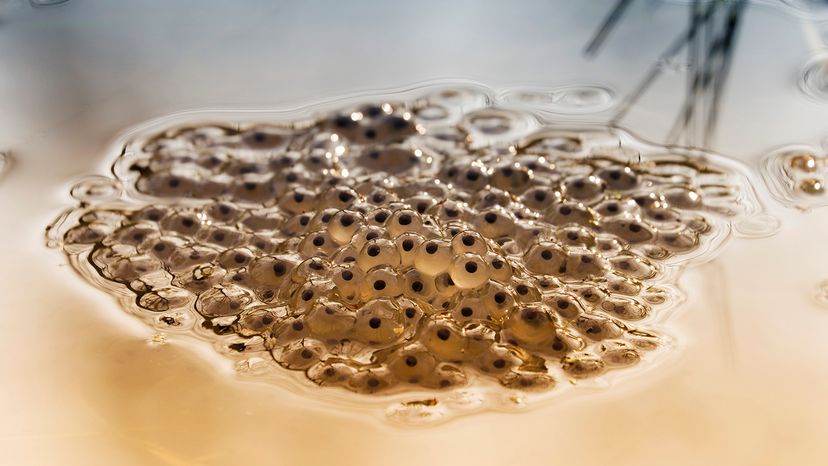
Frog eggs
Egg-laying behavior differs slightly between various frog species. Christophe Lehenaff / Getty Images

The frog’s life cycle consists of egg, larva (tadpole), and adult stages. Eggs are laid in water or moist environments.

Larvae breathe through gills before developing lungs. As the tadpole transforms, it absorbs its tail and grows limbs. This process varies slightly among frog families and habitats.

Advertisement

Arboreal, Aquatic, and Terrestrial Variations

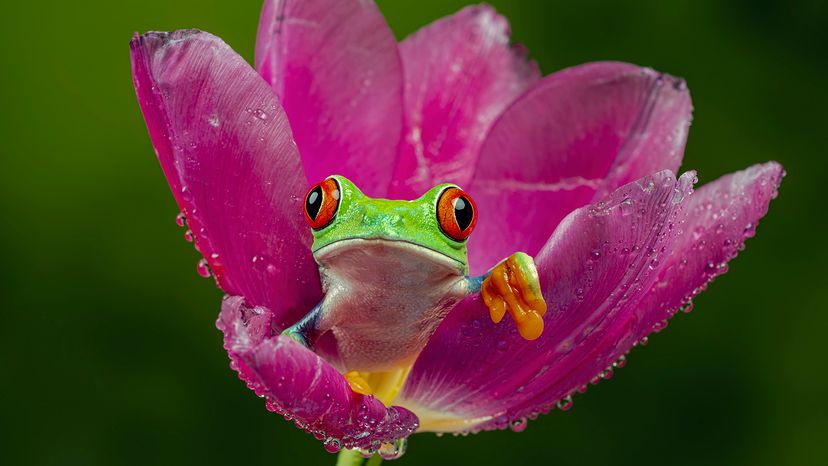
Arboreal species like tree frogs have long limbs and sticky pads for climbing. Aquatic species have webbed feet and more streamlined bodies. Terrestrial frogs often have camouflage coloration.

Each adaptation reflects the demands of the frog’s habitat, from wetlands to forests.

Advertisement

Organs in Action

Internal organs are packed into the body cavity. The lungs, liver, stomach, intestines, kidneys, adrenal glands, and heart all work in harmony. Each has a role in keeping the frog alive—whether that’s digesting food, excreting waste, or leaping away when disturbed.

We created this article in conjunction with AI technology, then made sure it was fact-checked and edited by a HowStuffWorks editor.

Advertisement

Loading...