The Hairy Frog Has Retractable Claws Made of Bone

By: Nico Avelle  | 
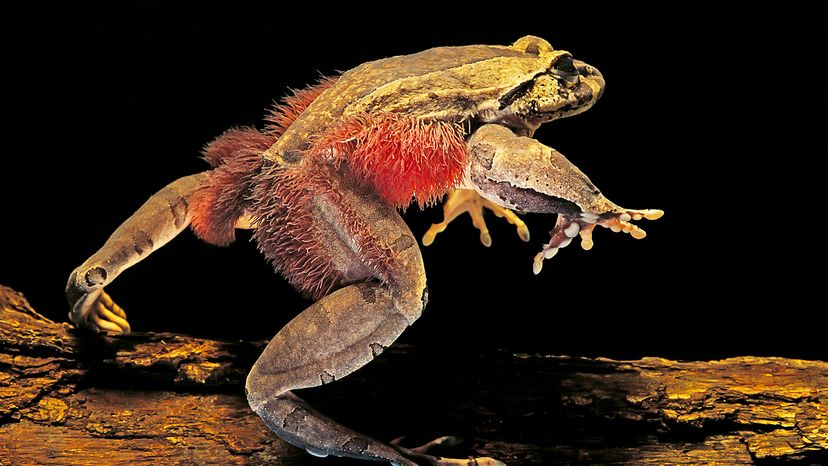
Hairy frogs have a small, bony nodule nestled inside their toes, making for a dangerous weapon. Paul Starosta / Getty Images

Most frogs hop away from danger. But the hairy frog? It brings its own weapons to the fight—literally. Known for its bizarre defense mechanism, this amphibian snaps its own bones to create claws that pierce through its skin. You read that right.

Also called the wolverine frog or horror frog, Trichobatrachus robustus is one of nature’s most intense amphibian species. Native to Central Africa, this species inhabits fast-flowing rivers, often near forests and agricultural lands.

Advertisement

It’s one of more than 600 African frogs, but few can match its mix of bizarre adaptations and concealed weaponry.
What Makes the Hairy Frog Hairy?

Hairy frogs develop hair-like structures on the sides of their bodies, but these aren’t real hairs. They’re actually tough strands of skin with short ridges, found only on the breeding male during the mating season.

These strands act like external gills, increasing surface area to absorb oxygen from water—a helpful trait when males guard egg masses in oxygen-poor environments.

Advertisement

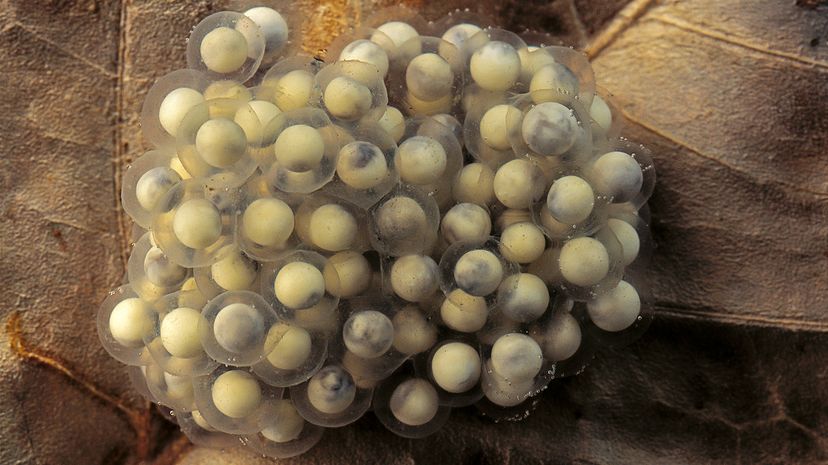
eggs
Males protect egg clusters like this one.
Paul Starosta / Getty Images

This adaptation is especially useful in the frog’s aquatic stage. Breeding males often remain with the eggs for an extended period, even as water currents in fast-flowing rivers threaten to wash them away. The better grip and oxygen absorption from these structures help them survive.

Advertisement

Wolverine Frog Claws: Natural Weaponry

The hairy frog’s nickname comes from its retractable claws, made of bone. Inside each toe tip of the frog’s hind foot lies a small bony nodule just under the skin.. When attacked, the frog intentionally breaks the nodule loose and pushes the sharpened bones through its own skin.

Possessing retractable or erectile claws gives hair frogs a brutal but effective defense.

Advertisement

The claws are not keratin like in cats; they’re made from the frog’s own bones. Because of this, they can’t retract passively. They remain extended until the damaged tissue heals.

Some scientists speculate this weaponry evolved to give frogs a better grip during territorial disputes or when clinging to slippery surfaces.

Advertisement

The Structure of These Bony Claws

Each claw sits on the inner surface of the frog’s toe and is sharpened like a horned tooth. The claw connects to the bone via a nodule connection, forming a natural hinge.

When the claw is extended, the bony nodule remains embedded in the toe pad, anchoring the bone and preventing it from tearing completely out of the toe.

Advertisement

The retraction mechanism is still under study. Researchers from the American Museum of Natural History and other scientist news services are exploring whether these claws evolved solely for defense or if they assist with mobility in rough environments.

These claws give new meaning to the idea of natural weaponry. Unlike many species that develop external tools, the hairy frog turns its own bones into weapons.

Advertisement

Breeding Behavior and Habitat

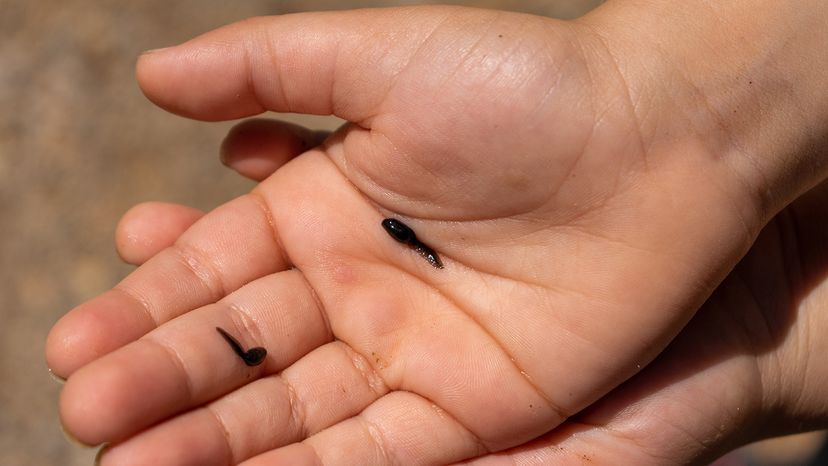
tadpoles
Like many other amphibians in the animal kingdom, hair frogs go through a tadpole stage. Cristina Guago / Shutterstock

Trichobatrachus robustus typically breeds during the rainy season. Males stay close to egg masses, guarding them from predators. They rely on their tough skin and somewhat hair-like structures to remain oxygenated and safe.

This frog species is most commonly found in Cameroon but has a large range across parts of Central Africa. It’s typically considered semiaquatic, with adults feeding on insects, worms, and other small invertebrates.

Advertisement

Frogs fall into various categories based on breeding behavior, and the hairy frog is notable for its parental investment. The male's commitment to guarding eggs adds an extra layer to its survival story.

Conservation and the Wild Animal Trade

Due to its unusual biology, the hairy frog has caught the attention of the wild animal trade. Collectors seek it for exotic pet markets and as specimens for scientific institutions.

The hairy frog is classified as Least Concern on the IUCN Red List, but it faces threats from rainforest habitat loss and unsustainable harvesting for food and the pet trade.

Advertisement

Local communities (for example, the Bakossi people of Cameroon) traditionally believe that eating these frogs can help childless couples conceive, leading to additional hunting pressure on the species.

5 Weird Features of Hair Frogs

  1. Short rounded snout: This gives the frog a wide, almost bulldog-like head.
  2. Large head: This houses paired internal vocal sacs used during mating season.
  3. Several rows of tiny teeth: Muscular hairy frog tadpoles have several rows of horn-like "teeth" in their mouths, which enable them to eat small prey.
  4. Claws from broken bones: Sharpened bones appear to have been intentionally snapped to form claws.
  5. Better grip: Bony claws (and small spines on the fingers) likely give male hairy frogs extra traction during fights or when clinging to slippery rocks in the breeding season.

We created this article in conjunction with AI technology, then made sure it was fact-checked and edited by a HowStuffWorks editor.

Advertisement

Advertisement

Loading...