The Mountain Chicken Is Actually an Endangered Frog

By: Nico Avelle  | 
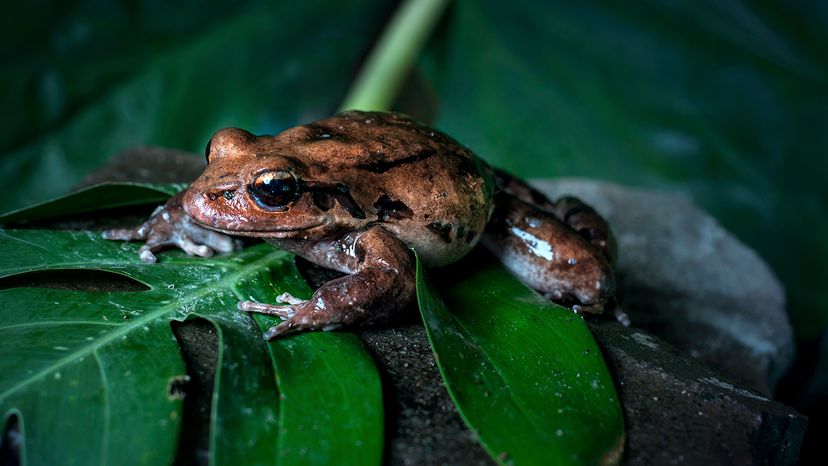
We don't see the resemblance, but we're told it looks (and tastes) like chicken once it's cooked. Derek D. Galon / Shutterstock

The mountain chicken is not a bird at all. It is a critically endangered frog known formally as Leptodactylus fallax, once one of the largest frogs in the world. Today this amphibian species survives on just two islands in the Caribbean: Montserrat and Dominica.

The mountain chicken frog earned its name in part because people say it tastes like chicken when cooked. Once hunted as a local delicacy and even considered a national dish, this giant ditch frog now stands as a flagship species for conservation in the natural world.

Advertisement

The Giant Ditch Frog With a Big Appetite

The mountain chicken frog ranks among the largest frogs on Earth. Its large size, powerful hind legs, and reddish brown coloring help it blend into leaf litter inside its forest habitat.

This critically endangered frog has a voracious appetite. It hunts other frogs, small mammals, and small vertebrates. When threatened, mountain chickens can emit a squawking alarm call.

Advertisement

Unlike many other amphibian species, the female lays her eggs inside a nesting burrow rather than in open water. The female lays both fertile eggs and unfertilized eggs (also called infertile eggs) which feed the tadpoles.

Instead of drifting in ponds, tadpoles metamorphose safely inside a foam nest created in the burrow.

Advertisement

How a Deadly Microscopic Fungus Changed Everything

Historically, the species was once abundant on Montserrat and Dominica. Then a deadly microscopic fungus known as chytrid fungus swept through amphibian populations worldwide.

This deadly fungal disease attacks the skin of amphibians, disrupting how they absorb water and salts. The fungal disease has devastated many other amphibian species across the world, pushing some to extinction.

Advertisement

In the early 2000s, the mountain chicken population crashed as the wild population declined by over 85 percent within 18 months.

Add habitat loss—habitat destruction from human settlements and even volcanic eruptions—and the mountain chicken faces overwhelming pressure. Hurricane Maria and other storms also tested the surviving frogs.

Advertisement

From Human Consumption to Mountain Chicken Conservation

Historically, local populations hunted the frogs for human consumption. On both islands, the frog held cultural heritage value as food and symbol.

When the species became critically endangered, governments and scientists shifted focus to mountain chicken conservation. Researchers began scientific research programs to understand breeding, disease resistance, and how treated frogs might survive in the wild.

Advertisement

Conservationists now manage captive breeding programs in biosecure facilities. These programs create a safety net population of captive frogs in safe havens away from the fungus.

Institutions such as Chester Zoo have successfully bred the species under semi wild conditions, working to reintroduce treated frogs back into protected habitat.

Advertisement

Life Cycle, Burrows, and Mother Frogs

The breeding strategy of Leptodactylus fallax sets it apart from other frogs. During the wet season, a male mountain chicken digs a nesting burrow.

After mating, mother frogs remain near the foam nest. Hens raise chicks, but here the female guards developing tadpoles underground. The unfertilized eggs provide food until tadpoles metamorphose into froglets.

Advertisement

This unusual system means fewer froglets per brood compared with other amphibians. Invasive species and climate change can add pressure to the species’ recovery.

What the 2026 Mountain Chicken Population Looks Like

Today the mountain chicken population remains fragile. A small wild population persists on Dominica, but in Montserrat the species is extinct in the wild. The species remains "critically endangered" per IUCN classification.

Conservation teams monitor populations closely, tracking disease, breeding success, and habitat quality. Captive breeding and reintroduction aim to rebuild healthy populations strong enough to resist future outbreaks.

Advertisement

The story of this giant ditch frog shows how amphibians act as early warning systems for ecosystem health. Protecting this amphibian species gives the mountain chicken a fighting chance at long term survival.

We created this article in conjunction with AI technology, then made sure it was fact-checked and edited by a HowStuffWorks editor.

Advertisement

Advertisement

Loading...