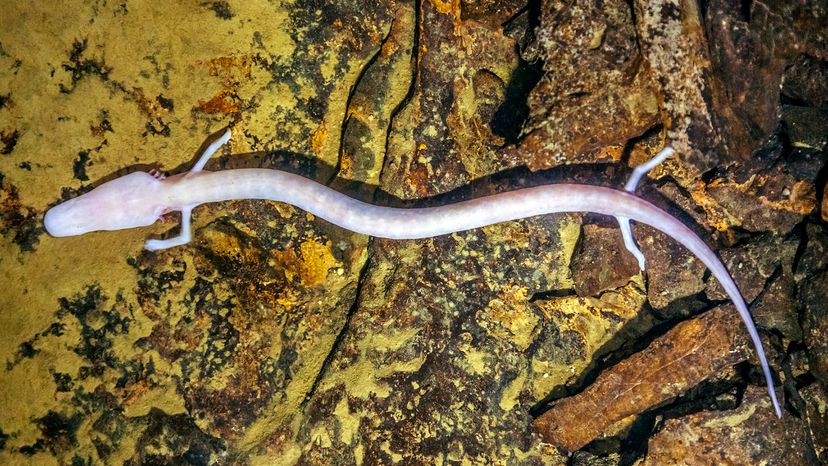
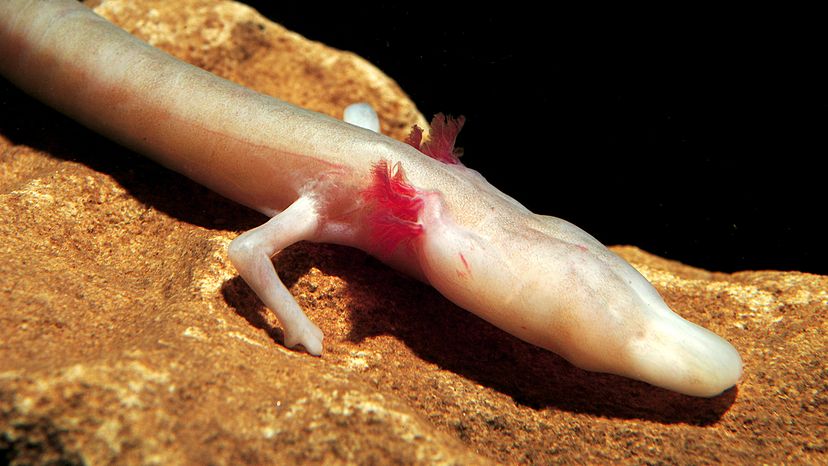
Because the olm depends on clean underground water, it faces threats from water pollution and human activity. Its conservation status places it among rare and endangered species in many parts of its natural range.
Scientists study these amphibians in specialized cave laboratories and research facilities such as the Proteus Vivarium at Postojna Cave Park. Projects like the Proteus Genome Project aim to understand the genetics and evolution of this ancient amphibian lineage.
Research described in sources such as Animal Diversity Web and publications from Oxford University Press highlights how the olm contributes significantly to studies of amphibian systematics and cave ecology.
By studying how the cave salamander survives in permanently dark subterranean ecosystems, scientists gain insight into the adaptability of life in some of Earth’s most extreme environments.
We created this article in conjunction with AI technology, then made sure it was fact-checked and edited by a HowStuffWorks editor.