7 Poisonous Frogs With Major 'Look but Don't Touch' Vibes

By: Nico Avelle  | 
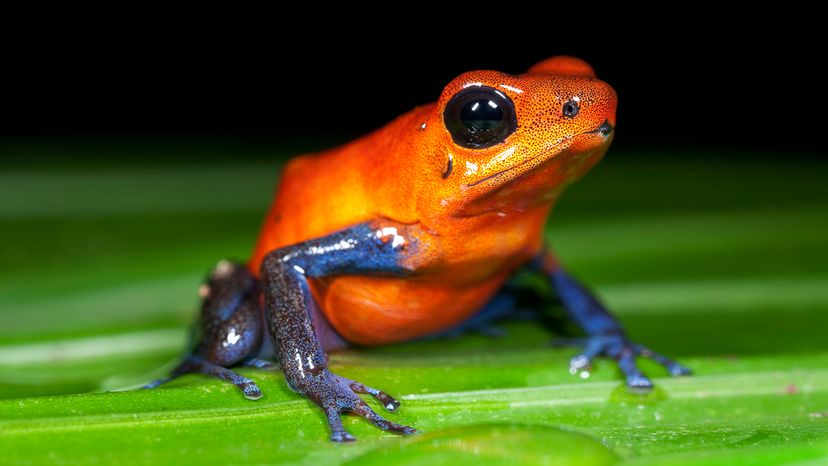
Strawberry Poison Dart Frog
Many poison dart frogs are brightly colored, warning predators to stay away. Paul Souders / Getty Images

Tiny, neon-colored, and hiding in plain sight on this list of poisonous frogs, these amphibians pack a punch way above their weight. Found mostly in the humid rainforests of Central and South America, poison dart frogs are famous for their toxic skin secretions and eye-popping hues.

You’ve probably heard that some frogs are poisonous, but not all of them come with the same level of risk. Let’s count down the most toxic frogs in the world—some with enough poison to take out small mammals, others just flashy enough to scare off predators.

Advertisement
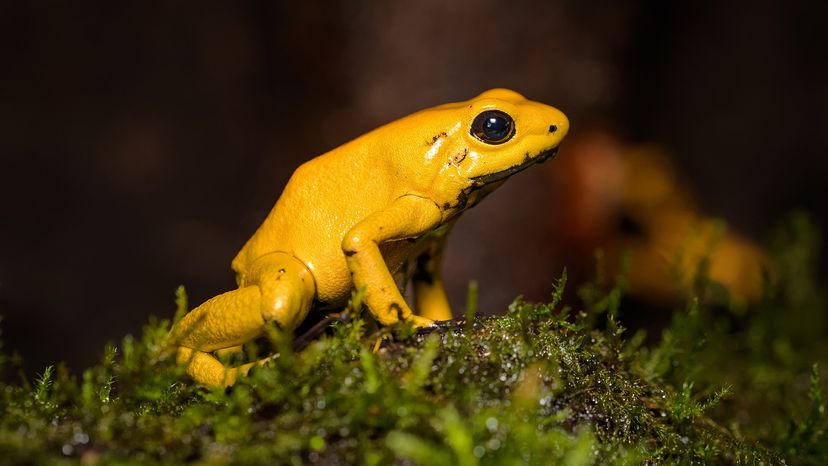
1. Golden Poison Frog (Phyllobates terribilis)

golden poison frog
Golden poison frog. Thorsten Spoerlein / Getty Images/iStockphoto

This little frog from western Colombia is the deadliest of them all. The golden poison frog can carry enough toxin to kill 10 adult humans.

Its poison, batrachotoxin, targets the nervous system and stops nerves from transmitting signals. Indigenous people have used its toxins to coat blow dart and arrow tips—hence the name "poison arrow frogs."

Advertisement

What makes this frog poisonous? Its natural diet in the wild includes toxic ants, mites, and tiny beetles, which help it produce skin secretions strong enough to ward off any potential predators.

In captivity, without these food sources, their toxicity fades. That's why most frogs kept as pets—often fed small crickets or fruit flies—aren’t dangerous.

Advertisement

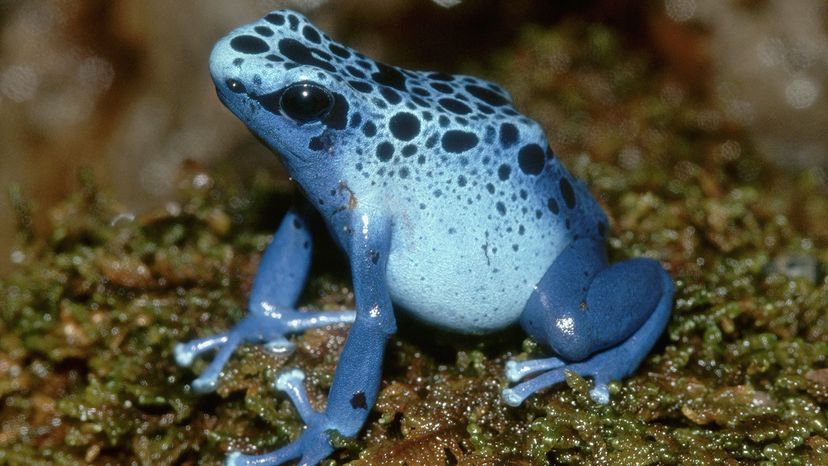
2. Blue Poison Dart Frog (Dendrobates tinctorius azureus)

Blue poison dart frog
Blue poison dart frog. Kevin Schafer / Getty Images

Native to the Sipaliwini Savanna of southern Suriname, the blue poison dart frog has a striking electric-blue color with black spots. Although less toxic than the golden variety, it still produces enough poison to keep predators away. These brightly colored amphibians use aposematic coloration to signal danger.

These frogs live on the forest floor and thrive in leaf litter, hunting small insects like ants and pinhead crickets. Their toxic skin glands come from their natural diet, which can't be recreated in captivity.

Advertisement

Blue dart frogs are popular in the pet trade, but wild frogs are far more toxic.

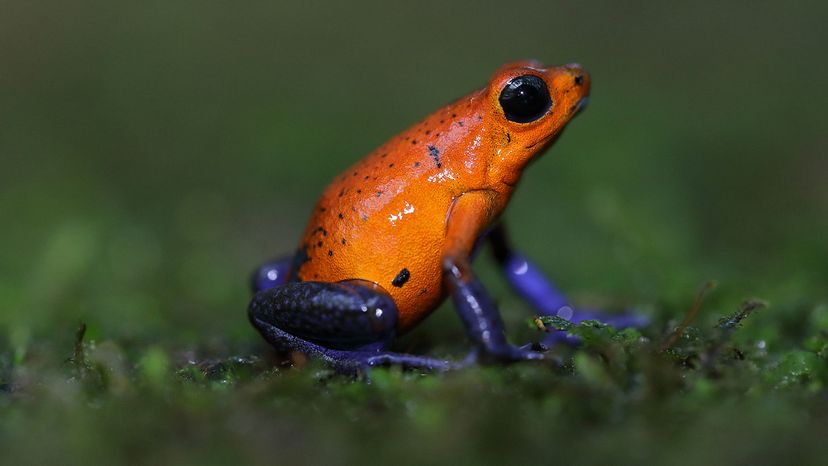
3. Strawberry Poison Dart Frog (Oophaga pumilio)

strawberry poison dart frog
Strawberry poison dart frog. Vinchel / Getty Images

Tiny but bold, the strawberry poison dart frog—sometimes called the strawberry poison frog—is famous for its brilliant red body and blue legs.

Found in Central America, especially Costa Rica and Panama, this species displays over 15 different color morphs. That makes it one of the most variable poison dart frogs around.

Advertisement

Females lay unfertilized eggs to feed their tadpoles, while males wrestle other males for prime breeding spots. Though not deadly to humans, their toxicity warns off other wildlife. Like other poisonous frogs, their poison depends on a wild diet of ants, mites, and small insects.

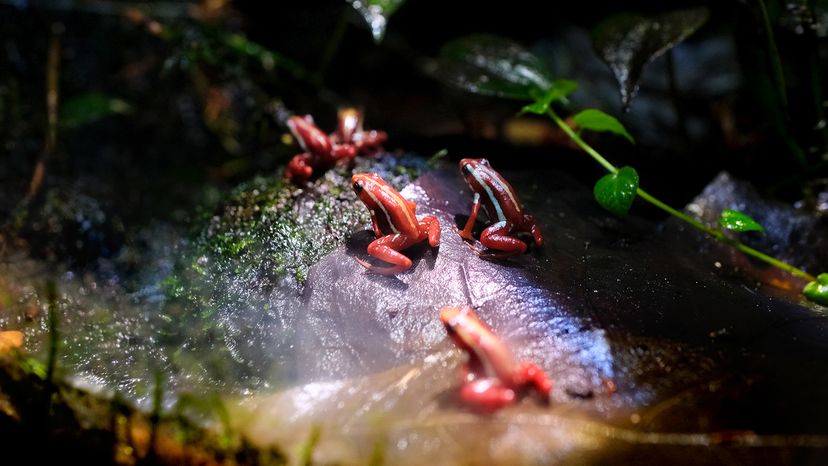
4. Phantasmal Poison Frog (Epipedobates tricolor)

Phantasmal poison frog
Phantasmal poison frog. Oleksandra Kharkova / Getty Images

Endemic to central Ecuador, this brightly colored frog produces epibatidine—a chemical compound once studied for use as a painkiller. It was previously classified in the genus Dendrobates, but has since been reclassified to the genus Epipedobates. Phantasmal poison frogs are threatened due to habitat loss and the illegal pet trade.

Like many species of poison dart frogs, these amphibians lose their toxicity in captivity. Wild frogs rely on specific food sources—tiny beetles, ants, and other insects—to generate toxic skin secretions. Habitat degradation and chytrid fungus have pushed them toward endangered status.

Advertisement

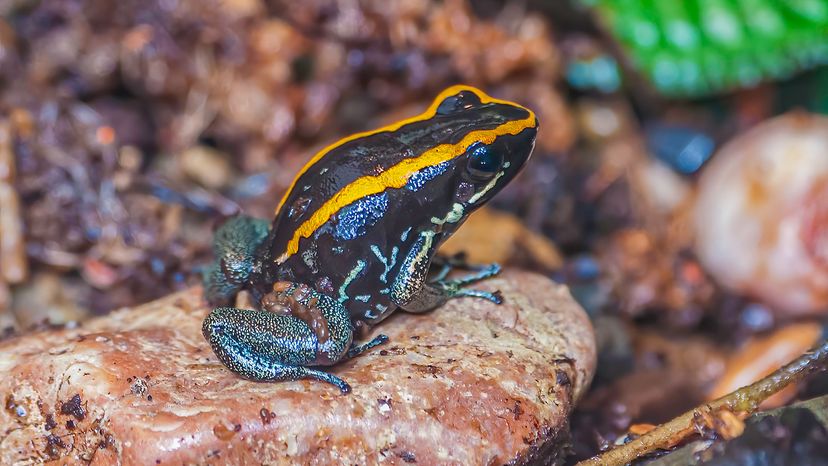
5. Black-legged Poison Dart Frog (Phyllobates bicolor)

Black-legged poison dart frog
Black-legged poison dart frog. imageBROKER/Jürgen & Christine / Getty Images/imageBROKER RF

Found in Colombia, this species is second only to the golden poison frog in terms of toxicity. It belongs to the genus Phyllobates, and like its golden cousin, it's used by Indigenous groups to create poison-tipped darts. Its skin contains enough toxin to deter most predators.

These frogs live in a rainforest habitat rich with leaf litter. Their population is decreasing due to habitat loss, climate change, and disease. They're also impacted by the pet trade, though captive frogs are rarely toxic due to a lack of dietary precursors.

Advertisement

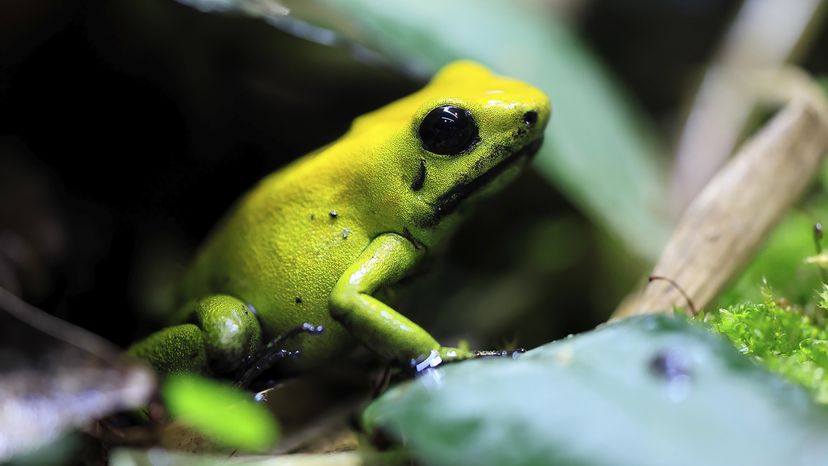
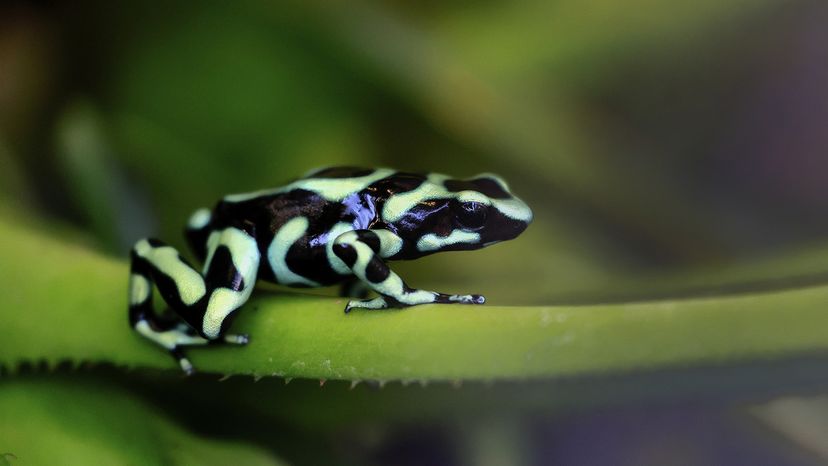
6. Green and Black Poison Dart Frog (Dendrobates auratus)

Green and black poison dart frog
Green and black poison dart frog. imageBROKER/Jürgen & Christine / Getty Images/imageBROKER RF

This frog is often found in Central America and along the Pacific coast of South America. It’s recognizable by its mint-green and black coloration, though other variations exist. These frogs produce alkaloid toxins in their skin that affect muscle and nerve function.

They often inhabit lowland tropical rainforests and are active during the day. Like other poison frog species, their toxins originate from the tiny arthropods they consume in the wild. Some populations have been introduced to other regions, including Hawaii.

Advertisement

7. Lovely Poison Frog (Phyllobates lugubris)

Lovely poison frog
Lovely poison frog. Gerald Corsi / Getty Images

Don't let the name fool you. This frog, native to Central America, is as poisonous as it is attractive. Often found near forest streams, this species prefers dense cover and moist habitats. Bright coloration helps warn predators, while their toxins act as a second line of defense.

Despite their potent skin secretions, lovely poison frogs face numerous threats, including habitat destruction and the spread of chytrid fungus. Like most species of poison dart frogs, their survival is tightly linked to rainforest conservation.

Advertisement

We created this article in conjunction with AI technology, then made sure it was fact-checked and edited by a HowStuffWorks editor.

Advertisement

Loading...