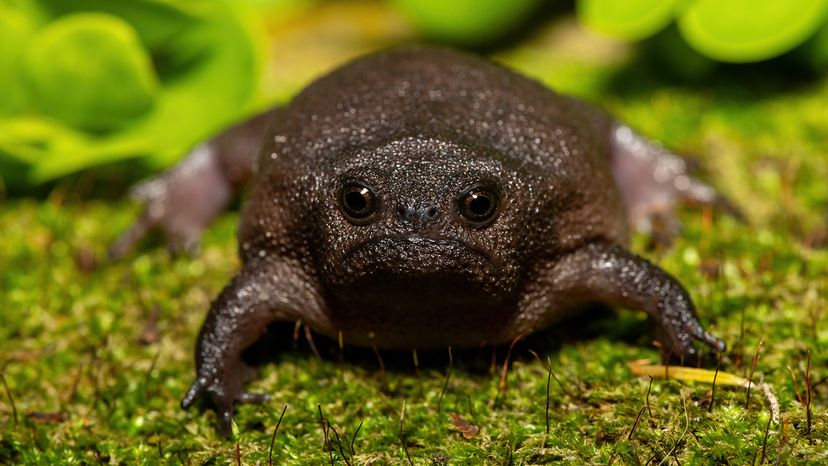
The Rain Frog Looks Like an AI-generated Pokémon

By: Nico Avelle  | 
Black rain frog
The black rain frog looks like the second-tier evolution of a Pokémon you'd find in a cave. Craig Cordier / Getty Images

If you're out during a desert rainstorm and hear something that sounds like a squeaky toy, don't panic. You might be hearing the rain frog—a tiny, burrowing amphibian that spends most of its life hidden underground.

Rain frogs aren't just one species. They're a group of small, round-bodied frogs with short limbs and a serious case of stage fright. These frogs are found only in sub-Saharan Africa, with those from southern Africa getting the most attention.

Advertisement

Some of them, like the black rain frog (Breviceps fuscus), look perpetually angry thanks to their frowny faces and stout bodies. Others, like the desert rain frog (Breviceps macrops), are known for their translucent skin and high-pitched defensive calls.
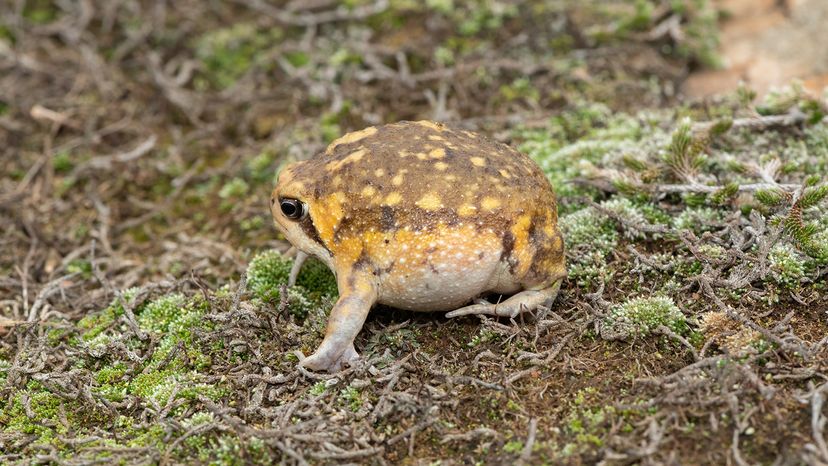
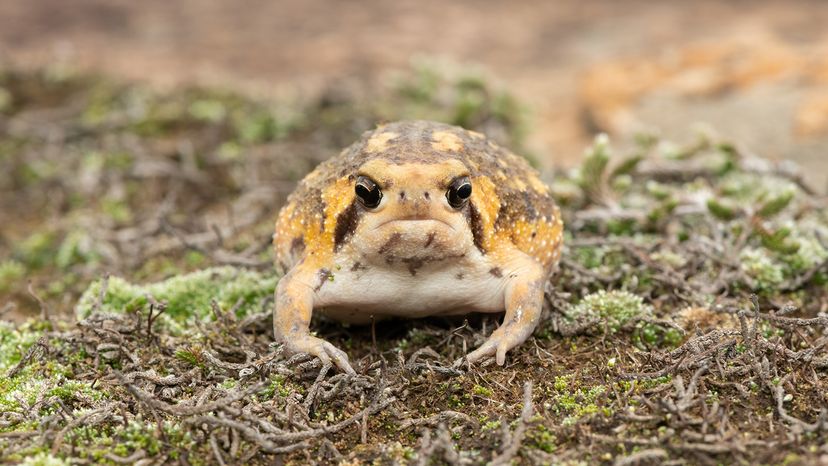
What Makes a Rain Frog a Rain Frog?

Rain frogs belong to the Brevicipitidae family. They get their name from their unusual lifestyle: They spend most of their time underground and emerge only after rainfall.

Unlike many other frog species, they don't have strong legs for hopping. Instead, their short limbs and rounded bodies are better suited for digging burrows.

Advertisement

Most rain frogs can't swim and are unable to live in open water. That's why moisture is so important.

When the rain comes, it's a sign for them to come to the surface, mate, and lay eggs. These events are rare and heavily dependent on environmental conditions.

Advertisement

Where Do Rain Frogs Live?

Rain frog
There's a lot that remains unknown about rain frogs because they're so good at hiding underground. Craig Cordier / Getty Images

Most rain frogs are native to sub-Saharan Africa, especially regions like South Africa and Namibia. These places don't get much rainfall, so when showers do arrive, it's a big event—for frogs and people alike.

Desert rain frogs are typically found along the coastal strip of Namibia and South Africa, where fog provides additional moisture they need to survive.

Advertisement

These frogs live in sandy areas and create burrows to stay cool and damp. The depth of these burrows can vary, depending on the species and local conditions. Some dig only a few centimeters down, while others go much deeper to find moisture.

Weird and Wonderful Adaptations

Rain frogs have a few tricks to help them survive in their dry environments. They can absorb water through their skin and rely on their burrows to maintain hydration. During dry spells, they stay underground in a state of dormancy.

When threatened, some rain frogs puff up their bodies and let out a loud squeal that sounds like a toy being stepped on. This sound isn’t just for show; it startles predators as a defensive tactic.

Advertisement

Eggs are laid in burrows and develop directly into tiny frogs, skipping the tadpole stage. This unusual adaptation among amphibians allows them to avoid open water altogether.

Why Rain Frogs Are Hard to Study

Bushveld rain frog
This bushveld rain frog is tired of your shenanigans. Craig Cordier / Getty Images

Rain frogs are extremely rare and difficult to spot in the wild. Because they spend most of their lives underground and come out only after rain, researchers have limited opportunities to observe them. Their presence is often detected by their call rather than their appearance.

Even when they're active, their coloring helps them blend into their surroundings. Some are pale, others dark—black rain frogs, for instance, are true to their name.

Advertisement

All this makes it tough to estimate their population sizes or learn much about their behavior.

The World Is Paying Attention

Social media has made rain frogs something of a viral sensation. Videos of them squeaking or puffing up to look intimidating have racked up millions of views.

But popularity hasn't always translated into conservation support.

Advertisement

Habitat loss and climate change threaten many rain frog species. Since they depend on specific conditions to survive and reproduce, even small shifts in rainfall patterns or land use can have big impacts. Scientists are racing to learn more before it's too late.

We created this article in conjunction with AI technology, then made sure it was fact-checked and edited by a HowStuffWorks editor.

Advertisement

Advertisement

Loading...