The Red-eyed Tree Frog Has Extremely Sensitive Skin

By: Nico Avelle  | 
Red-eyed tree frog
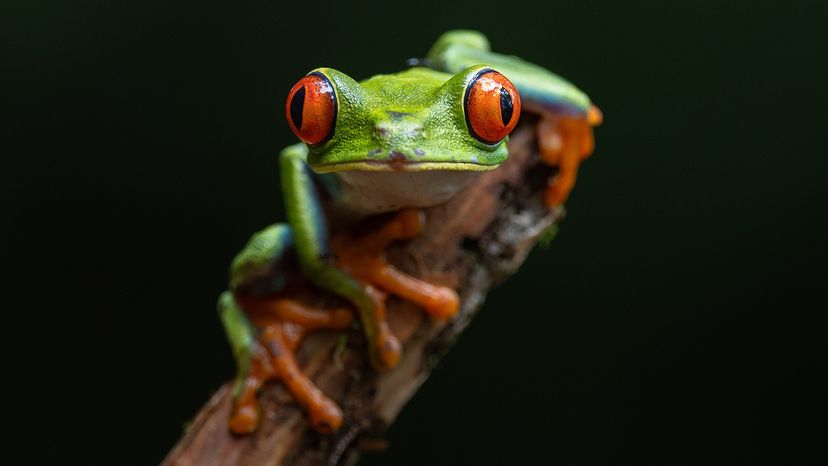
What are you looking at, huh? Harry Collins Photography / Shutterstock

Ah, the red-eyed tree frog—with its signature stare and bright-green body, these small frogs are icons of the tropics.

Native to Central America and southern Mexico, red-eyed leaf frogs belong to the genus Agalychnis. Their colors aren't just for show; they play key roles in survival and attraction.

Advertisement

Though they’re often confused with other species, red-eyed tree frogs are unique in both appearance and behavior when you take a closer look. They spend their lives high in tropical rainforests, relying on camouflage, startle coloration, and suction cups to thrive among trees.
What Makes the Red-eyed Tree Frog Stand Out?

Red-eyed tree frog
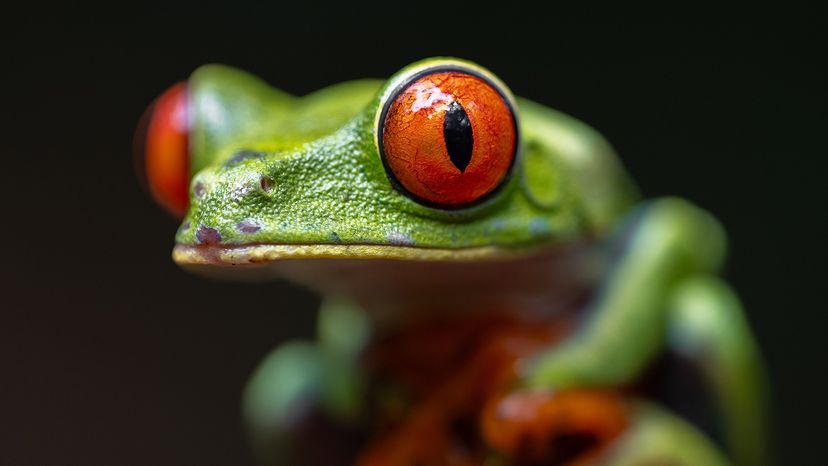
We can't help but wonder what's going through this frog's mind. Harry Collins Photography / Shutterstock

Adult frogs can reach a total length of about 2 to 3 in (5 to 7 cm). They have bright-red eyes, a bright-green body, light-blue flanks with yellow stripes, and orange toes.

When threatened, they flash their colors—a defense mechanism that startles predators for just a few seconds, giving the frog time to escape.

Advertisement

These frogs are not poisonous. Their main defenses rely on their skin’s coloration and quick reflexes. The sensitive skin also means they absorb moisture and chemicals directly, which makes them vulnerable to pollutants in their natural environment.

Where Do Red-eyed Tree Frogs Live?

Red-eyed tree frogs are widely distributed in tropical rainforests from southern Mexico, throughout Central America, and in northern South America. They live in trees above the forest floor, typically near permanent ponds and other water bodies.

During the rainy season, male frogs call loudly to attract females and defend small territories. Yes, frogs fight.

Advertisement

Their habitat includes dense foliage, leaves for laying eggs, and hiding spots like tree hollows or inside bromeliads. Nighttime temperatures tend to stay mild, while daytime temperatures can vary depending on altitude.

Life Cycle and Reproduction

Red-eyed tree frog eggs
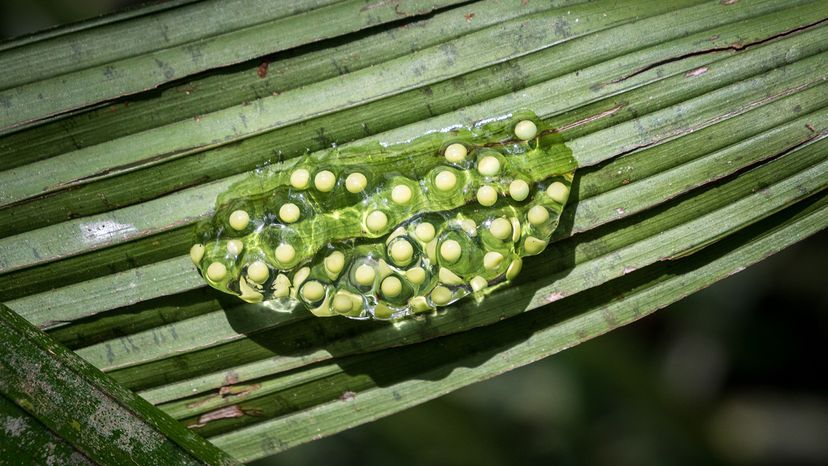
These eggs hatch early if they sense danger. Wirestock Creators / Shutterstock

Mating takes place during the rainy season. Males vocalize to attract females, often competing with other amphibians for attention.

Eggs are laid on leaves hanging over ponds. If danger approaches, the embryos can hatch early and drop into the water—an impressive adaptation.

Advertisement

Once in the pond, the tadpoles develop quickly. These animals grow into small frogs within weeks, depending on temperature and food supply. As a general rule, faster development improves survival in unpredictable environments.

What Do Red-Eyed Tree Frogs Eat?

In the wild, adult frogs feed on live insects like flies, crickets, moths, and other small invertebrates. Fruit flies and pinhead crickets are common prey for juveniles.

In captivity, feeder insects must be gut-loaded (fed nutritious food) to avoid health issues like metabolic bone disease.

Advertisement

These frogs are active hunters. They use their large, sticky toe pads to climb, then pounce on prey with precision. Their large eyes give them excellent night vision, helping them locate prey in low-light conditions.

Keeping Red-eyed Tree Frogs as Pets

If you’re caring for a small group of red-eyed tree frogs, it’s crucial to mimic their natural environment. That means live insects for food, stable nighttime temperatures, and high humidity. Provide plants, hiding spots, and water access for bathing and hydration.

Avoid handling them too often due to their sensitive skin. Like other reptiles and amphibians, they require specific care and should never be housed with incompatible species.

Advertisement

We created this article in conjunction with AI technology, then made sure it was fact-checked and edited by a HowStuffWorks editor.

Advertisement

Loading...