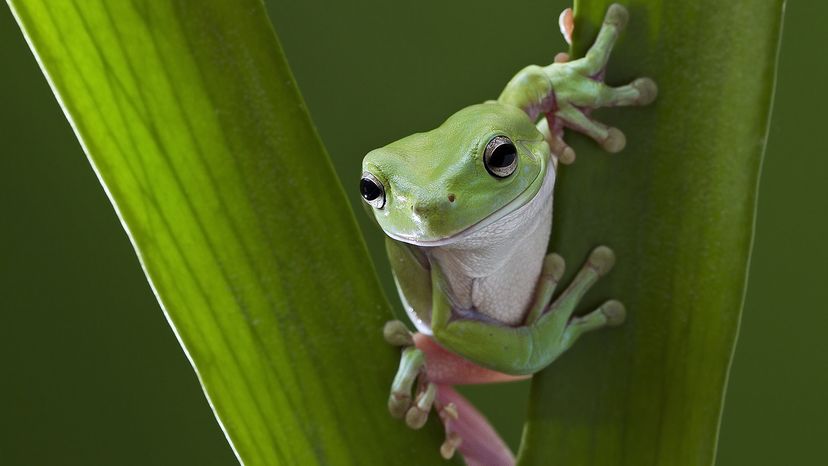
This frog species is particularly adept at navigating vertical spaces. halimqd / Shutterstock
The tree frog is a small, agile amphibian best known for its climbing ability and vocal nighttime habits. These frogs are typically found in warm, moist environments across the central and southeastern United States, though they can thrive in many habitats with a nearby water source.
Members of the tree frog family have specialized toe pads at the tips of their toes, allowing them to cling to vertical surfaces like trees, shrubs, and even windows.
These toe tips contain a mucus-secreting gland and a disk-like structure that helps them stick to surfaces. Some have claw shaped bones at the end of their last bone in the front legs, further enhancing their grip.
Advertisement
Green and Gray Tree Frogs
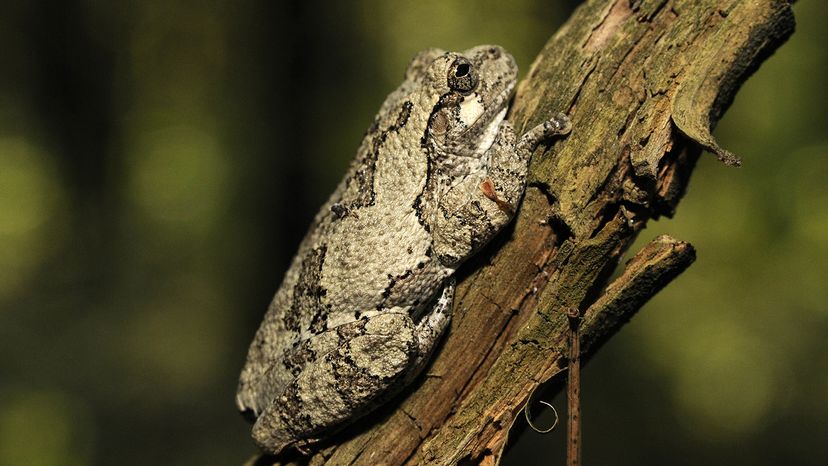
This gray tree frog has evolved with some pretty handy camouflage. Wirestock Creators / Shutterstock
The green tree frog is a common frog in the central to southeastern United States, often found near ponds with plentiful vegetation.
Males are usually smaller and use advertisement calls during breeding season to attract female frogs. Male green tree frogs are especially known for their loud, croaking calls.
Advertisement
The gray tree frog, also known as Hyla versicolor, can change color between gray, green, and brown, depending on its surroundings.
These frogs are nocturnal and are more active at night, using their strong legs and feet to navigate through trees and escape from predators like snakes, birds, and spiders.
Advertisement
Reproduction and Development
During the breeding season, males call out loudly to potential mates. Once eggs are laid in shallow water, tadpoles hatch and begin their aquatic life. Tadpoles live in water for several weeks before developing lungs and losing their tail.
After metamorphosis, they become land-dwelling amphibians capable of climbing and breathing air.
Advertisement
Diet and Predators
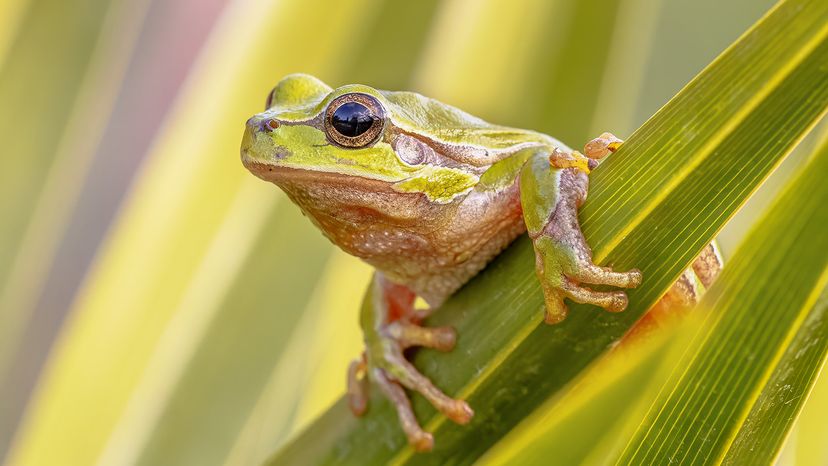
You can't convince us that this green European tree frog isn't posing for the camera. Rudmer Zwerver / Shutterstock
Tree frogs are insectivores, eating insects such as moths, crickets, and other small arthropods.
Because of their small size, they must stay alert for predators and use camouflage and quick reflexes to survive. Their skin can be bright green, gray, or even bright yellow, depending on the species.
Advertisement
3 Impressive Facts About Tree Frogs
Tree frogs breathe through both their lungs and skin.
Tree frogs can jump up to 20 times their body length.
The average life span of a wild tree frog is around five years.
Whether you're hearing their croaks at night or spotting their blue, green, or gray forms clinging to a branch, tree frogs offer a vivid glimpse into the diversity and adaptability of the animal kingdom.
We created this article in conjunction with AI technology, then made sure it was fact-checked and edited by a HowStuffWorks editor.
Advertisement
Cite This!
Please copy/paste the following text to properly cite this HowStuffWorks.com article: