All the Animals That Lay Eggs (That Are NOT Birds)

By: Nico Avelle  | 
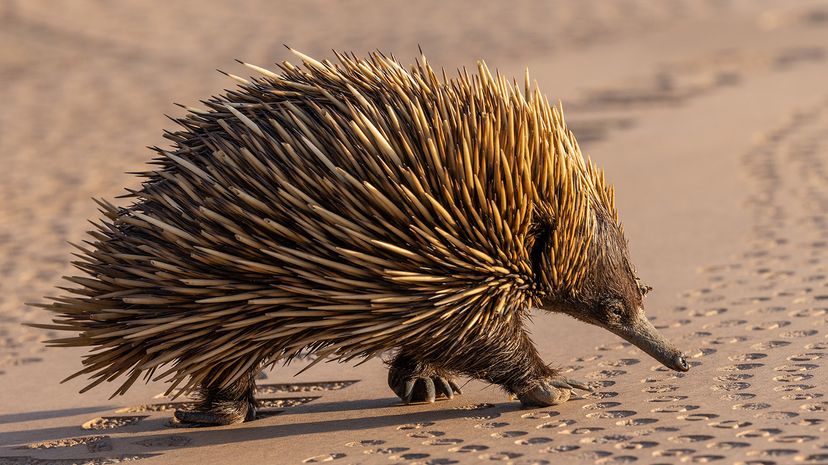
The short-beaked echidna is one of only five mammals that lays eggs. Ken Griffiths / Shutterstock

When people think about animals that lay eggs, birds usually come to mind first. But many animals that lay eggs that are not birds exist across the animal kingdom, from reptiles and amphibians to fish, insects, and even a few unusual mammals.

In fact, egg laying is one of the oldest reproductive strategies on Earth.

Advertisement

Understanding how animals lay eggs helps explain the differences between species, from hard shells on land to soft, jelly-like eggs in water. It also highlights how evolution shaped different types of animals to survive in specific habitats across the world.

1. Monotremes (Egg-Laying Mammals)

Monotremes are the only mammals that lay eggs, making them a rare exception among animals that usually give live births. There are only five living monotreme species: the platypus and four species of echidna, including the short-beaked echidna.

Unlike other mammals, monotremes lay eggs instead of bearing live young, yet they still produce milk to feed their offspring.

Advertisement

They do not have nipples. Instead, milk seeps from glands in their skin, and the babies lap it up.

The platypus typically lays one to three eggs, which hatch after about ten days. The newborns, often called puggles, stay close to the mother, who keeps them warm with her body and tail.

The echidna lays a single soft egg and carries it in a pouch, where it continues developing before moving to a burrow. These young may remain dependent for months, sometimes up to a year.

Advertisement

2. Corals and Marine Invertebrates

Corals may not look like typical animals, but they are living organisms that can reproduce by releasing eggs and sperm into the water during spawning events. In some species, millions of eggs are released over just a couple of days.

Despite these huge numbers, only a tiny fraction survive to adulthood. This highlights a common pattern in egg-laying species: Producing many eggs increases the chances that at least some offspring will survive predators and environmental challenges.

Advertisement

3. Reptiles (Snakes, Lizards, Turtles and Crocodiles)

Reptiles are among the most familiar animals that lay eggs. This group includes snakes, lizards, turtles, and crocodylia, most of which lay eggs on land even if they spend much of their time in water.

Sea turtles provide a well-known example. Females return to the same beaches where they were born, digging nests in the sand to lay hundreds of eggs.

Advertisement

In some sea turtle species, synchronized mass nesting events are called an arribada and can help swamp predators, increasing the chance that at least a few hatchlings survive.

Crocodiles show another twist: Nest temperature determines the sex of their offspring. In crocodilians, females are generally produced at low and high incubation temperatures, while males are produced at intermediate temperatures.

Mothers often stay nearby to protect both the nest and newly hatched babies.

Advertisement

4. Amphibians (Frogs and Toads)

Amphibians—such as frogs and toads—often lay eggs in water. Their eggs do not have hard shells. Instead, they are surrounded by a soft, jelly-like coating that protects the developing embryo.

Once the eggs hatch, the young emerge as larvae, often called tadpoles, which live in water and breathe through gills. Over time, they transform into adult amphibians, making them one of the clearest examples of life cycle changes in animals.

Advertisement

5. Fish (Including Unique Cases Like Seahorses)

Most fish reproduce by laying eggs, often releasing thousands at once into rivers, oceans, or other bodies of water. These fish eggs usually float or attach to surfaces, depending on the species and environment.

Some fish use unusual strategies. In seahorses, the female deposits her eggs into a pouch on the male’s body. The male then fertilizes and carries the eggs until they hatch, reversing the typical roles seen in many other animals.

Advertisement

This wide range of reproductive methods shows how fish have adapted egg laying to different aquatic habitats.

6. Insects and Arthropods

Insects and other arthropods are some of the most prolific egg layers on the planet. Many species lay eggs on specific plants so that their larvae will have an immediate food source once they hatch.

This strategy increases survival rates, especially in environments where food availability changes quickly. From butterflies to beetles, egg laying allows insects to reproduce in large numbers across diverse ecosystems.

Advertisement

Speaking of Exceptions: Snakes That Give Live Births

While most snakes lay eggs, some species break the pattern. Certain snakes are ovoviviparous, meaning the eggs hatch inside the mother’s body. The young are then born alive.

This approach blends egg laying with live birth, showing how flexible reproduction can be across different species. It also helps these snakes survive in colder climates where external eggs might not develop properly.

Advertisement

Differences Between Egg Laying and Live Birth

Egg laying and live birth represent two major reproductive strategies. In egg-laying species, the embryo develops outside the mother’s body, nourished by a yolk inside the egg. In animals with live births, development happens inside the mother.

Most mammals are placentals, meaning they give birth to live young. Marsupials, such as kangaroos, give birth to very underdeveloped newborns that continue growing in a pouch. Monotremes stand apart as the only mammals that lay eggs.

Advertisement

These differences highlight how evolution has produced multiple solutions to the same challenge: protecting and feeding offspring until they can survive on their own.

10. Why Egg Laying Still Works Today

Egg laying remains one of the most successful reproductive strategies in the animal kingdom. From reptiles on land to fish in water, it allows species to produce large numbers of offspring with relatively low energy investment per egg.

Even in the modern world, this approach helps animals survive in a wide range of habitats. Whether it is a turtle burying eggs in sand, a frog laying clusters in a pond, or an insect choosing the perfect leaf, egg laying continues to shape how animals reproduce and thrive.

Advertisement

We created this article in conjunction with AI technology, then made sure it was fact-checked and edited by a HowStuffWorks editor.

Advertisement

Loading...