12 Animals With Opposable Thumbs, Including the Monkeydactyl

By: Nico Avelle  | 
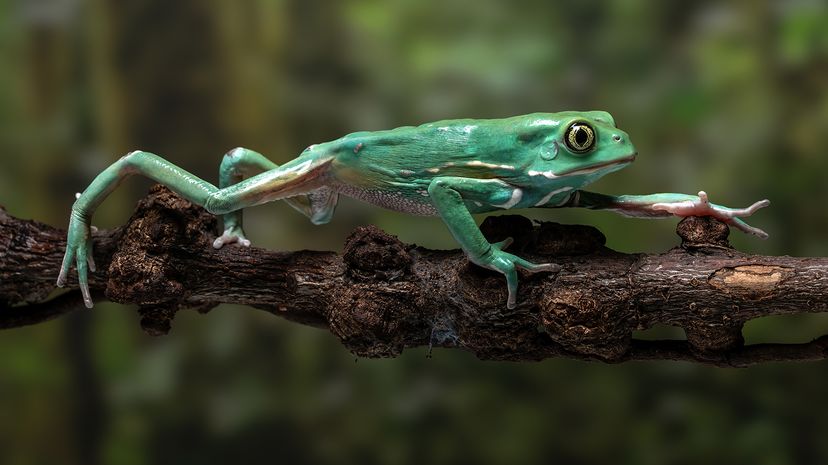
The waxy monkey tree frog is one of the few non-mammals to have opposable thumbs. Lauren Suryanata / Shutterstock

Animals with opposable thumbs stand out in the animal kingdom because they can grasp, hold, and manipulate objects with precision.

An opposable thumb means the thumb can move across the hand to touch the other fingers, creating a strong precision grip. This ability has shaped survival strategies across species, from tool use to climbing trees and gathering food.

Advertisement

While humans are the most famous example, many other animals have evolved true or pseudo-opposable thumbs. These adaptations allow them to firmly grasp branches, pick small objects, and navigate complex environments with impressive dexterity.

1. Humans

Humans have some of the most advanced opposable thumbs in the animal world. The structure of human hands—including the metacarpal bone and two phalanges in each thumb—allows for powerful and precise movement.

This ability has played a major role in human evolution. It supports tool use, fine motor skills and the ability to manipulate small objects like berries, tools, and writing instruments.

Advertisement

2. Great Apes

Great apes—including chimpanzees, gorillas, and orangutans—have fully opposable thumbs. They use their grasping hand to climb trees, groom each other, and manipulate objects.

These primates are closely related to humans and show similar hand structures, though their fingers are often longer for climbing.

Advertisement

3. Gibbons (Lesser Apes)

Gibbon species, known as lesser apes, also have opposable thumbs. They are famous for swinging through trees using long fingers and powerful arms.

Interestingly, their thumbs can be kept out of the way while brachiating (swinging hand-over-hand), but they still assist with grasping and balance.

Advertisement

4. Old World Monkeys

Old World monkeys, such as baboons and macaques, have fully opposable thumbs that allow them to manipulate objects with precision.

These social animals use their hands to gather food, groom, and interact with other individuals in their groups.

Advertisement

5. New World Monkeys

Some New World monkeys—including squirrel monkeys—can oppose their thumbs, though in spider monkeys the thumb is reduced.

Living in Mexico, Central America, and South America, these monkeys rely on their hands. In some species, their tails to grasp tree branches and move through dense forests.

Advertisement

6. Lemurs

Lemurs have an opposable thumb on each hand and an opposable toe on each foot. This combination gives them exceptional grip while climbing trees.

Their ability to grasp with both hands and feet helps them move efficiently through their arboreal habitats.

Advertisement

7. Koalas

Koalas have two opposable thumbs on each fore paw. These thumbs are positioned opposite the other fingers, allowing a strong grip on tree branches.

This adaptation is essential for climbing trees and holding onto eucalyptus branches, their primary food source.

Advertisement

8. Giant Pandas

Giant pandas do not have a true opposable thumb, but instead a false thumb. This structure is an enlarged wrist bone (the radial sesamoid) that acts like a thumb.

It allows pandas to grasp bamboo shoots and strip leaves efficiently, demonstrating how pseudo-opposable thumbs can still be highly functional.

Advertisement

9. Opossums

Opossums have an opposable thumb on their hind feet rather than their front paw. This helps them climb trees and hold onto branches securely.

Their grasping feet allow them to navigate complex environments, but adult opossums cannot hang by their tails.

Advertisement

10. Waxy Monkey Tree Frog

The waxy monkey tree frog is an amphibian with opposable thumbs. It uses them to grip tree branches and climb rather than hop like many other frogs.

This adaptation helps it move carefully through its environment and maintain stability on narrow surfaces.

11. Chameleons

Chameleons do not have a single opposable thumb, but their toes are grouped into two opposing bundles. This structure functions like multiple opposable digits.

It allows them to grasp narrow branches with precision while climbing slowly through trees.

12. Monkeydactyl

One of the earliest known examples of opposable thumbs comes from an extinct species called Kunpengopterus antipollicatus, sometimes called "Monkeydactyl."

This Jurassic-era reptile had a true opposable digit, showing that this trait evolved long before modern mammals.

Why Opposable Thumbs Matter

Opposable thumbs provide a major advantage in the animal world. They allow animals to:

  • Firmly grasp branches while climbing trees
  • Manipulate small objects with precision
  • Gather food more efficiently
  • Perform grooming and social behaviors

This ability can improve survival. In humans, it enabled advanced tool use, which helped shape modern civilization.

We created this article in conjunction with AI technology, then made sure it was fact-checked and edited by a HowStuffWorks editor.

Advertisement

Loading...