The Arctic Food Web (and Why Ice Matters So Much)

By: Nico Avelle  | 
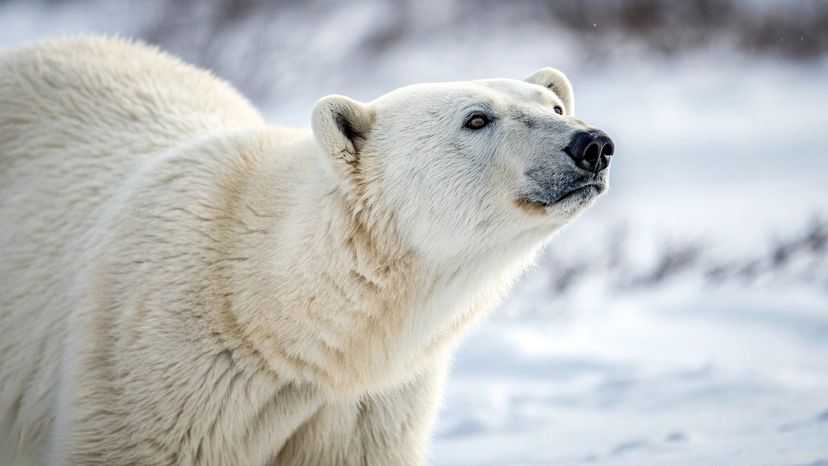
This polar bear is an apex predator, but there's a whole lot that happens before you make it to this part of the arctic food web. OlhaPonomar / Shutterstock

The arctic food web explains how energy moves through one of the coldest ecosystems on Earth. From microscopic algae trapped in sea ice to apex predators like polar bears, every organism depends on another for food.

This interconnected system shows why changes in ice, ocean temperature, and climate matter so much in the polar regions.

Advertisement

Unlike a simple food chain, a food web shows how Arctic animals rely on multiple food sources. In the Arctic Circle, survival depends on timing, sunlight and the delicate balance of the whole ecosystem.

Primary Producers at the Base of the Web

The arctic food web begins with primary producers that capture the sun’s energy. Tiny plants such as phytoplankton and ice algae use carbon dioxide to create food through photosynthesis. These microscopic organisms live in the Arctic Ocean and within sea ice.

Despite their small size, these producers support the entire marine food web. Without them, energy could not move upward through the ecosystem.

Advertisement

Primary Consumers and Energy Transfer

Primary consumers eat phytoplankton and other tiny organisms. Zooplankton, including small shrimp like crustaceans and pelagic crustaceans, feed directly on microscopic algae. Some small fish also eat zooplankton during early life stages.

On land, Arctic hares and other small mammals act as primary consumers by eating plants. These animals transfer energy from plants to larger predators.

Advertisement

Secondary Consumers and Arctic Fish

Secondary consumers eat smaller animals. Arctic cod play a central role because many species eat fish as a primary food source.

Arctic char, other small fish and some whale species also feed at this level.

Advertisement

Seals (such as ringed seals, bearded seals, and harp seal species) eat fish and zooplankton. These seals depend on sea ice for rest and giving birth.

Tertiary Consumers and Top Predators

Tertiary consumers sit near the top of the arctic food chain. Polar bears hunt seals and rely heavily on sea ice to access prey. Arctic foxes eat small mammals, birds and leftovers from larger predators.

Even whales occupy higher trophic levels. Bowhead whale eats krill and zooplankton, showing how even whales connect back to tiny organisms at the base of the web.

Advertisement

Climate Change and Major Threats

Climate change represents a major threat to the arctic ecosystem. Global warming reduces sea ice, disrupting food sources, and hunting grounds for Arctic species.

As ice disappears, one organism affects another. When ice algae decline, energy transfer can weaken across the arctic food web.

Advertisement

We created this article in conjunction with AI technology, then made sure it was fact-checked and edited by a HowStuffWorks editor.

Advertisement

Loading...