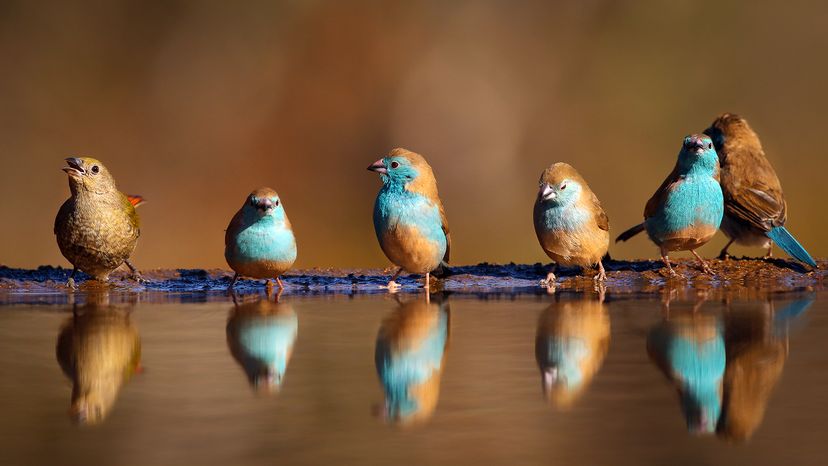
Collective nouns aren’t just decorative; they help describe how animals behave when they gather. For example:
- A leap of leopards suggests sudden movement.
- A gang of elk evokes coordinated motion.
- A bask of crocodiles highlights stillness in the sun.
- A scurry of squirrels fits their twitchy energy.
In contrast, a charm describes something more visual and emotional. It’s not about speed or function, but the feeling these animals inspire when they gather.
Here are some other imaginative collective nouns that make animal behavior even more vivid:
- A covey of partridges
- A mischief of magpies
- A pack of wolves
- An unkindness of ravens
- A business of ferrets
- A trip of goats
- A cast of falcons
- A shoal of herring
- A trip of dotterel
- A cete of badgers
These terms often come from old hunting guides, folklore or regional dialects. While they’re not used in scientific classification, they remain a beloved part of English animal lore.
So next time you spot a lively group of finches fluttering through your backyard, you’ll know exactly what to call them: a charm.
We created this article in conjunction with AI technology, then made sure it was fact-checked and edited by a HowStuffWorks editor.