What Is a Group of Buzzards Called? Depends, Are They Feeding or Flying?

By: Nico Avelle  | 
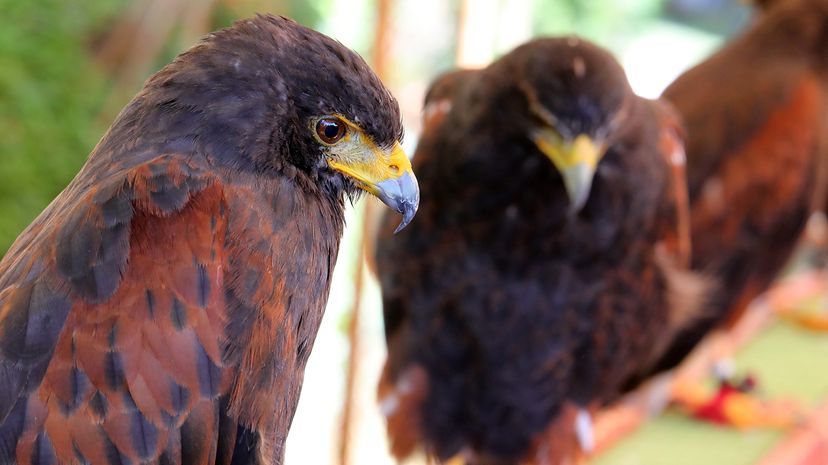
These Harris buzzards live in the southwestern U.S., whereas turkey vultures (commonly confused for buzzards) live in South America. ChiccoDodiFC / Shutterstock

Buzzards soar on rising air currents, often circling high above fields and forests. But what is a group of buzzards called? As with many birds of prey, there’s more than one term, each tied to the birds’ behavior and setting.

Buzzards, especially in the Americas, are often confused with vultures. In fact, in North America, the term "buzzard" commonly refers to turkey vultures (Cathartes aura), a species of New World vultures.

Advertisement

Regardless of the name, their groupings have some colorful collective nouns.

A Kettle of Buzzards in Flight

When buzzards are seen soaring in thermals, the correct collective noun is "kettle." This term "kettle" paints a vivid image of birds swirling upward like steam rising from a spout.

Kettles often form during migration, when large numbers of turkey vultures and other vultures use rising warm air to conserve energy.

Advertisement

A kettle of buzzards may include dozens or even hundreds of individuals spiraling together in the sky. It’s an impressive sight that can occur during migration.

A Wake or Committee on the Ground

When buzzards gather on the ground—especially around a carcass—the group is commonly called a wake. The name is a nod to the birds' role in consuming dead animals. Feeding buzzards may surround the remains of prey, joined by black vultures or even hyenas and other scavengers.

Buzzards perching quietly in trees or on fenceposts may be called a committee, a term also applied to vultures. This phrase is also sometimes used when describing these birds at rest.

Advertisement

Buzzards and Their Behavior

Buzzards, like many closely related birds in the Cathartidae family, play a crucial ecological role. They feed on carrion—dead animals—which helps reduce the spread of disease. These birds have evolved traits that reflect this lifestyle:

  • Bare skin on their heads to stay clean while feeding
  • An acute sense of smell to locate food
  • Long, broad wings designed for soaring

Their behavior includes circling high to scout for carrion, resting in groups on trees or the ground, and even nesting on cliffs.

Advertisement

Other Bird Collective Nouns

The animal kingdom is full of quirky group names that reflect animal behavior or folklore. Here are some examples of other birds' collective nouns:

  • A murder of crows
  • A parliament of owls
  • A siege of herons
  • A gaggle of geese (on land)
  • A flight of storks
  • A pod of pelicans
  • A flock of birds (generic term)

Each of these group names helps describe animal movement, social behavior, or perceived character.

Advertisement

Scavengers and Soaring Species

Buzzards are often seen with other scavengers. In Africa and the Americas, they may feed near hyenas, foxes, or wild dogs. They’re also commonly accompanied by black vultures and world vultures.

Other large soaring birds—like hawks, eagles, and storks, may share the sky with buzzards—especially during migration. Species such as herons, gulls, geese, and cormorants are also known for forming large groups in flight or on land.

Advertisement

Some people mistake buzzards for hawks or even falcons, but buzzards are typically broader-winged and more specialized for soaring.

The Role of Buzzards in Ecosystems

Buzzards are essential to healthy ecosystems. By feeding on carrion, they prevent the buildup of dead animals and limit the spread of bacteria. Though sometimes misunderstood or seen as ominous, they provide a valuable natural service.

Even their feet and legs are adapted for walking and balance, rather than catching live prey. Unlike hawks or eagles, buzzards rarely hunt; they rely on smell, sight, and patience to locate leftovers.

Advertisement

We created this article in conjunction with AI technology, then made sure it was fact-checked and edited by a HowStuffWorks.

Advertisement

Loading...