
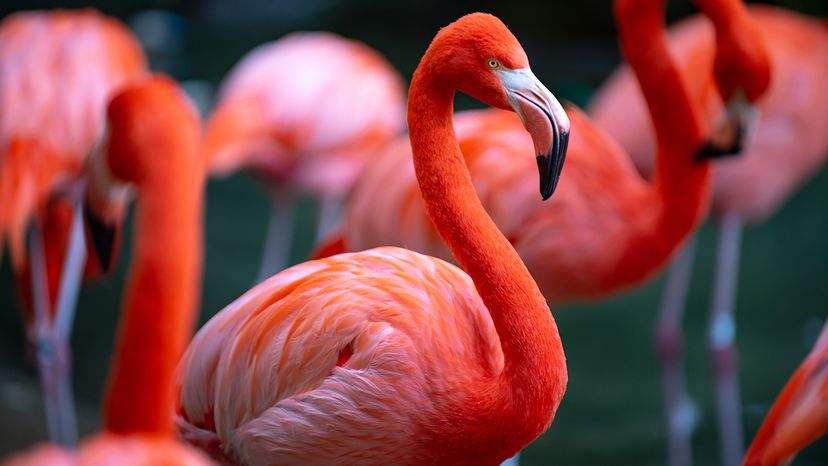
Ever spot a bunch of tall pink birds gathered by the water and wondered, "What is a group of flamingos called?" The answer is as colorful as the birds themselves: a flamboyance.
Advertisement
Ever spot a bunch of tall pink birds gathered by the water and wondered, "What is a group of flamingos called?" The answer is as colorful as the birds themselves: a flamboyance.
Advertisement
With long legs, s-curved necks, and plumage that ranges from blush to fiery coral, flamingos are living highlighters in the bird world.
These birds owe their color to their diet of brine shrimp and blue-green algae, both rich in carotenoids. Chicks, born a soft gray, develop their adult color over time as their diet changes.
Advertisement
Flamingos use their uniquely shaped bills to separate mud from food. They often feed with their heads upside down, filtering out algae and small crustaceans in a movement that looks like underwater vacuuming.
It's efficient and oddly elegant, especially when performed by an entire group in sync.
Advertisement
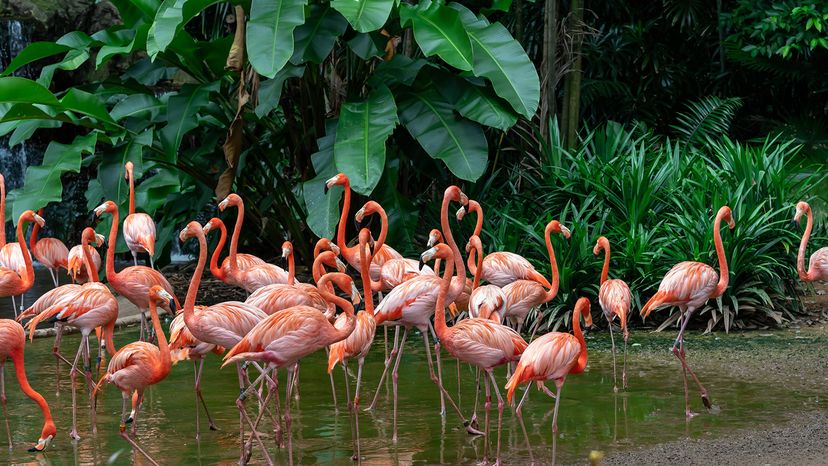
The term "flamboyance" isn’t just fun to say; it perfectly matches the birds' showy nature. A flamboyance refers specifically to a group of flamingos. You might also hear "colony" or "stand," depending on the source.
These words describe the same idea: multiple flamingos gathered in one place, often for nesting, feeding, or migrating.
Advertisement
Flamingos are social animals that live in large colonies, sometimes numbering in the tens of thousands. This social structure helps them find food, evade predators, and raise chicks more successfully. In captivity, zoos replicate these groupings to keep flamingos healthy and mentally stimulated.
There are six species of flamingos.
These birds are often observed in the wild and in zoos, forming flamboyances that stretch across wetlands and salt flats. Whether it’s a flock of Chilean flamingos in Argentina or a stand of greater flamingos in Kenya, the group dynamic remains central.
Advertisement
Flamingos are known for their one-legged stance. One theory is that it reduces energy expenditure, allowing muscles to rest. An alternative theory suggests it helps conserve body heat by keeping one leg tucked beneath the body.
This behavior isn’t unique to flamingos—it’s also observed in other bird species—but flamingos are definitely the poster birds for the pose.
Advertisement
Some scientists have hypothesized that the one-legged stance could reduce exposure to waterborne parasites, although this remains unconfirmed by research. While the exact reason remains debated, it’s clearly something these birds do often, both when resting and even while sleeping.
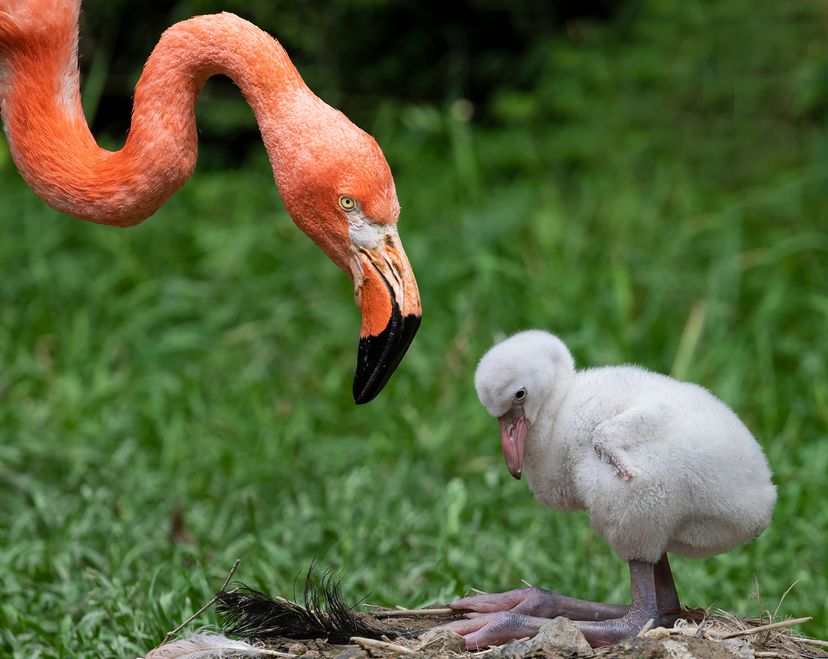
Flamingos lay a single egg, usually on a raised mud mound in shallow water. Parents take turns incubating the egg and later feeding the chick a nutrient-rich fluid called crop milk. This secretion comes from the lining of the upper digestive tract and is packed with fat and protein.
Young flamingos form groups called crèches, which help protect them while they grow and learn to forage. During these early weeks, they stay close to adults and mimic their movements.
Advertisement
While many animals are born nearly ready to go, flamingo chicks require a lot of parental care and time to develop their iconic look.
Flamingos inhabit wetlands, lakes, and lagoons in some of the world's most extreme habitats. From the saline lakes of East Africa to the high Andes of South America and the coastal mudflats of the Caribbean, they adapt to environments where few other animals thrive.
In places like Lake Natron in Tanzania, lesser flamingos breed in conditions that would seem uninhabitable to most animals. These birds are perfectly adapted to extreme salinity and heat.
Advertisement
In South America, two species (Andean and James’s flamingos) live at elevations where oxygen is thin and temperatures swing drastically between day and night.
The word "flamboyance" captures the essence of these birds, but the term also reflects how people see flamingos: creative, flamboyant, and a bit theatrical. While other animals like peacocks or ducks have their own collective nouns, few are as on-the-nose as flamboyance is for flamingos.
We created this article in conjunction with AI technology, then made sure it was fact-checked and edited by a HowStuffWorks editor.
Advertisement
Please copy/paste the following text to properly cite this HowStuffWorks.com article:
Advertisement