What Is a Group of Parrots Called? Way More Chaotic Than 'Flock'

By: Nico Avelle  | 
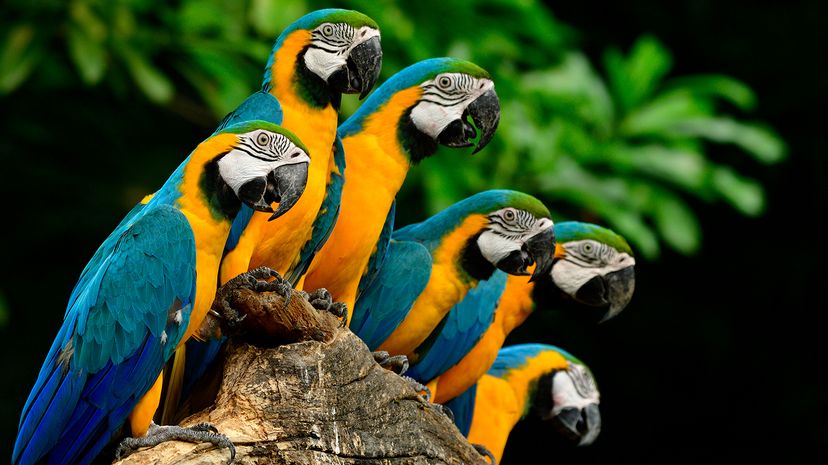
There's clearly a very serious conversation taking place here. whitejellybeans / Shutterstock

You may have heard a group of lions is called a pride, and a group of crows is called a murder. But what is a group of parrots called? The answer is almost as noisy as the birds themselves.

Parrots are known for their intelligence, mimicry skills, and colorful plumage. These social birds often live in close proximity, forming tight-knit communities in the wild. So it's no surprise their collective noun is equally lively: a pandemonium.

Advertisement
Pandemonium: A Wildly Appropriate Term

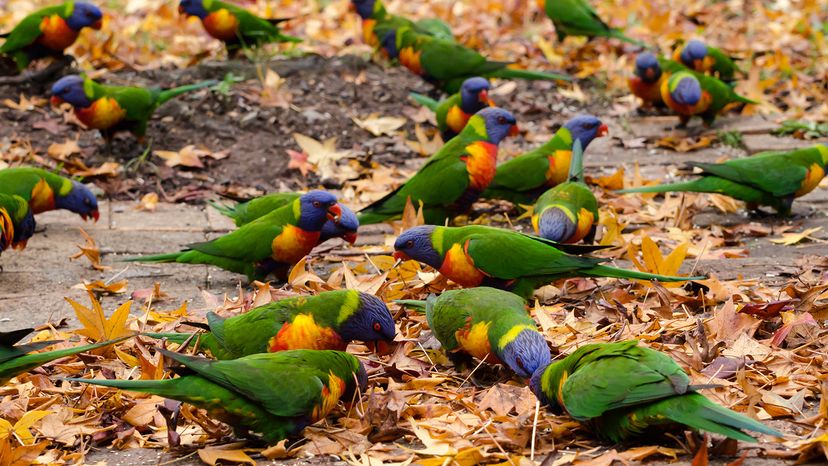
A pandemonium of parrots sounds like chaos, and that's pretty accurate.

Parrots are noisy. Their calls echo through the forest, making parrots among the loudest birds in the world. When gathered in trees or taking flight, they resemble a parade, full of color and motion.

Advertisement

The word "pandemonium" dates back to the 17th century and originally described the capital of Hell in John Milton's "Paradise Lost." Today, it's used to describe uproar or wild disorder—a fitting image for a group of parrots raising a ruckus in the canopy.

Parrot Society in the Wild

parrots
Parrot communities are highly structured, even if they don't look that way to an untrained eye. whitejellybeans / Shutterstock

Parrots don’t just fly together; they live in highly structured communities.

A group can include younger parrots learning the ropes and older birds teaching them where to find food and how to communicate. This blend of social learning and cooperation makes parrot society remarkably complex.

Advertisement

From macaws in the Amazon to cockatoos in Australia, parrot groups often behave more like extended families. Parrots have complex social bonds with layers of relationships, comparable to those seen in primates and dolphins.

That’s why the collective noun “pandemonium” captures more than their sound. It speaks to their energy and intelligence.

Advertisement

The Role of Sounds in Group Identity

parrots
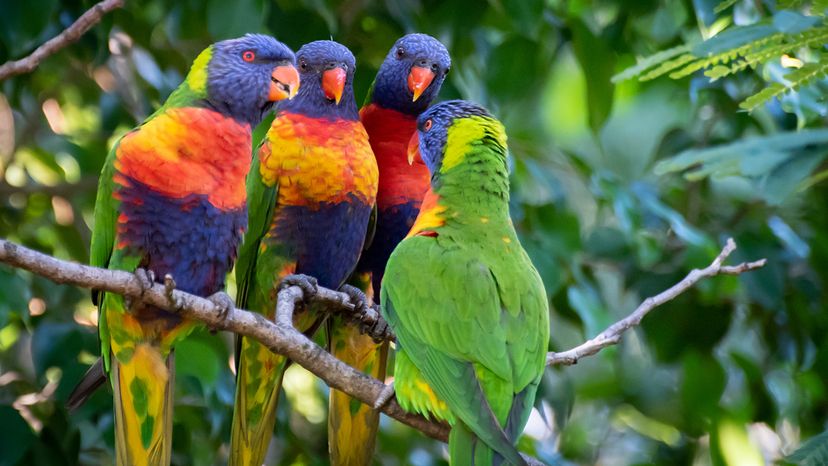
These parrots look like they're ready to sound off for roll call. Super Prin / Shutterstock

Parrots are vocal learners, meaning they can mimic and create new sounds. This helps them form group-specific calls, like a local dialect. It’s not just funny; these sounds are essential to survival.

Younger parrots practice calls like kids learning to speak. They rely on older birds to teach them. Over time, this creates a group identity defined by unique sounds, not just plumage or location.

Advertisement

A Look at Other Collective Nouns

The English language is full of colorful ways to describe animal groups. While "flock" is a much more conventional term for birds, it's far from the only one. There's also:

  • A murder of crows
  • A gaggle of geese
  • A charm of hummingbirds
  • A parliament of owls
  • A michief of magpies
  • A covey of quail
  • A convocation of eagles
  • A cast of hawks
  • A muster of storks
  • An unkindness of ravens

These terms describe more than numbers. They reflect behavior, folklore or how humans experience these animals. The term “pandemonium” adds parrots to that creative linguistic tradition.

Advertisement

Group Names in Real Life

Do bird experts really use all these quirky names? Sometimes.

Wildlife biologists often use the more familiar term “flock” in technical contexts. But among birders and naturalists, terms like "pandemonium" are a fun way to describe animal behavior in the field.

Advertisement

The names may not be scientific, but they help people connect with wildlife. Hearing that a bunch of parrots forms a pandemonium tells you a lot about what to expect: color, chatter, and constant movement.

Why We Name Animal Groups

There’s a point to all these colorful group names. Collective nouns help us describe not just numbers, but the mood and motion of animals in the world. It’s not just a bunch of birds. It’s a charm of finches, a flamboyance of flamingos, or a pandemonium of parrots.

These terms also reflect human creativity and curiosity. They describe how animals appear to us in the moment—a flight, a stare, a murder, a pride. And they remind us how language evolves alongside our understanding of nature.

Advertisement

From Birds to the Bigger Picture

Parrots aren’t alone in their noisy, social lives. The animal kingdom is packed with species that form complex communities. Monkeys live in troops, dolphins in pods, lions in prides.

Even in the world of birds, the diversity is huge. Vultures may form a wake when gathered around a food source. Waterfowl gather in rafts. Falcons join a cast.

Advertisement

Nature doesn’t just gather animals together. It builds societies with rules, bonds and behavior patterns. Parrots remind us that even in the wild, community matters.

We created this article in conjunction with AI technology, then made sure it was fact-checked and edited by a HowStuffWorks editor.

Advertisement

Advertisement

Loading...