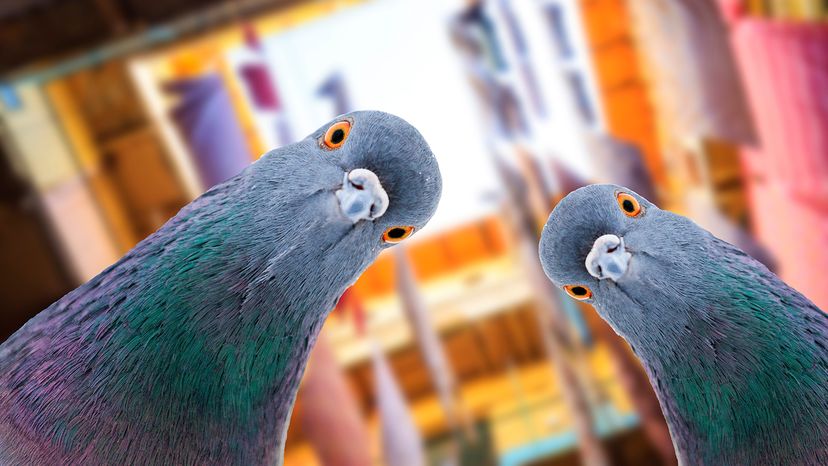
These adult pigeons are likely part of a larger flock. Drakuliren / Shutterstock
Ever walked through a city square and seen a sky full of pigeons take off at once? You may have wondered, what is a group of pigeons called? Does it have a fancy name like a parliament of owls or a murder of crows?
Nope. It's just called a flock, a term as common as the birds themselves.
The most common collective noun for pigeons is a "flock."
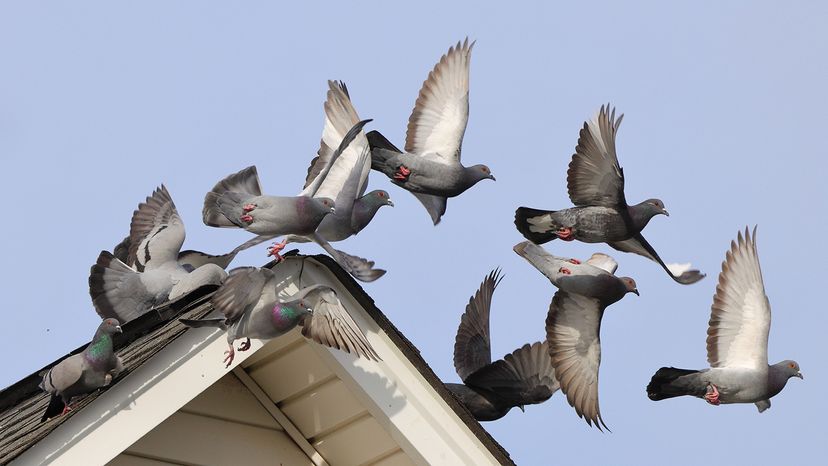
Whether they're perched on power lines, strutting in parks or wheeling through the sky, pigeons stick together in flocks for safety, navigation and social bonding. In flight, these flocks often seem choreographed, helping birds evade flying predators like hawks and falcons.
Advertisement
What are carrier pigeons called? A kit!
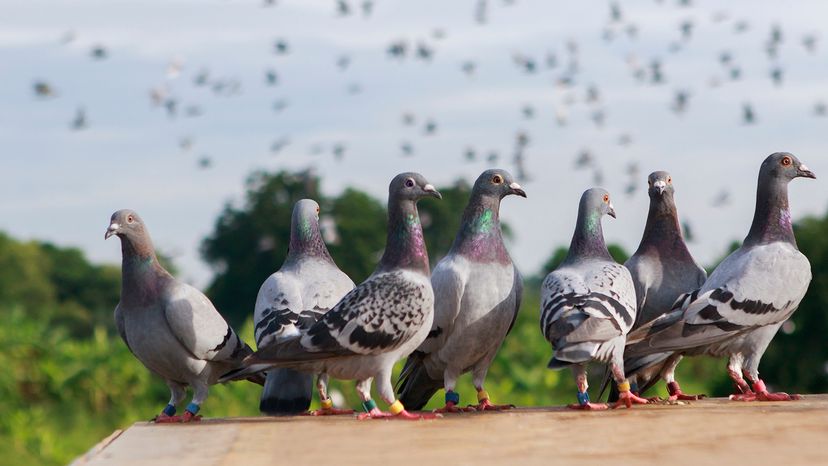
stockphoto mania / Shutterstock
Interestingly, a group of pigeons may also be called a "kit" when referring to trained flying pigeons, especially in the world of fancy pigeons and pigeon racing.
During the breeding season, smaller groups or pairs might roost together, but larger groups dominate during the non-breeding season when pigeons form roosting communities.
Advertisement
Pigeon Species and Their Group Behaviors
Pigeons belong to the bird family Columbidae, which includes many species of both pigeons and doves. The most familiar are rock pigeons—also known as rock doves—which have adapted well to urban life. Feral pigeons, descendants of domesticated rock pigeons, are a common sight in cities worldwide.
Homing pigeons and carrier pigeons (pigeons selectively bred for their navigational skills) often fly in flocks, especially during training or racing. Their remarkable ability to use Earth’s magnetic fields allows them to travel long distances and return home.
Advertisement
Baby pigeons, called squabs, stay hidden in nests until they’re large enough to join flying adults.
Why Pigeons Flock Together
Pigeons are no strangers to urban and residential areas. Wirestock Creators / Shutterstock
Flocking provides safety in numbers. When many pigeons fly together, they confuse predators, giving individuals a better chance to escape. Flocks also help pigeons find food more efficiently and improve their orientation when navigating vast landscapes.
Pigeons are generally monogamous and form mated pairs, but those pairs still join large flocks outside the breeding season.
Advertisement
In forested areas, tropical pigeons like the Victoria crowned pigeon and Nicobar pigeon may form smaller groups, while wood pigeons and turtle doves gather in larger ones, especially when migrating.
Humans and Pigeons
Pigeons have lived alongside humans for thousands of years. Carrier pigeons played key roles in communication during World War I and II, valued for their ability to fly long distances with messages tied to their legs.
Today, feral pigeons are more often city dwellers, scavenging crumbs and nesting on ledges.
Advertisement
Many people see pigeons as pests, lumping them in with rats or starlings. But that discounts traits like their use of landmarks and sun positioning to navigate. Even their coos and head-bobbing carry social meaning within the flock.
We created this article in conjunction with AI technology, then made sure it was fact-checked and edited by a HowStuffWorks editor.
Advertisement
Cite This!
Please copy/paste the following text to properly cite this HowStuffWorks.com article: