What Is a Group of Turkey Vultures Called? Depends What It's Doing

By: Nico Avelle  | 
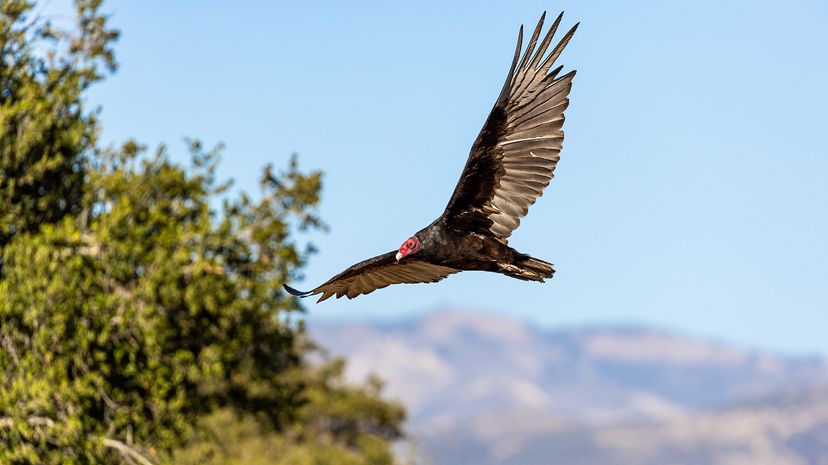
Like many other animals, groups of turkey vultures have different names, depending on what they're doing at the time of their gathering. Mauro Rodrigues / Shutterstock

If you've ever seen large birds circling high above or gathered near a carcass, you might have wondered, what is a group of turkey vultures called?

These often-misunderstood scavengers play an essential role in ecosystems—and yes, they have more than one group name.

Advertisement
A Wake, Kettle, or Committee

birds
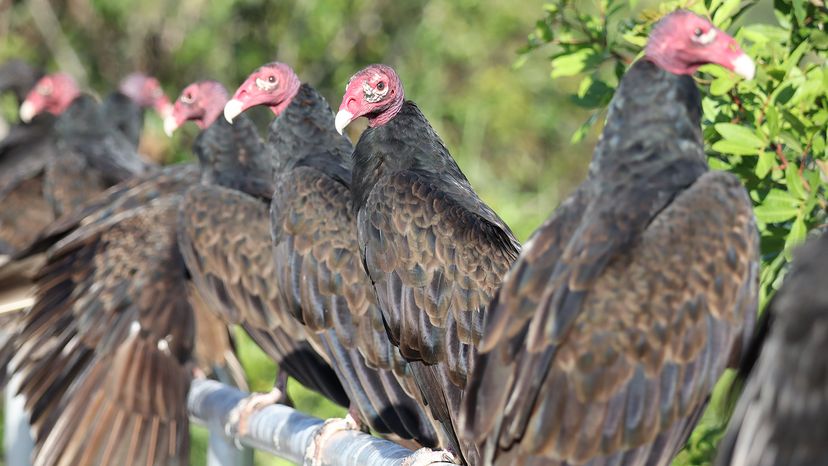
Ladies and gentlemen, we present: a committee of turkey vultures. Michelle L. Alvarez / Shutterstock

The name for a group of turkey vultures depends on what they’re doing. When resting on the ground or in trees, a group of vultures is called a "committee," whereas a group feeding on a carcass is known as a "wake" But when soaring together in flight, they’re called a "kettle."

These terms also apply to other vultures and large birds. Seeing a wake of turkey vultures near a carcass might look grim, but it’s all part of nature’s clean-up crew at work.

Advertisement

What Makes Turkey Vultures Unique

Turkey vultures (scientific name Cathartes aura) are a species of New World vultures with an excellent sense of smell—rare among birds. They can detect dead animals from over a mile (1.6 km) away by picking up gases from rotting flesh.

bird
Turkey vultures have enormous wingspans that allow them to soar with relative ease.
Safa Shahidi / Shutterstock

With a wingspan of up to 6 feet (1.8 m) and pale undersides on their flight feathers—which gives a two-toned appearance that helps camouflage them against the bright sky—turkey vultures soar using thermals (rising warm air currents).

Advertisement

This lets them travel long distances without flapping their wings.

Advertisement

Not the Same as Other Vultures

Unlike the black vulture, which relies more on sight and flies in tighter groups, turkey vultures are known for their solitary or loose pair behavior. However, they form congregations or wakes around food sources or in communal roosts.

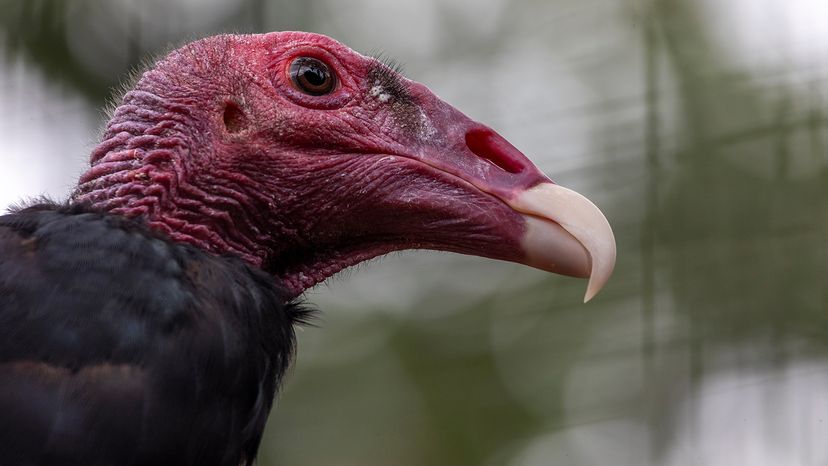
They feed almost exclusively on carrion (dead animals) and rarely kill live prey. Their bald heads and strong stomach acid help prevent the spread of parasites and disease from the food they eat.

Advertisement

4 Fun Facts About Turkey Vultures

  1. When threatened, turkey vultures may defend themselves by vomiting.
  2. Their legs can appear white because they defecate on them to cool off.
  3. They make low grunts and hissing sounds, not typical bird songs.
  4. Turkey vultures are often seen soaring in groups over September skies during migration.

They're an essential, if underappreciated, part of wildlife communities across the Americas.

We created this article in conjunction with AI technology, then made sure it was fact-checked and edited by a HowStuffWorks editor.

Advertisement

Advertisement

Loading...