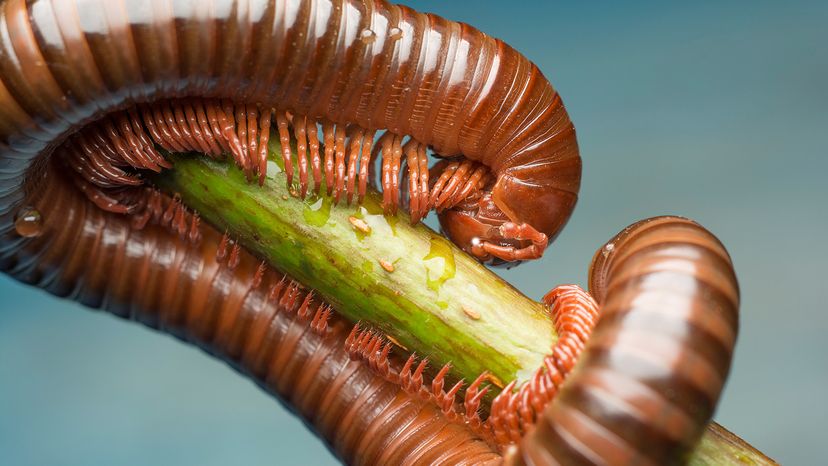
Centipede vs. Millipede: Differentiating Between Many-legged Insects

By: Nico Avelle  | 
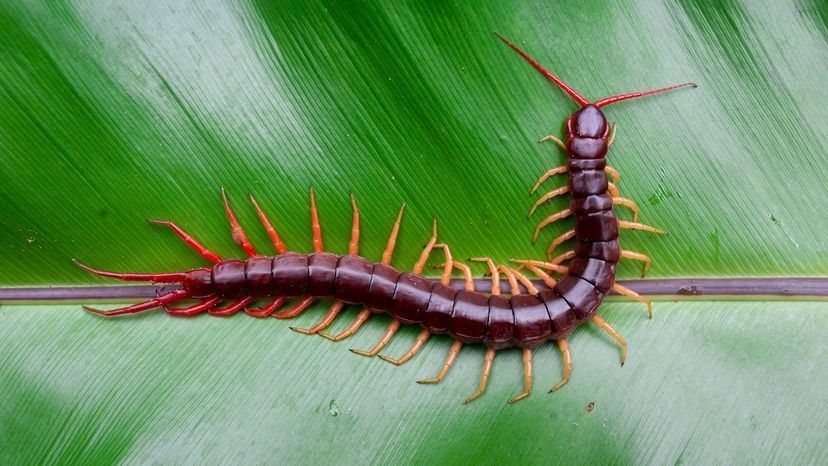
Centipede
Fun fact: Centipedes don't sting. They bite. kooanan007 / Shutterstock

You spot a many-legged crawler in your bathroom and wonder, "Centipede vs. millipede ... does it matter?" This quick guide breaks down the key differences in the age-old confusion.

Though both are arthropods with segmented bodies and jointed legs, their form, diet, and ecological roles couldn’t be more different.

Advertisement

Different Body Structure

Centipedes have a flatter body with segments that each bear one pair of legs. Their legs extend out from the body and give them a speed advantage, especially useful for capturing small creatures and avoiding predators.

Most centipedes range from yellowish to dark brown, and they look sleek and fast — makes sense, given the small insects that comprise their diet.

Advertisement

Millipedes, on the other hand, have a more cylindrical body, with each segment typically bearing two pairs of legs. Their segments are more compact and positioned for burrowing through decaying organic matter. Most millipedes are dark brown, slow-moving, and often curl into a spiral when threatened.

Legs Per Segment

Millipede
One of the ways you can tell this is a millipede is its rounded body, whereas a centipede has a more flattened body. Piyapong pc / Shutterstock

Centipedes feature one pair of legs per body segment, while millipedes generally have two pairs. That means a millipede looks denser and has many more legs moving in a wave-like motion.

Some species of centipedes have over 300 legs spanning their entire body, but due to their leg-per-segment structure, but they always have an odd number of leg pairs.

Advertisement

Millipedes can also have hundreds of legs, but in pairs per segment, often moving rhythmically as they navigate through soil or leaf litter.

Diet and Feeding Habits

The diet of centipedes is carnivorous. These carnivores actively hunt insects, spiders, silverfish, and even small cockroaches. Using venomous fangs, they kill prey and help with pest control indoors.

Millipedes are primarily detritivores, feeding on decaying plant material, microbial decomposition, and living plants only when decaying. By feeding on this matter, they enhance soil nutrient cycles and contribute to healthy ecosystems.

Advertisement

Habitats and Behavior

Common house centipedes are often seen indoors, especially in bathrooms and basements. They prefer humid environments and can be found under rocks, mulch, or debris when outside.

Millipedes thrive in moist habitats rich in organic matter. You might find them in gardens, compost piles, or under logs. During heavy rain or when the weather cools, they may enter homes in search of shelter.

Advertisement

Defense Mechanisms

When threatened, centipedes may bite. Their venom isn’t lethal to humans, but it can feel like a bee sting. They use speed and hiding to avoid predators.

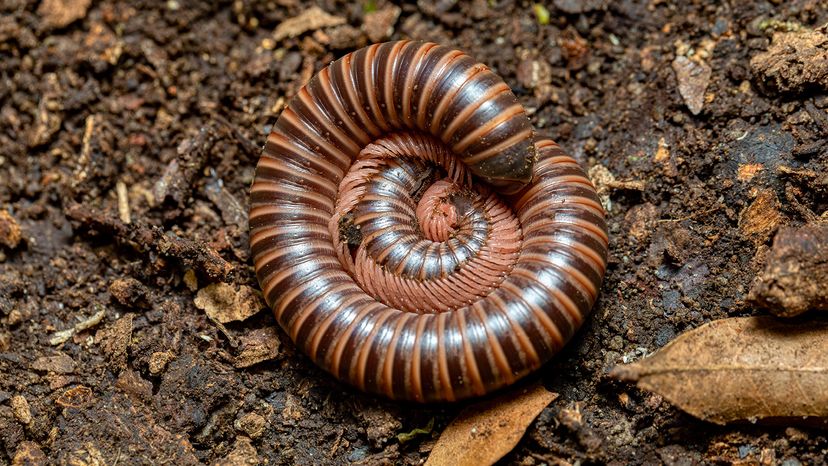
Millipede
Millipedes curl up in self-defense.
Artush / Shutterstock

Millipedes, lacking venom, roll into tight coils. Some species can emit irritating chemicals when disturbed, a defense that may ward off predators including pets or small children.

Advertisement

Lifecycle and Reproduction

Centipedes lay eggs in soil or leaf litter — and, in many species, their larvae hatch with fewer segments, gaining more as they molt.

Millipedes lay clusters of eggs underground. Their juveniles gradually develop new segments and pairs of legs as they mature.

Advertisement

Role in the Environment

Centipedes and millipedes both serve vital purposes. Centipedes help manage populations of other insects and pests. Millipedes break down decaying organic material, supporting microbial ecosystems and soil structure.

We created this article in conjunction with AI technology, then made sure it was fact-checked and edited by a HowStuffWorks editor.

Advertisement

Advertisement

Loading...