10 Colorful Spiders: Natural Works of Art or Pests? You Decide

By: Nico Avelle  | 
Green Lynx Spider
Some of these arachnids are tinted for camouflage, whereas others sport brighter colors to attract mates. Sula64 / Shutterstock

Some spiders blend into the background. Others? They demand your attention. Colorful spiders light up forests, flowers, and even backyards with a dazzling range of hues—and there's more to that brilliance than meets the eye.

Bright colors in nature often mean one of two things: "I'm dangerous" or "I'm tricky."

Advertisement

In spiders, those vibrant shades help them attract mates, ambush prey, or scare off predators. These invertebrates come dressed in some of the most jaw-dropping palettes on Earth.
1. Peacock Spider

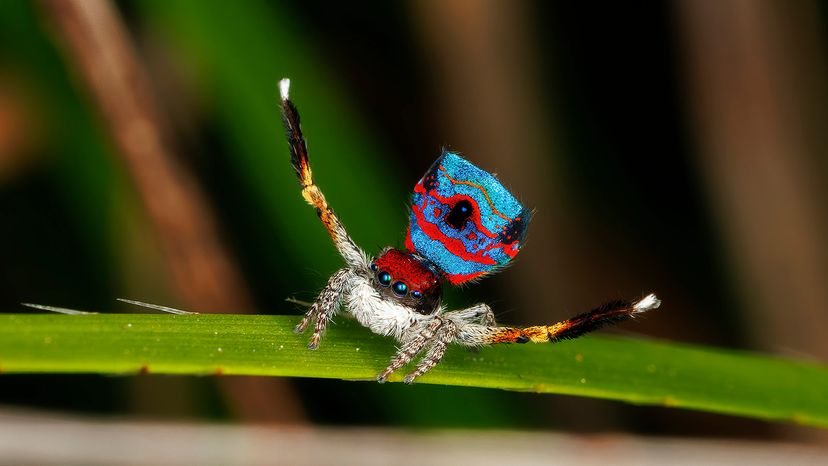
peacock spider
Peacock spider. Robbie Goodall / Getty Images

Tiny but showy, the male peacock spider (Maratus spp.) flashes a brightly colored abdomen to court mates, just like its bird namesake.

Found primarily in Australia, these jumping spiders grow just 0.2 in (5 mm) long but pack a punch of color. Their flamboyant displays, backed by rhythmic leg waving, resemble a dance floor showdown.

Advertisement

2. Golden Silk Orb-Weaver

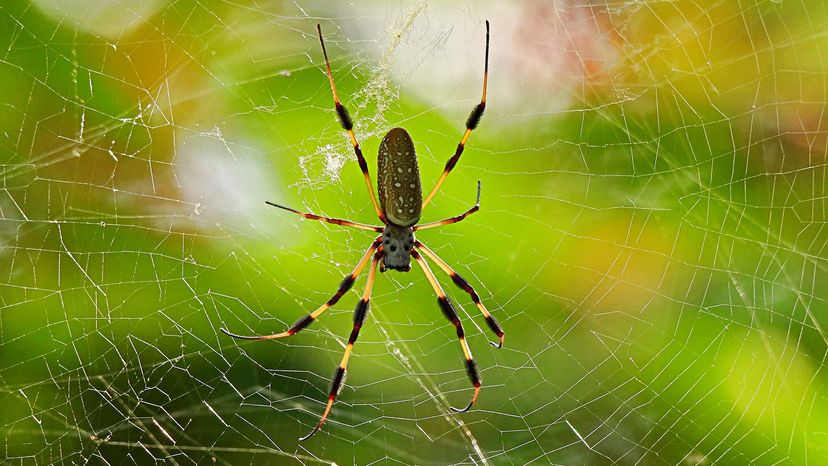
golden silk orb-weaver
Golden silk orb-weaver. Sandi Smolker / Getty Images

These large spiders spin golden-hued webs strong enough to snare birds. Native to warm regions worldwide, golden silk orb-weavers (Trichonephila spp.) feature long legs striped with yellow and black, plus a shimmering body.

The gold hue of their webs comes from the silk itself—not from a structural effect, but from yellow pigments (such as xanthurenic acid) in the silk.

Advertisement

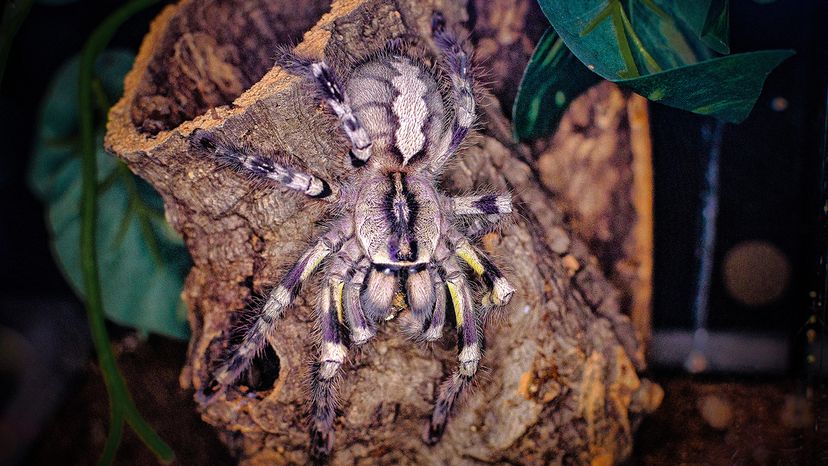
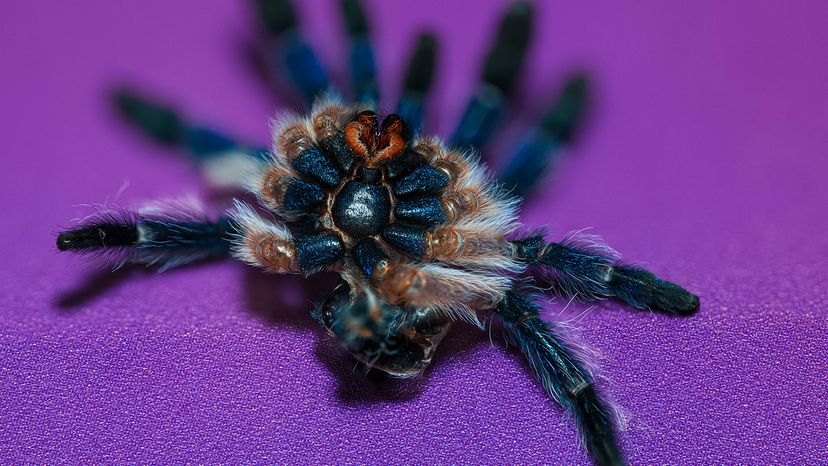
3. Indian Ornamental Tarantula

Indian Ornamental Tarantula
Indian ornamental tarantula. Michael McDonald / Getty Images

Don't let these beautiful spiders fool you. Poecilotheria metallica, found in southeastern India, combines electric blue coloring with a potentially painful bite.

The vivid appearance—used for camouflage among tree bark—stands out in the tarantula world, where most other species tend to show more earth tones.

Advertisement

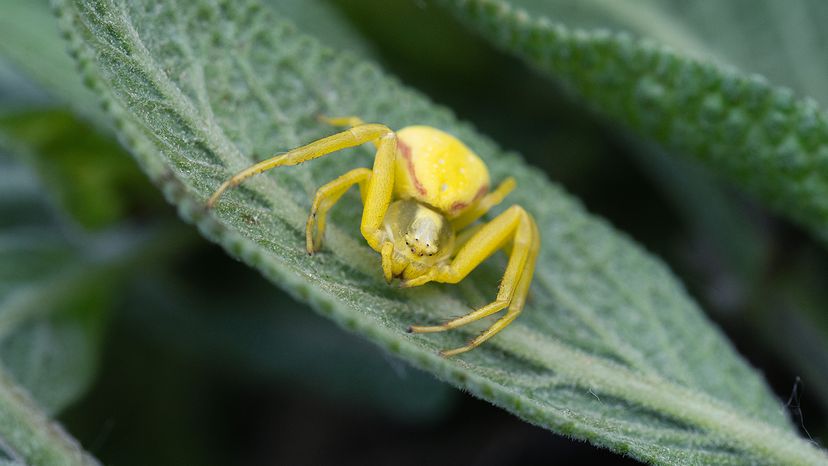
4. Crab Spider

Goldenrod crab spider
Goldenrod crab spider. TorriPhoto / Getty Images

The goldenrod crab spider (Misumena vatia) is a master of disguise.

Perched on bright yellow flowers like sunflowers or black-eyed Susans, it can shift its color to match the bloom. This lets it ambush unsuspecting insects that come looking for nectar, not a spider with a body length of up to 0.4 in (10 mm).

Advertisement

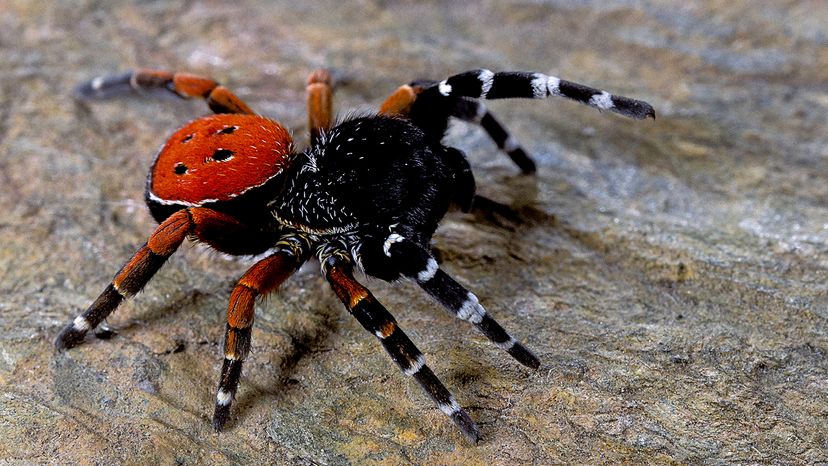
5. Ladybird Spider

ladybird spider
Ladybird spider. Paul Starosta / Getty Images

Once thought extinct in parts of Europe, the male ladybird spider (Eresus sandaliatus) rocks a red-and-black body that mimics a ladybug. Why? Probably to warn predators it may be venomous.

Though not aggressive toward humans, this spider's appearance sends a message: You'd better not eat me.

Advertisement

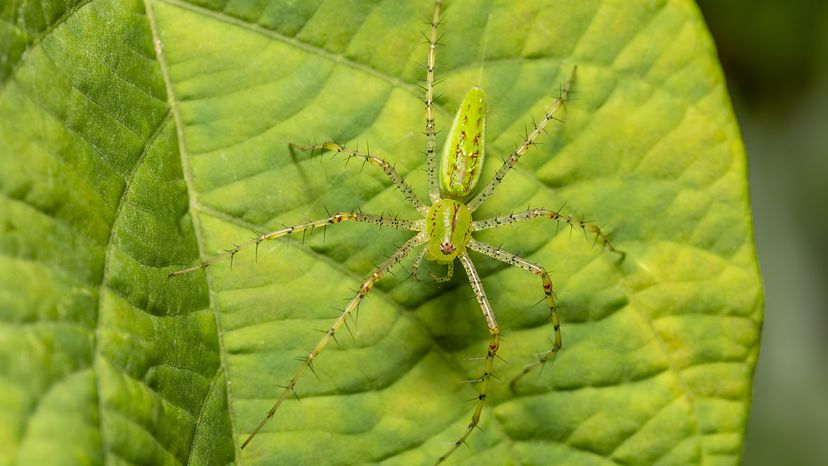
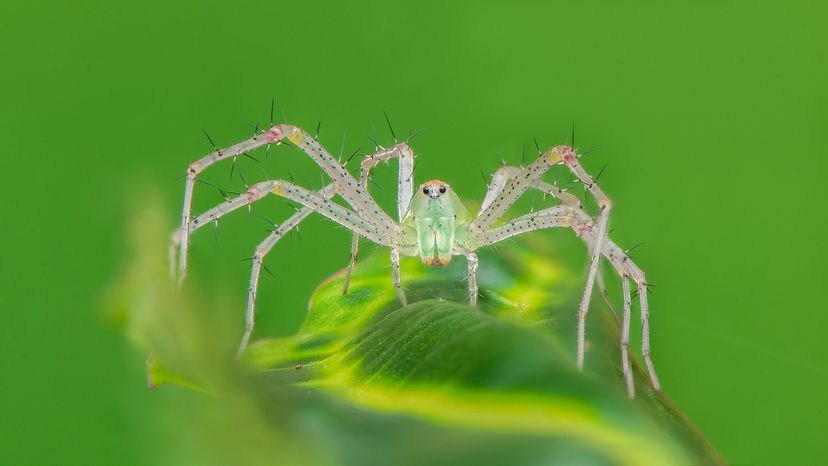
6. Green Lynx Spider

Green lynx spider
Green lynx spider. Artush / Shutterstock

True to its name, the green lynx spider (Peucetia viridans) blends into leaves and flowers, making it a lethal hunter. It’s bright green with translucent legs, often tinged in red or yellow.

Found in the southern U.S. and parts of Central America, it doesn’t spin webs to catch prey; it pounces.

Advertisement

7. Brazilian Jewel Tarantula

Brazilian jewel tarantula
Brazilian jewel tarantula. Logan Fair / Getty Images

First described in 1841, the Brazilian jewel tarantula (Typhochlaena seladonia) sports an iridescent exoskeleton with flashes of blue, pink and gold.

This arboreal spider lives in tree hollows, where it lines the space with silk. Its small size and stunning appearance make it a collector favorite.

Advertisement

8. Singapore Blue

This rare tarantula (Lampropelma violaceopes) lives in East Asia and stuns with cobalt blue legs and a deep golden body. Despite its color, it tends to stay hidden in tree cavities.

While its venom isn't deadly to humans, its aggressive nature and large size—up to 9-in (23-cm) leg span—make it one to watch from a distance.

Advertisement

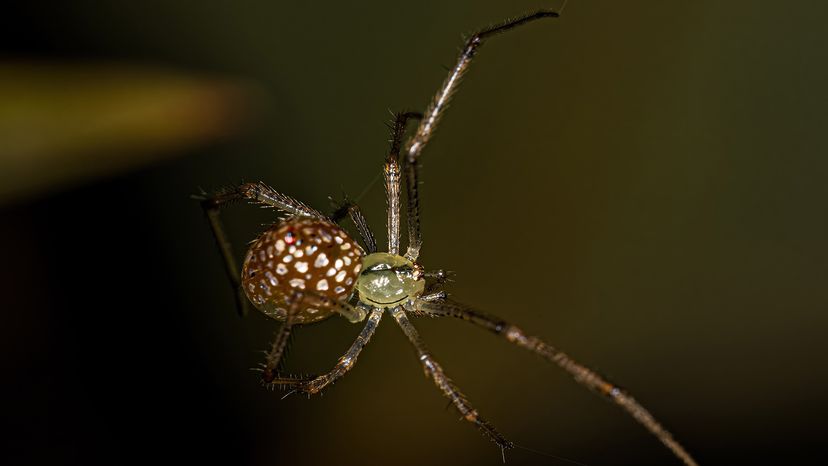
9. Mirror Spider

mirror spider
Mirror spider. Vinicius R. Souza / Shutterstock

Native to Australia, the mirror spider (Thwaitesia spp.) looks like it’s wearing disco balls on its back. Its abdomen features silvery patches that expand or shrink depending on stress levels.

These reflective spots help it vanish in plain sight: Light bounces off, making it blend into the environment.

Advertisement

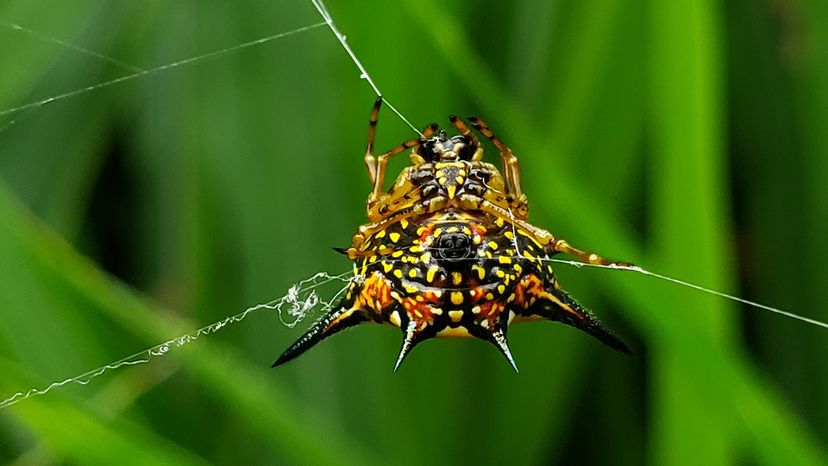
10. Spiny Orb-Weaver

Spiny orb-weaver
Spiny orb-weaver. Syawal art / Shutterstock

With a shape like a cartoon crab and a shell covered in spikes, the spiny orb-weaver (Gasteracantha spp.) doesn’t look like your average spider.

It comes in red, white, yellow and black, and builds its webs in gardens, forests and tree canopies. Its odd appearance is pure defense; predators see those spikes and look for lunch elsewhere.

We created this article in conjunction with AI technology, then made sure it was fact-checked and edited by a HowStuffWorks editor.

Advertisement

Loading...