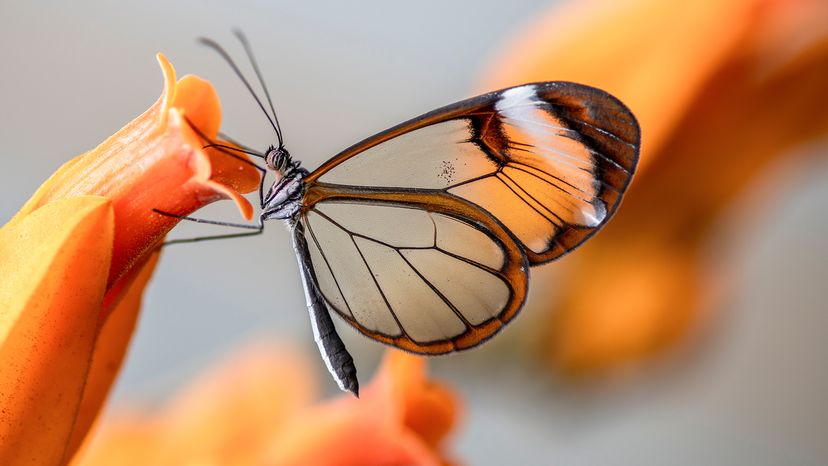
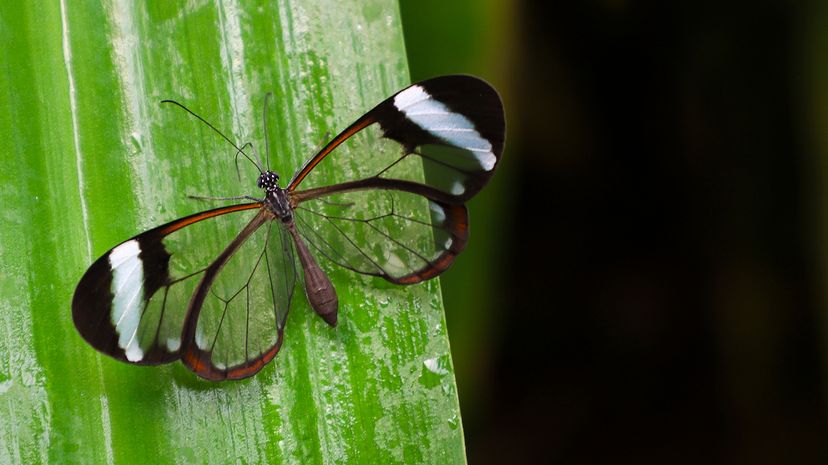
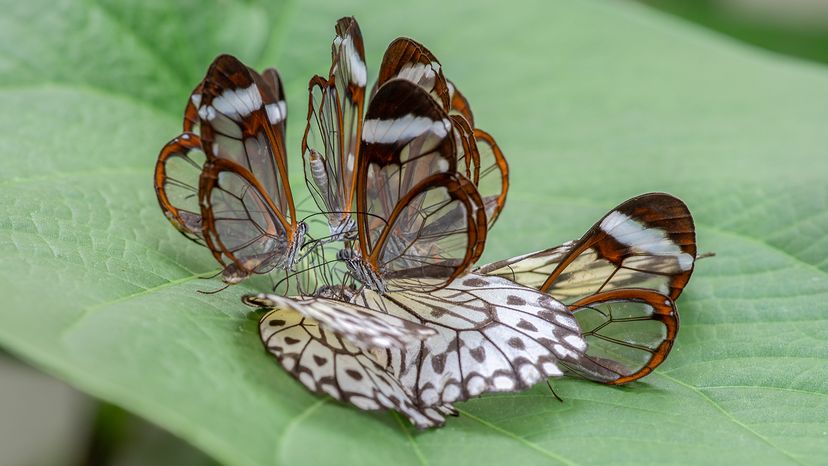
Glasswing butterflies go through the typical butterfly stages: egg, larva (caterpillar), pupa, and adult. The lifecycle begins when the mated female lays her eggs on plants of the nightshade family (genus Cestrum).
These plants, part of the toxic nightshade family, supply a chemical defense that carries through the butterfly's later life stages.
Both the caterpillar and the adult butterfly benefit from these toxins. The larvae are extremely reflective and have green bodies with bright purple and red stripes. They feed on host plants and store chemical extracts that make them distasteful to predators.
During pupation, a silk pad anchors the pupa. However, pupal attachment failure occurs occasionally, especially when the silk pad breaks due to disturbance. The pupa produces a hardened casing where metamorphosis continues until the adult butterfly emerges.