6 Green Butterfly Species Blending in With Their Environments

By: Nico Avelle  | 
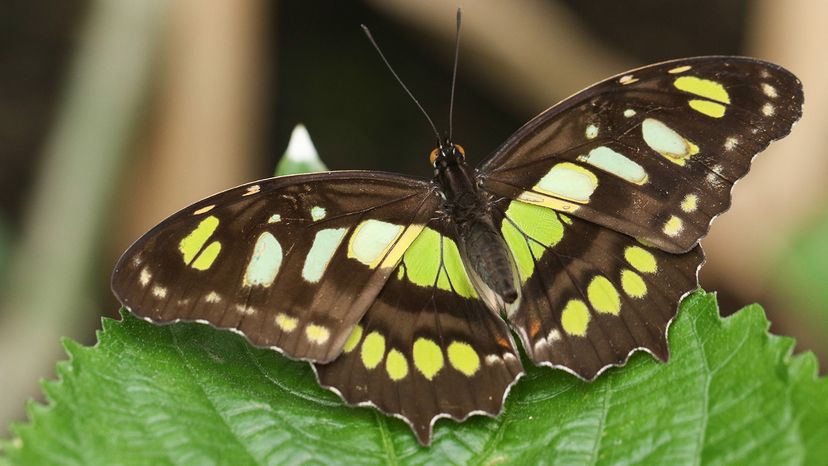
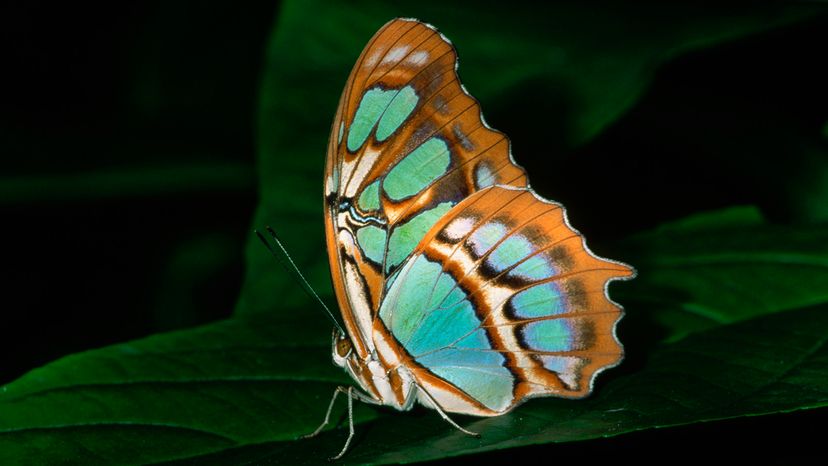
Malachite
This particular butterfly is named after a similarly colored mineral. George D. Lepp / Getty Images

When you think of butterflies, bold oranges or deep blues might come to mind. But some of the most striking species sport a different palette. A green butterfly turns heads with hues that blend into leaves, grass, and stems—perfect camouflage with a flash of surprise.

These bright-green wonders are more than just pretty wings. They’re pollinators, pioneers, and survival specialists.

Advertisement

Here's a look at some of the small but mighty species that carry their color with flair.
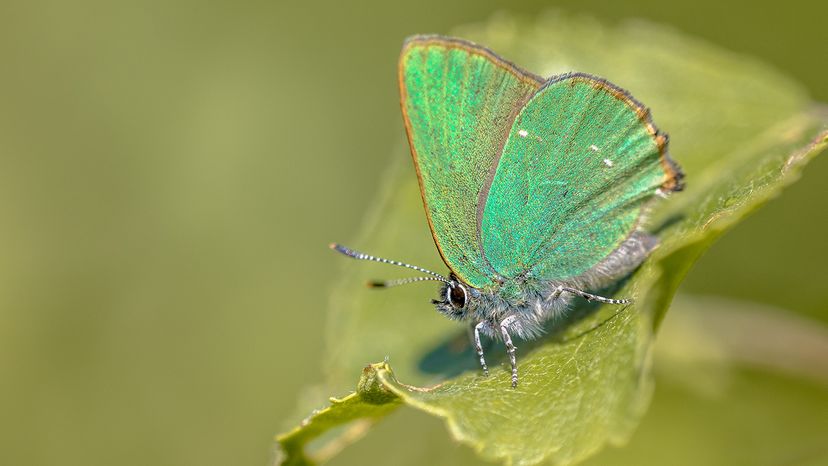
1. Green Hairstreak (Callophrys rubi)

Green hairstreak
Green hairstreak. Rudmer Zwerver / Shutterstock

Arguably the most well-known green butterfly in Europe, the green hairstreak has vivid green undersides that blend perfectly into plants. Its wings are brown on top, but you rarely see that side unless it flies. Males are territorial and easier to spot than the more secretive females.

You’ll find them in moorland, heathland, and grassy places across a widespread range from April to July, depending on location.

Advertisement

Their caterpillars feed on a wide variety of plants, from gorse to bird’s-foot trefoil. Eggs are laid singly, often near the tips of flower buds.

2. Green Comma

Though not always a full-on green, some populations of this comma butterfly display a greenish tinge on their wings, especially in shaded forests. The jagged edges of their wings and their bright-greenish undersides help them disappear into background foliage.

Found across North America’s boreal forests, they are typically active from April to June (a warmer time of year).

Advertisement

3. Malachite (Siproeta stelenes)

Malachite butterfly
Malachite butterfly. sandra standbridge / Getty Images

Found in Central and South America, it features bright green patches bordered by black. Its large wingspan and fluttering flight make it easy to spot in shaded forest clearings.

Named for its resemblance to the mineral, the malachite butterfly is a tropical standout. Females lay eggs on host plants like ruellia and acanthus.

Advertisement

4. Green Dragontail (Lamproptera meges)

This Southeast Asian species is a showstopper. It has long tails and clear wings with bright-green markings. Though small, its fast, darting flight pattern gives it an energetic presence.

Found in forested riverbanks, the males are often seen puddling (drawing nutrients from moist soil or sand).

Advertisement

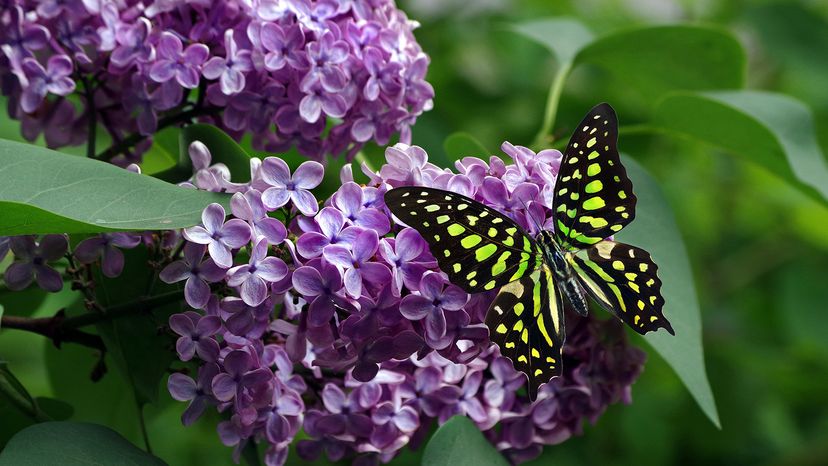
5. Tailed Jay (Graphium agamemnon)

Tailed Jay
Tailed Jay. OLEKSII KRIACHKO / Getty Images

With a lime-green pattern on black wings, this butterfly is both bold and beautiful. Common in parts of South and Southeast Asia, it feeds on nectar plants and is constantly on the move.

Caterpillars are often found munching on annonaceae plants, and adults continue to be active throughout the year in warmer climates.

Advertisement

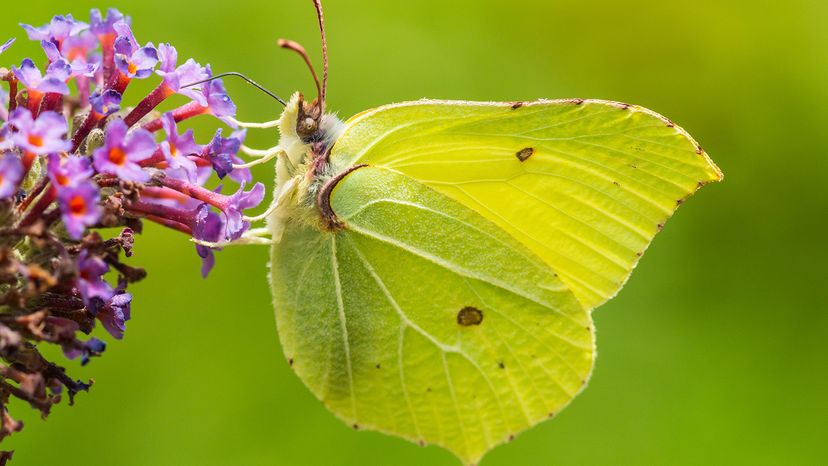
6. Brimstone (Gonepteryx rhamni)

Brimstone
Brimstone. Ian Grainger / Shutterstock

The Brimstone isn’t green in the classic sense, but its yellow-green wings help it disappear into leafy canopies.

Found across Europe and Asia, it's often one of the first butterflies to emerge in early spring, sometimes as early as April. Its caterpillars feed on buckthorn species.

Advertisement

2 Green Moths That Merit Mention

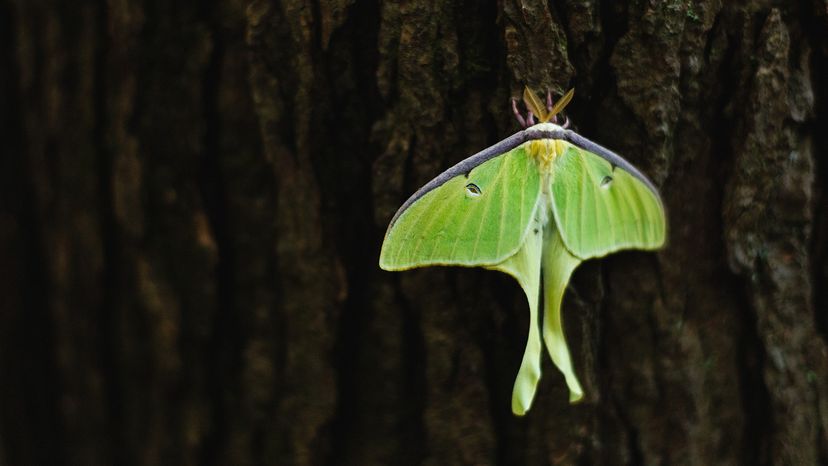
1. Luna Moth (Actias luna)

Luna Moth
Luna moth.
Logan Bush / Shutterstock

While technically a moth, the Luna’s pale green wings and long tails earn it a spot here. Native to North America, this nocturnal flier has translucent wings with eye spots that deter predators.

Females release pheromones at night to attract males, who can detect them from kilometers away.

Advertisement

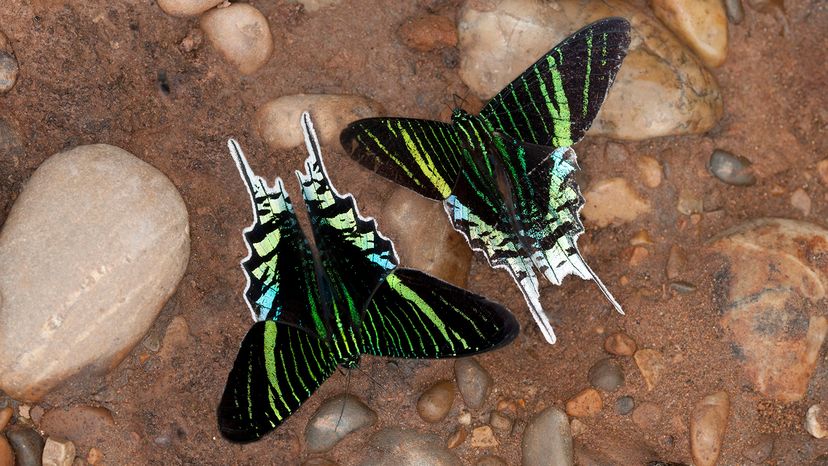
2. Green-banded Urania (Urania leilus)

Green-banded Urania
Green-banded urania.
Guenter Fischer / Getty Images/imageBROKER RF

This day-flying moth from South America features iridescent green bands across black wings. Found in rainforest regions, it migrates in large groups and plays a key role in pollinating tropical plants.

Though small in size, its collective movements are impossible to miss.

We created this article in conjunction with AI technology, then made sure it was fact-checked and edited by a HowStuffWorks editor.

Advertisement

Advertisement

Loading...