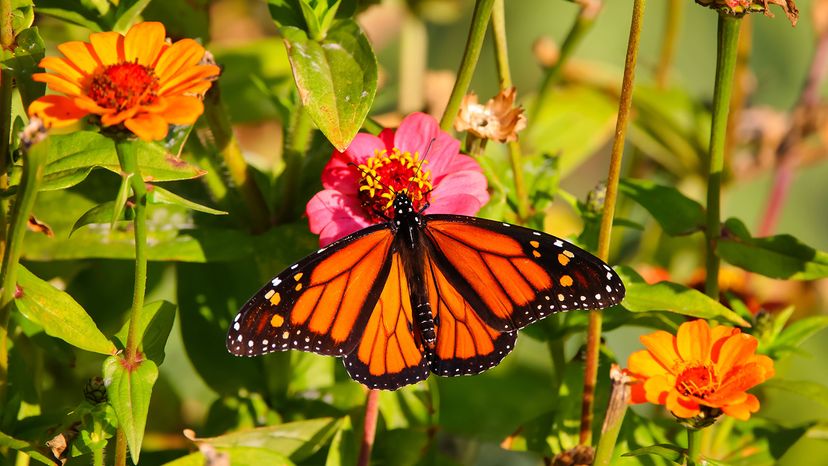
Eastern monarchs migrate all the way from Canada to Mexico. Wirestock Creators / Shutterstock
The monarch butterfly (Danaus plexippus) is one of the most iconic insects in the natural world.
Known for its bright orange wings, laced with black veins and bordered by a black edge dotted with white spots, this striking butterfly species has become a symbol of beauty and resilience across North America.
The monarch's life begins when monarchs lay eggs on milkweed plants, the only host plants monarch caterpillars eat.
After hatching, the monarch caterpillars feed exclusively on milkweed leaves before forming chrysalises. From there, an adult butterfly emerges, ready to feed on flower nectar and begin the cycle again.
Advertisement
Each year, multiple generations are born. The last generation of summer becomes the migratory generation, responsible for the legendary monarch migration southward.
These adult monarchs live far longer than earlier broods, storing energy for the long flight.
Advertisement
Monarch Migration
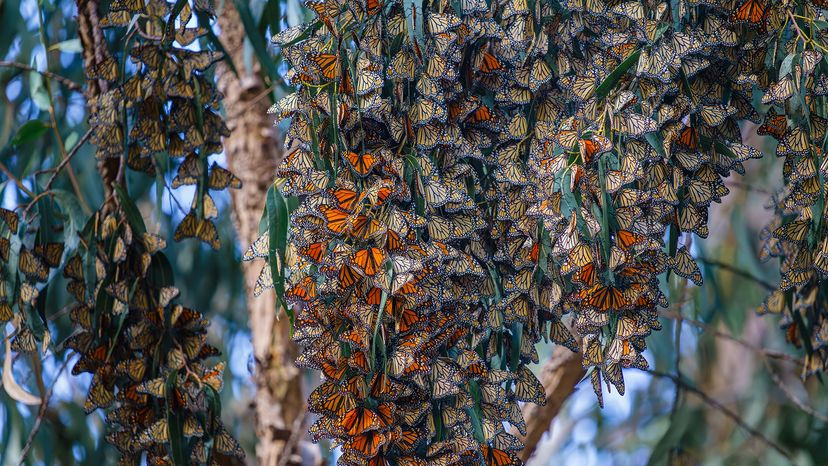
Take a closer look: Those aren't leaves. HannaTor / Shutterstock
Migratory monarchs undertake one of the longest insect migrations in the world. Eastern monarchs travel from southern Canada and the northeast United States all the way to central Mexico, where they cluster in mountain forests at high elevations.
These monarch overwintering sites provide the cool, moist climate monarchs need to survive the winter.
Advertisement
Western monarchs, meanwhile, migrate to coastal California—especially southern California—to find their own overwintering habitat. These two populations are separated by the Rocky Mountains, and each faces unique environmental threats.
In early March, as weather warms, the overwintering monarchs begin their spring migration northward. They reach breeding grounds in the central United States, where they lay their eggs and die.
Their offspring continue the journey, completing the cycle by the following spring.
Advertisement
Monarch Habitat and Challenges
Monarchs rely on a network of monarch waystations filled with milkweed species and nectar plants to rest and refuel.
Unfortunately, habitat destruction, illegal logging in Mexico, the spread of tropical milkweed, and climate change are threatening these butterflies.
Advertisement
The eastern monarch butterfly population and the western population have seen steep declines. The monarch population east of the Rockies is monitored closely, while the western population has reached record lows.
These declines have led to petitions to add monarchs to the Endangered Species Act, though their official conservation status is still under review by the Wildlife Service.
Advertisement
Why Monarchs Matter
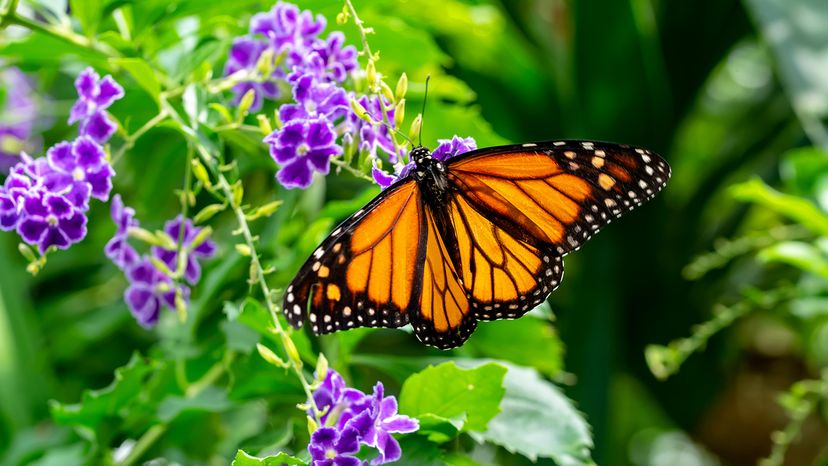
Adult monarchs feed on flower nectar. Darkdiamond67 / Shutterstock
Adult monarch butterflies and their larvae support ecosystems as other pollinators do. They also act as indicators of environmental health. From southern Canada to South America, monarchs inspire conservationists and educators alike.
Protecting monarch habitat, planting swamp milkweed and native milkweed species, and participating in citizen science are just a few ways to help monarchs face the challenges ahead.
Advertisement
We created this article in conjunction with AI technology, then made sure it was fact-checked and edited by a HowStuffWorks editor.
Cite This!
Please copy/paste the following text to properly cite this HowStuffWorks.com article: