The Morpho Butterfly: One of Few Species to Live Up to Its Hype

By: Nico Avelle  | 
Morpho
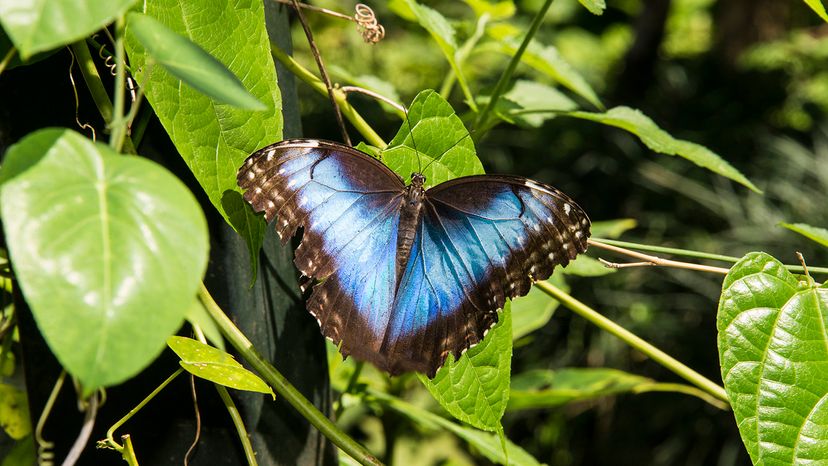
Many morpho butterflies are found primarily in South and Central America. Mark Newman / Getty Images

When people think of the tropics, they often imagine lush green forests, towering trees and flashes of color flitting between the leaves. One of the most iconic and dazzling sights in this landscape is the morpho butterfly, especially the brilliant blue morpho.

The blue morpho is more than a pretty face. Found across Central and South America, this neotropical butterfly belongs to the Morpho genus, a group known for its large size and iridescent wings.

Advertisement

These butterflies aren’t just popular in butterfly houses; their shimmering beauty attracts artists, scientists and nature lovers alike.
Why Is the Blue Morpho So Blue?

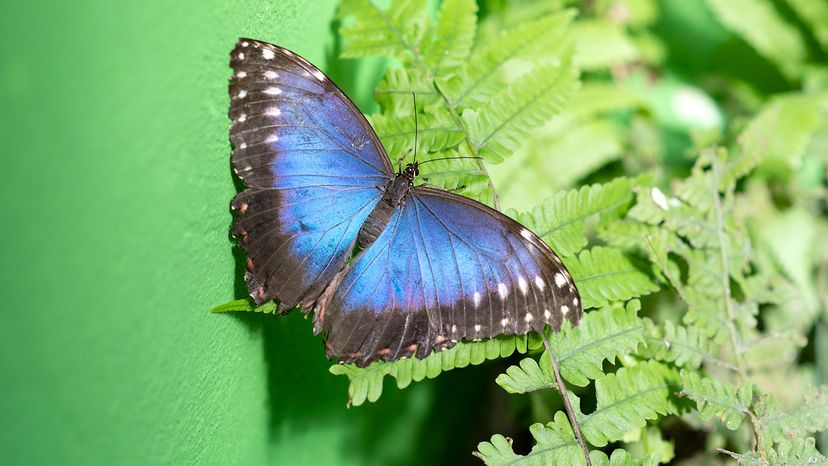
The blue color of morpho butterflies isn't pigment; it's physics.

Their wings reflect light due to microscopic scales that act like tiny mirrors, reflecting light to produce the brilliant blue color. This phenomenon, called structural color, makes their wings appear as shimmering light blue mirrors.

Advertisement

Under UV light, the iridescent effect is even more dramatic, allowing blue morphos to signal to each other for mating while staying unnoticed by predators such as birds.

Morphos have two fore wings and two hind wings. When their wings are folded, they blend into the forest floor thanks to dull brown undersides marked with eyespots that provide camouflage.

But when they fly, their bright blue wings flash in a bouncy flight pattern, confusing predators by appearing and disappearing with each beat.

Advertisement

Life Cycle of a Morpho Butterfly

Morpho butterfly
The blue morpho butterfly is a stunning sight to view in person. Miguel Sanz / Getty Images

The life cycle of this butterfly, like other species, begins with blue morpho eggs laid on host plants—typically those in the pea family. From there, they hatch into blue morpho caterpillars, which spend the larval stage eating constantly.

After forming a chrysalis, the adult butterfly emerges, ready for its short adult life of about a month. Most of this time is spent eating and reproducing.

Advertisement

Adults use their proboscis (a tube-like tongue) to sip fluids from rotting fruit, tree sap, and decomposing animals. Unlike many butterflies, adult blue morphos rarely visit flowers for nectar, relying instead on these other sources for sustenance.

Where to Find Blue Morphos in the Wild

Blue morphos thrive in the tropical forests of Central and South America, especially in countries like Costa Rica. They're among the largest butterflies in these regions, with an average wingspan of 4.7 to 7.9 in (12 to 20 cm).

You'll often spot adult morphos flying near the forest floor, especially along streams or sunny clearings. Their natural habitat is increasingly threatened by habitat fragmentation, which puts pressure on many morpho species.

Advertisement

Adaptations and Defenses

Blue Morpho Butterfly
Being able to go from a blue butterfly to a brown one with wings folded up enables morphos to thoroughly confuse predators. J.T. Lewis / Shutterstock

Adult morpho butterflies have several adaptations to survive their short but active adult life. In addition to their iridescent blue wings, they have two clubbed antennas for navigation, six legs for walking and clinging, and eyes capable of detecting polarized light.

Their beauty also comes with a cost: The bright color can attract predators. But it's not all bad news. The rapid flickering of iridescent blue and dull brown as they fly makes them difficult targets.

Advertisement

Some of the adult butterfly’s natural predators are birds and lizards, but morphos have evolved to outmaneuver many of them.

Morphos Beyond the Forest

Although their natural home is the tropical rainforest, morpho butterflies are popular attractions in butterfly houses around the world. Scientists even study their wings for potential applications in solar cells and anti-counterfeiting technologies.

Organizations like the Rainforest Alliance work to protect their habitat, while groups like the New York Entomological Society study their behavior and evolution.

Advertisement

We created this article in conjunction with AI technology, then made sure it was fact-checked and edited by a HowStuffWorks editor.

Advertisement

Loading...