The Mourning Cloak Butterfly Makes Unique Winter Appearances

By: Nico Avelle  | 
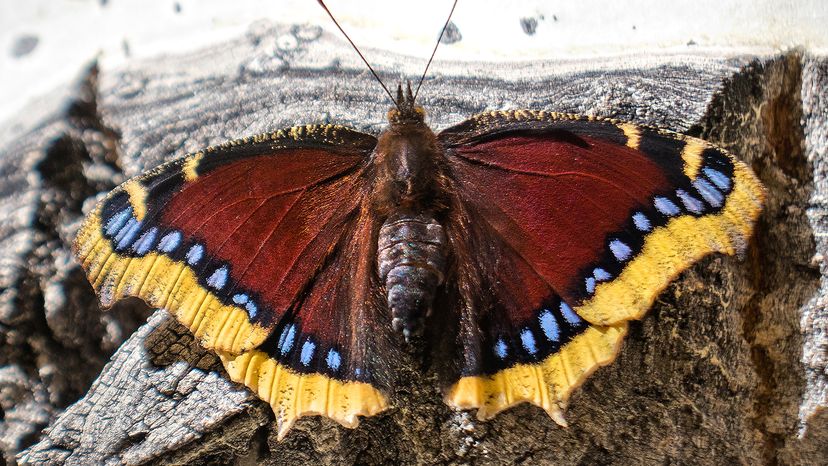
Morning cloaks are unique in that they don't rely on flowers for food. Valentina Gatewood / Getty Images

The mourning cloak butterfly might not win any contests for flashiest insect, but this species breaks the mold in some surprising ways.

With its dark red wings, yellow border, and bright blue spots, it's easily distinguishable from other butterflies. And unlike most of its kin, it thrives in cold climates and sticks around through the winter months.

Advertisement

You might spot one fluttering on a warm winter day when most insects are still in hiding. When temperatures rise just a few degrees, adult mourning cloaks wake up, stretch their legs, and start flying again—even if snow still covers the ground.
What Do Mourning Cloak Butterflies Look Like?

The mourning cloak, also known by its scientific name Nymphalis antiopa, belongs to the brush-footed butterflies family. Its wingspan stretches up to 4 in (10 cm), making it one of the larger species in its range.

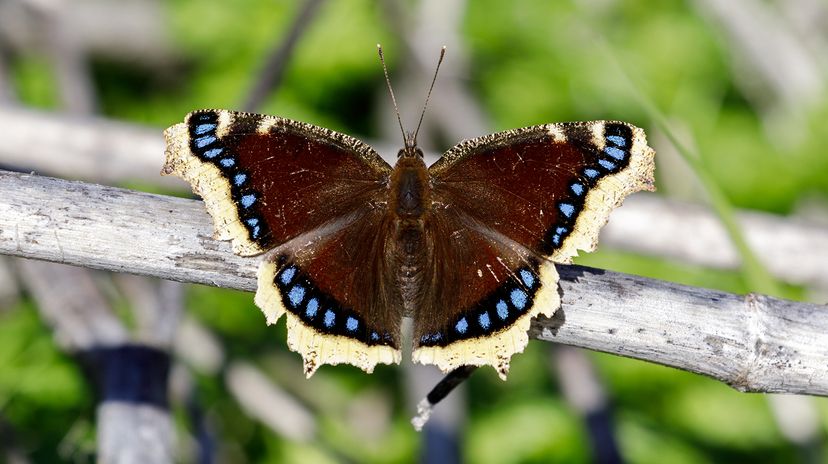
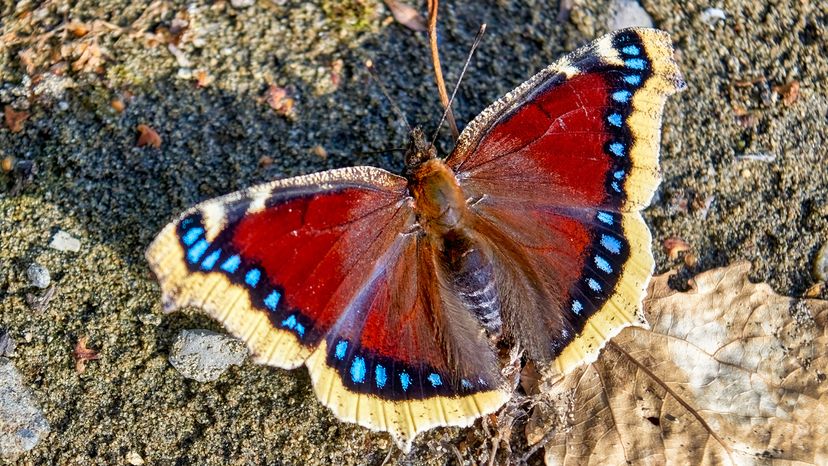
The upper side of its wings is dark red, bordered by a pale yellow band and lined with bright blue spots. The pale yellow band along the wing edges can fade to almost white as the butterfly ages. This cloak-like coloration is where the butterfly gets its name.

Advertisement

butterfly
You can tell this is an older mourning cloak butterfly by its faded and ragged wing edges.
yhelfman / Getty Images/iStockphoto

The underside is a mottled dark brown, helping it camouflage against tree bark and twigs. This cryptic appearance helps it evade predators such as birds, ants, and beetles.

Advertisement

Where Do Mourning Cloaks Live?

This butterfly can be found in North America and northern South America, as well as across Europe and Asia. In the United Kingdom, it goes by the name Camberwell beauty. It prefers open habitats including hardwood forests, parks, and areas with host trees like willow, elm, and cottonwood.

Mourning cloaks frequently use deciduous trees as host plants. Females lay clusters of eggs around the twigs of these trees in spring.

Advertisement

The eggs hatch into caterpillars (larvae) covered in black spines and white speckles. These larvae live communally in webs and feed on host plant leaves until they form chrysalises and metamorphose.

What Do Mourning Cloaks Eat?

butterfly
These adult butterflies hibernate through winter. Anatoliy Berislavskiy / Getty Images/iStockphoto

Unlike most butterflies, mourning cloaks don’t rely on flowers. Their main food source includes tree sap, rotting fruit, and even decaying organic matter. This allows them to be active in cooler months when nectar isn’t available.

You might see them feeding on fermented fruit in late summer and fall or sipping sap from tree wounds in early spring. Their preference for unusual foods allows them to thrive in places and seasons where other butterflies can’t survive.

Advertisement

How Do Mourning Cloaks Survive Winter?

Adult mourning cloaks are one of the few butterflies that hibernate through winter. Instead of migrating, they tuck into tree cavities, under loose bark, or sheltered places like buildings. Their cold-weather survival strategy gives them a head start in spring.

They often emerge on the first warm days of late winter or early spring—sometimes even during winter on unseasonably warm days. Their dark coloration helps them absorb sunlight and warm up quickly, making them some of the first butterflies to fly each year.

Advertisement

Life Cycle and Behavior

Mourning cloaks go through a complete metamorphosis: egg, larva, pupa, adult. Eggs are laid in rings and hatch in 10 to 14 days. The caterpillars feed for several weeks before forming chrysalises.

The larvae live in communal webs and feed together on host plants. After pupation, adult butterflies emerge and may live for up to 10 months—an unusually long lifespan among butterflies.

Advertisement

They mate in spring shortly after emerging from hibernation. Males are territorial and can often be seen patrolling sunny patches, waiting for females. Adults fly throughout summer and early fall before entering hibernation again.

What Makes Mourning Cloaks Unique?

The mourning cloak is one of the longest lived butterflies in North America. Its ability to hibernate, eat sap and fruit, and fly on warm winter days sets it apart from other species.

Its appearance, behavior, and lifecycle make it a truly unique butterfly. From their dark red wings edged in yellow to their brush-footed legs, mourning cloaks are built to endure. Their ability to exploit cold seasons gives them access to resources and habitats unavailable to most other butterflies.

Advertisement

We created this article in conjunction with AI technology, then made sure it was fact-checked and edited by a HowStuffWorks editor.

Advertisement

Loading...