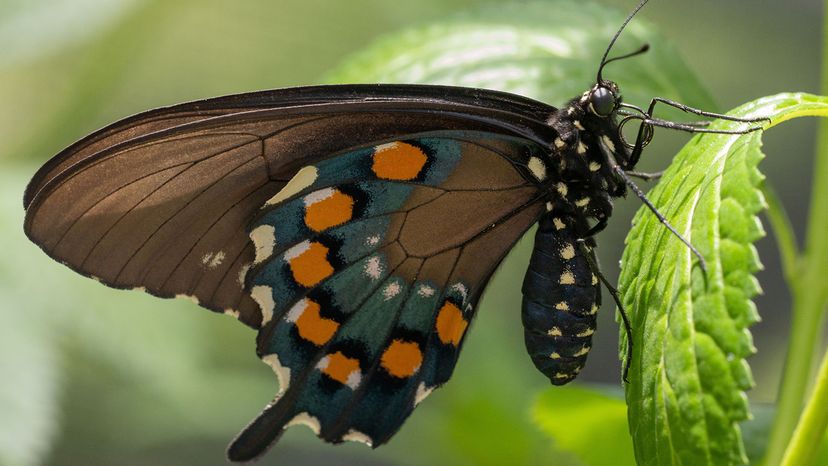
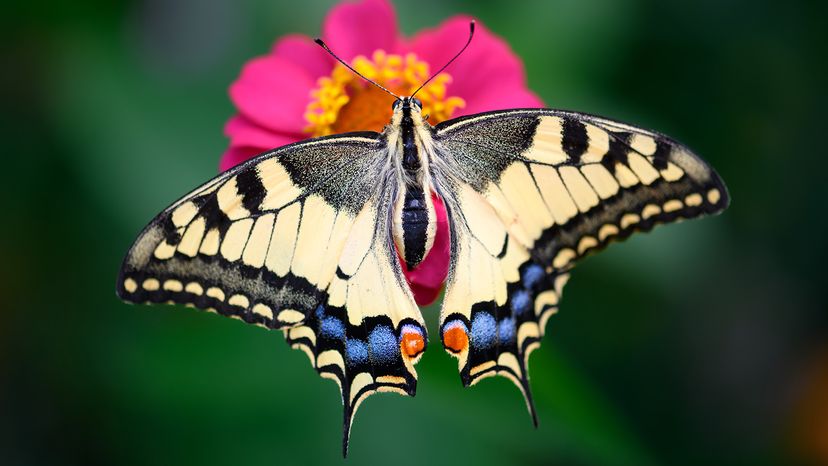
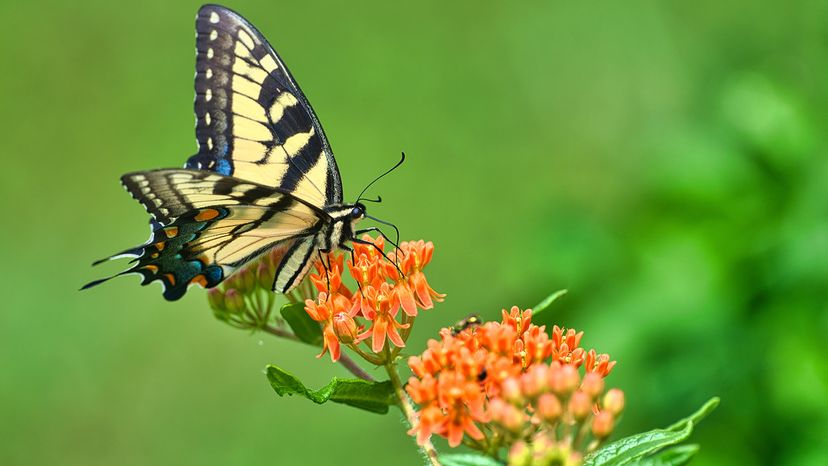
All around the world, swallowtail butterflies brighten skies while pollinating plants. Wirestock Creators / Shutterstock
Few insects are as eye-catching as the swallowtail butterfly. Known for their vibrant colors and uniquely shaped hind wings, swallowtails belong to the family Papilionidae and are found worldwide except in the Arctic regions.
These butterflies aren't just beautiful; they're essential to the ecology of forests, fields, and gardens.
With hundreds of swallowtail species worldwide, some of the most well-known include the:
Eastern tiger swallowtail (Papilio glaucus)
Black swallowtail (Papilio polyxenes)
Spicebush swallowtail (Papilio troilus)
Pipevine swallowtail (Battus philenor)
Each has its own range of color pattern, preferred habitat, and host plants for its caterpillars.
Advertisement
Swallowtails often use Batesian mimicry, with nontoxic species like the spicebush swallowtail evolving to resemble the toxic pipevine swallowtail. This mimicry protects them from predators who learn to avoid anything with their distinctive markings.
Advertisement
Life Cycle and Larval Host Plants
Certain swallowtail butterflies only lay their eggs on certain plants. Smit / Shutterstock
Swallowtail butterflies begin life as tiny eggs laid on specific larval host plants.
For the eastern swallowtail caterpillar, the tulip tree and wild cherry are common choices.
Black swallowtail larvae prefer plants in the carrot family, such as dill, fennel, and Queen Anne's lace.
Other species like Papilio cresphontes use citrus trees.
When the eggs hatch, the caterpillars feed on the host plant, sometimes camouflaging themselves with patterns that mimic bird droppings or feature a white saddle.
Advertisement
After several molts, they enter the pupal stage, forming a chrysalis attached to a plant stem. In this stage, they transform into adult butterflies.
Advertisement
Adult Behavior and Appearance
Adult swallowtails feed on nectar from plants like milkweed, Joe Pye weed, and Verbena bonariensis. Male butterflies often patrol for mates or participate in "puddling," where they sip minerals from damp soil.
Female butterflies lay eggs on suitable host plants and may have different color forms, like the dark form of the female tiger swallowtail butterfly.
Advertisement
Regional and Endangered Species
The eastern tiger swallowtail is the state butterfly of Alabama, Delaware, Georgia, and South Carolina. Wirestock Creators / Shutterstock
Some swallowtail species are regional specialties. The eastern tiger swallowtail is the state butterfly of several U.S. states.
The Richmond birdwing, native to Australia, is listed as a vulnerable species and survives only in a few remaining habitat pockets. In Europe, the Parnassius apollo is another threatened swallowtail, relying on alpine habitats.
Advertisement
Swallowtails, from the common butterfly in your backyard to the rare and elusive species in dense forests, are key pollinators and indicators of a healthy environment. Protecting their habitats and host plants ensures these fluttering wonders remain part of our world.
We created this article in conjunction with AI technology, then made sure it was fact-checked and edited by a HowStuffWorks editor.
Advertisement
Cite This!
Please copy/paste the following text to properly cite this HowStuffWorks.com article: