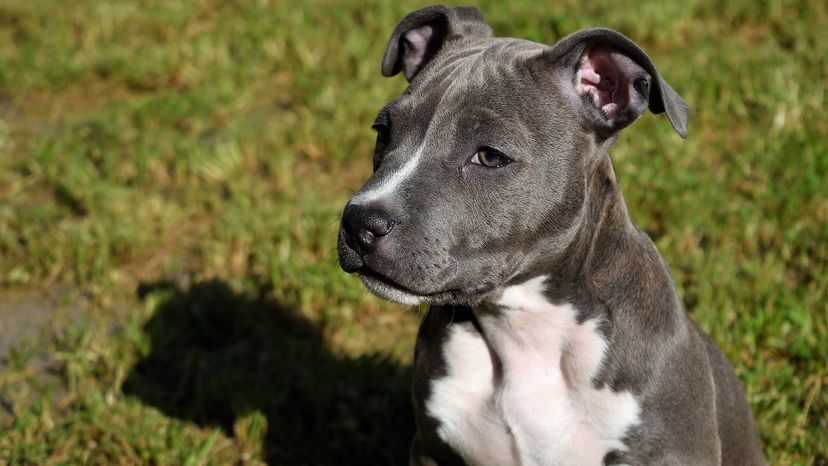
American Staffordshire Terrier vs. Pitbull

By: Nico Avelle  | 
American staffordshire terrier
In the early 20th century, the AKC decided not to register the American Pit Bull Terrier under that name due to its association with dog fighting. But there's so much more to these loving dogs than their history. esoxx / Shutterstock

When talking about muscular, blocky-headed dogs with a strong jaw and loyal nature, the American Staffordshire Terrier vs. pitbull comparison often comes up. Are they the same breed or different?

The answer is a little of both, depending on which kennel club you ask and what traits you’re comparing.

Advertisement

Both dogs descend from 19th-century bull and terrier crosses originally bred in England for bull baiting and dog fighting—brutal blood sports that shaped their tough appearance and energetic temperament. Today, however, these breeds are more like misunderstood pets than aggressive dogs.


Shared Origins, Split Recognition

American Pit Bull Terrier
American Pit Bull Terriers have very short fur and relatively low body fat. NDanko / Shutterstock

The American Pit Bull Terrier and American Staffordshire Terrier come from the same roots. They were imported to the U.S. in the 1800s, where breeders began selecting for different traits.

In the early 20th century, the American Kennel Club (AKC) decided not to register the American Pit Bull Terrier under that name due to its association with dog fighting.

Advertisement

Instead, in the 1930s, the AKC added a similar dog breed to its registry as the American Staffordshire Terrier, refining the breed standard to favor show traits over gameness.

Meanwhile, the United Kennel Club (UKC) and the American Dog Breeders Association continued to recognize the American Pit Bull Terrier as a separate breed.

Advertisement

3 Key Differences and Breed Standards

  1. Size: American Staffordshire Terriers tend to be slightly heavier and stockier than American Pitbull Terriers.
  2. Breed standards: The AKC’s standards for the American Staffordshire Terrier are stricter and more uniform, while Pit Bulls (as recognized by the UKC) show more variation.
  3. Appearance: Both have a short coat and a muscular, compact build. The differences are subtle and often hard to detect unless you’re familiar with the specific traits of each breed.

Other breeds like the Staffordshire Bull Terrier and Bull Terrier are often lumped into the "pit bull" category, though they are separate breeds with their own unique standards.

Advertisement

Behavior and Temperament

Pit Bull Terrier
What matters is how a dog is raised, not the name of its breed. Olya Komarova / Shutterstock

Despite an unfair reputation as an aggressive breed, both dogs can be affectionate, loyal, and great with families—if properly trained and socialized. Early socialization and consistent training are crucial to prevent fear-based aggression or reactivity.

These terrier breeds are energetic and may not do well in apartment living unless they get regular exercise. They’re not ideal for long periods of isolation, as boredom can lead to destructive behavior.

Advertisement

They generally get along with other pets if raised together, but introductions should be supervised, especially with other dogs.

Health and Life Expectancy

Both breeds are prone to similar health issues, including elbow dysplasia and weight gain. Regular vet checkups and a balanced diet help extend their life expectancy, which typically ranges from 12 to 16 years.

Their short coat is fairly easy to maintain, requiring minimal grooming. However, they should be kept indoors during extreme weather due to their low body fat and short fur.

Advertisement

Choosing the Right Dog for You

If you're considering a new dog and torn between these two breeds, the major difference comes down to registration, show standards, and sometimes size. For families willing to put in the time for training and socialization, either dog can make a loving, loyal companion.

Whether labeled a staffy, pitbull, or just a good dog, what matters most is how they're raised, not what they're called.

Advertisement

We created this article in conjunction with AI technology, then made sure it was fact-checked and edited by a HowStuffWorks editor.

Advertisement

Loading...