Can Cats Eat Apples? A Note on Cyanide in Apple Seeds

By: Nico Avelle  | 
Cat with apple
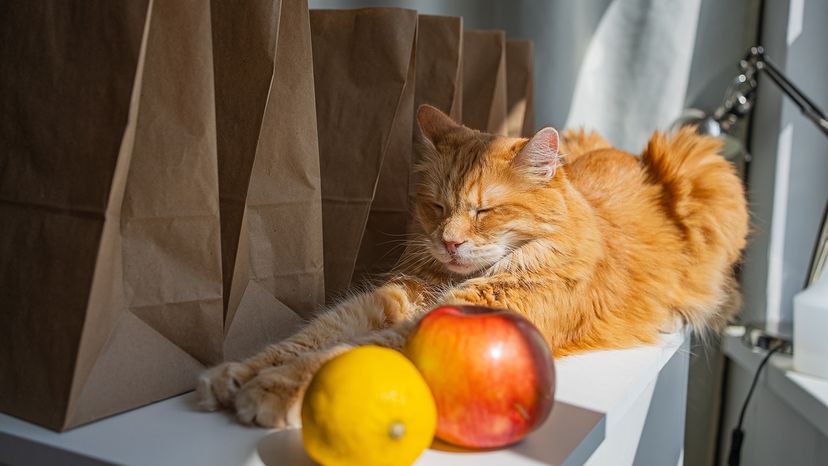
This cat is trying to put on a good while posing with an apple, but even he knows that this isn't a match made in heaven. Wirestock Creators / Shutterstock

If your feline friend seems curious about your fruit bowl, you might wonder, can cats eat apples? The short answer: Yes, but only in moderation and with some important caveats.

While apples are generally safe for cats, they aren’t essential to a cat's diet. Cats are obligate carnivores, meaning they rely on animal products to get all the nutrients they need.

Advertisement

That means fruit, including apples, should only be an occasional treat—not a dietary staple.
The Safe Way to Feed Apples

If you want to feed apples to your cat, stick to small pieces of fresh fruit.

Only offer the apple flesh and make sure it’s free from seeds, which contain cyanide and are toxic to cats. Avoid the core, stems, and any parts that are hard to chew or digest.

Advertisement

Cooked apples without added sugar or spices can also be offered in tiny amounts. A sliver of plain baked apple or pureed apple with no added ingredients is safe for most cats.

Watch Out for Too Much Sugar

Cats lack the functional sweet taste receptors that humans have, so they don’t enjoy the sugary flavor of fruit the way we do. But they can still ingest too much sugar from fruit like apples.

Feeding too much apple can upset your cat's stomach and potentially contribute to feline diabetes or obesity over time.

Advertisement

Even though apples contain some vitamin C and dietary fiber, those benefits don’t outweigh the risks of excessive sugar. Cats don’t process fruit sugars well, and their digestive systems are better suited to meat-based nutrients. Plus, they make their own vitamin C, so they don't need to get it from fruit.

Apple Products to Avoid

Person holding apple pie
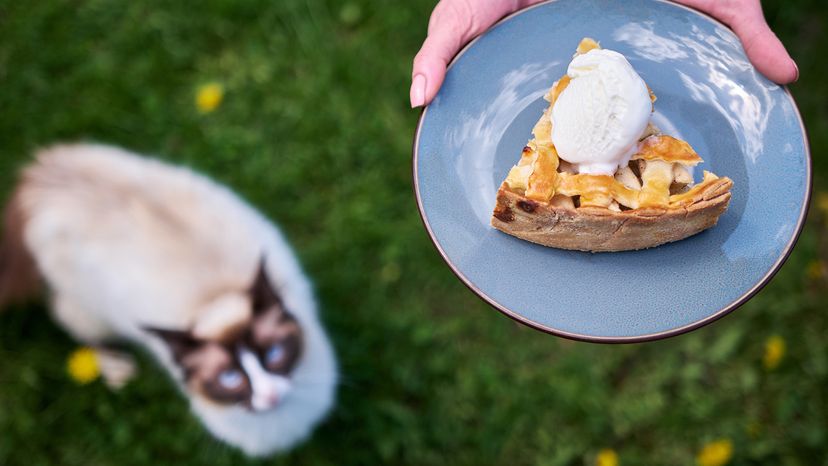
This apple pie will probably give that cat an upset stomach. RESTOCK images / Shutterstock

Pet parents should steer clear of apple pie, dried apples, and applesauce with added sugar or spices. These human foods often contain other ingredients that are bad for cats.

The same goes for apple juice, which has too much sugar and little fiber.

Advertisement

Unsweetened homemade applesauce or cooked apples might be okay in a pinch, but only in small quantities. Always read labels and avoid any added sugar, cinnamon, nutmeg, or other spices that can cause digestive issues.

Apples in a Balanced Diet

Feeding fruit should never replace animal-based cat food. Apples are a treat, not a source of essential nutrients. Too much apple can crowd out other foods that provide the amino acids, protein, and vitamins cats need for strong muscle function and a healthy immune system.

If you're introducing apples as a new food, start with a small bite and watch for signs of stomach upset. Vomiting, diarrhea, or changes in behavior could mean your cat isn’t tolerating it well. When in doubt, skip it.

Advertisement

5 Key Takeaways

Cat with fruit
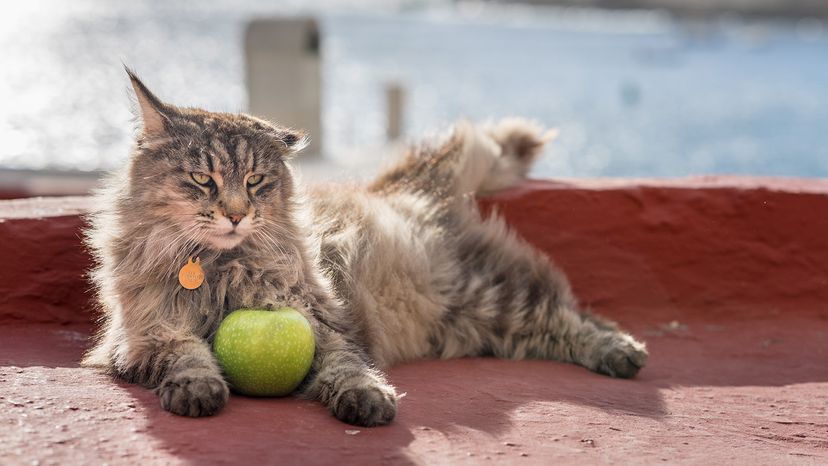
The good news is that most cats won't eat fruit on their own. ShishkinStudio / Shutterstock
  1. Apples are generally safe for cats if peeled, seeded, and served in small amounts.
  2. Cats are obligate carnivores and get their nutrition from meat, not fruit.
  3. Avoid apple seeds, cores, apple pie, apple juice, and anything with added sugar or spices.
  4. Apples should never be a regular part of your cat’s diet.
  5. When feeding new foods, monitor your cat for any signs of digestive issues.

A small slice of apple once in a while won’t hurt most cats, but don’t rely on it for health benefits. A cat’s nutrition is best supported by high-quality meat protein and a vet-approved balanced diet.

We created this article in conjunction with AI technology, then made sure it was fact-checked and edited by a HowStuffWorks editor.

Advertisement

Advertisement

Loading...