
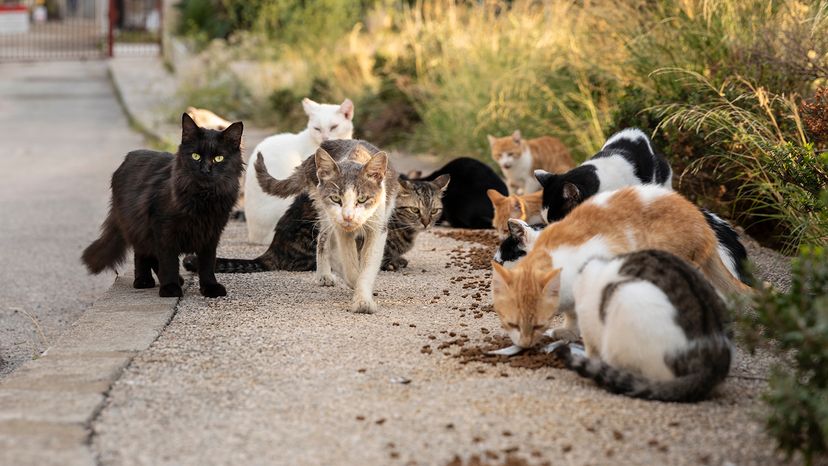
You may have seen them slinking through alleyways or sunbathing in barns. But when they gather, what is a group of wild cats called?
The answer, like cats themselves, is a little mysterious and more than a little charming.
Advertisement
You may have seen them slinking through alleyways or sunbathing in barns. But when they gather, what is a group of wild cats called?
The answer, like cats themselves, is a little mysterious and more than a little charming.
Advertisement
The most commonly accepted term for a group of feral cats is a colony. This word refers to a group of three or more cats living or moving together.
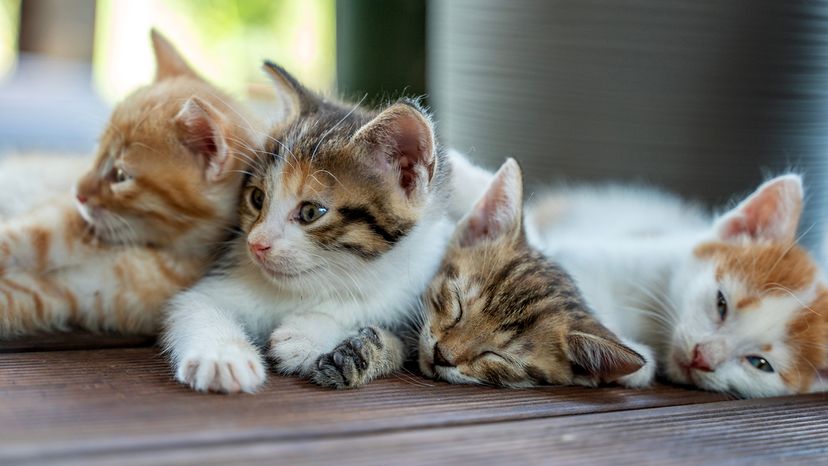
Groups of domestic cats, however, are called clowders. A group of young cats or kittens is a litter.
Advertisement
Feral cats are domestic cats that have adapted to life in the wild. They often live in feral cat colonies, usually near consistent food sources or shelter like barns filled with hay.
Unlike indoor cats—or even outdoor cats with homes—feral cats avoid humans and form groups for safety and reproduction.
Advertisement
Each cat colony has its own structure. Female cats often stay close to the same colony, while male cats roam more. Cat parents in these stray cat colonies teach young kittens how to hunt and avoid threats.
Food bowls and private spaces (like climbing spaces or sheltered corners) become vital territory markers.
Advertisement
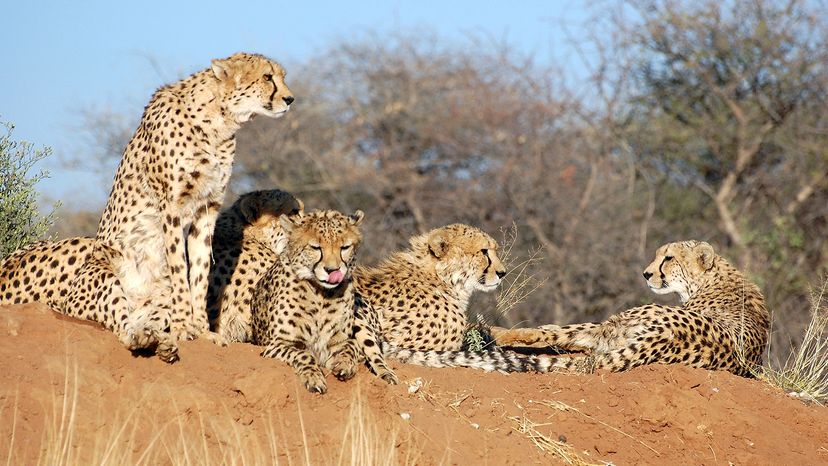
If you’re thinking of wild big cats—like lions or tigers—the group names change. A group of lions is called a "pride," while tigers don’t often form groups in the wild.
Most big cats are typically solitary by nature; tigers rarely group at all. In the rare cases when such big cats band together, biologists use specific terms. For instance, a small group of male cheetahs is known as a coalition
Advertisement
Beyond "clowder," collective nouns for cats include some delightfully strange entries. A group of cats can also be called a "glaring"—especially when they stare fiercely at other cats (or a dinner plate).
Feral cats called together in groups are also occasionally described as a "destruction," which makes a bit more sense if you’ve ever seen them knock things off counters or fight over food.
Advertisement
According to etymology experts, these collective nouns reflect how cats behave: independent, territorial, and social only on their own terms.
We created this article in conjunction with AI technology, then made sure it was fact-checked and edited by a HowStuffWorks editor.
Advertisement
Please copy/paste the following text to properly cite this HowStuffWorks.com article:
Advertisement