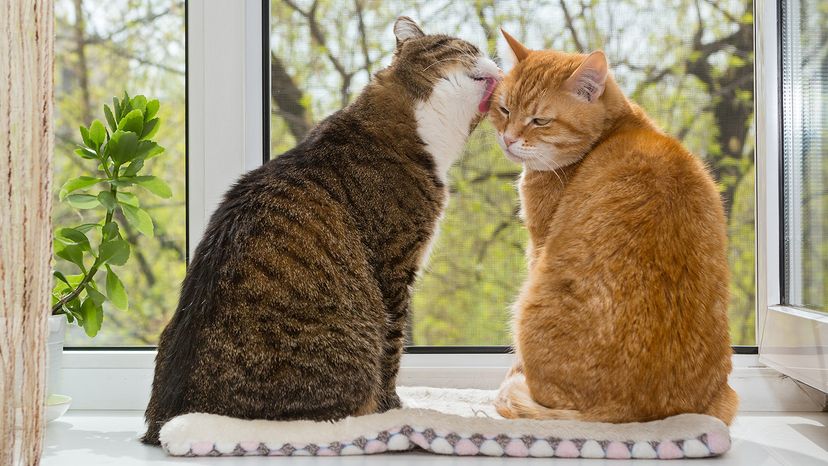
The cat doing the licking looks content. The other cat? We're not so sure. Okssi / Shutterstock
If you live with more than one cat, you've probably noticed one cat licking the other, sometimes for minutes at a time. If you’ve ever wondered, "Why do cats lick each other?" the answer lies in both biology and feline psychology.
This grooming behavior, known as allogrooming, is perfectly normal and deeply rooted in the feline world. It serves multiple purposes, from removing dirt and loose hair to forming bonds and even showing dominance.
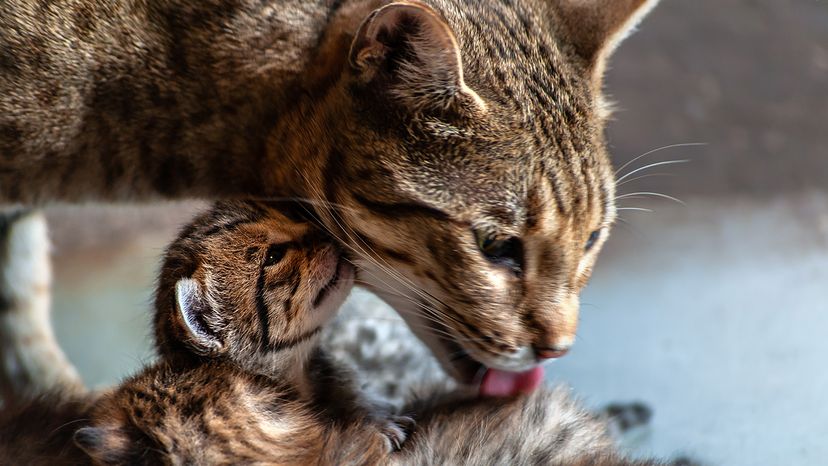
Mama cats show affection and care by licking their kittens from Day 1. Denys R / Shutterstock
Grooming begins at birth. A mother cat licks her kittens to clean them and stimulate their bodies. That early care wires kittens to associate grooming with safety, affection and attention.
As cats grow, they often repeat this behavior with a furry friend—especially one they trust.
Advertisement
Mutual Grooming Helps With Bonding
When two cats lick each other, they’re not just cleaning up fur. Mutual grooming helps build social bonds. This kind of licking is part of a normal cat's behavior and a clear indicator that your cats love and trust each other.
Most often, one cat focuses on another cat's head, ears and neck—places that are hard to reach solo. Indoor cats that spend a lot of time together often form strong attachments and use allogrooming to show it.
Advertisement
Flexing Dominance
In some cases, grooming has less to do with affection and more to do with power dynamics. The higher-ranking or more confident cat may initiate the grooming, while the lower-ranking cat submits to it.
So, if your cats fight and the older cat always grooms the younger one, it might be asserting its status as the dominant cat.
Advertisement
Sometimes, licking transitions into biting or a playful fight. This shift isn’t always aggression. In fact, play fighting is a normal part of feline relationships. However, if the biting becomes intense or causes stress, it could indicate a real fight rather than friendly roughhousing.
It’s Also About Health
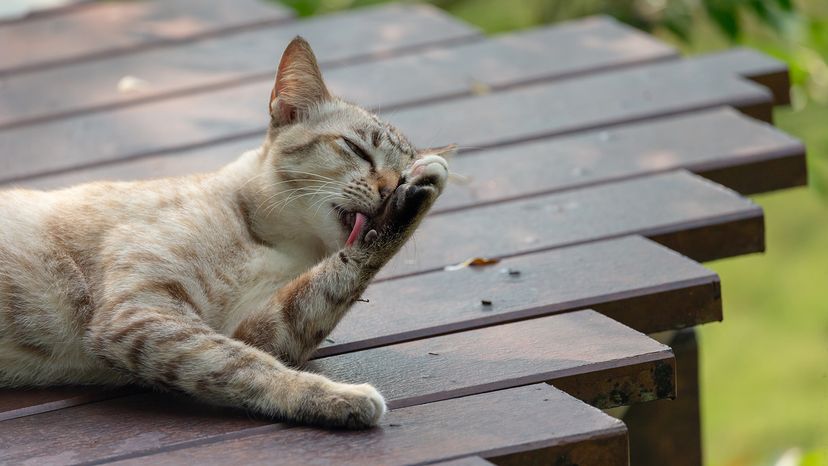
Cats lick themselves for cleanliness—and sometimes for stress relief. The Five Aggregates / Shutterstock
Cats groom themselves to stay clean and regulate body temperature. Mutual grooming expands that mission. It helps remove loose fur, dirt and even insects from places a cat can’t easily reach. The cat's tongue, with its tiny hook-like structures, is ideal for this job.
Excessively grooming or licking could point to stress or a medical issue, though. If your feline friend is constantly licking another or themselves, it might be worth a vet visit or the use of calming diffusers to reduce anxiety.
Advertisement
When cats groom each other, they’re displaying complex, layered behavior that signals trust, affection and sometimes even mild tension. Overall, it’s a good sign for their well-being and social bonding.
We created this article in conjunction with AI technology, then made sure it was fact-checked and edited by a HowStuffWorks editor.
Advertisement
Cite This!
Please copy/paste the following text to properly cite this HowStuffWorks.com article: