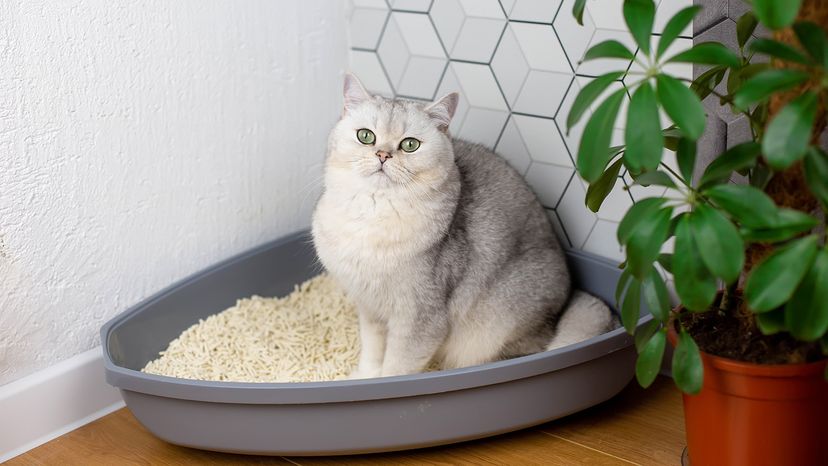
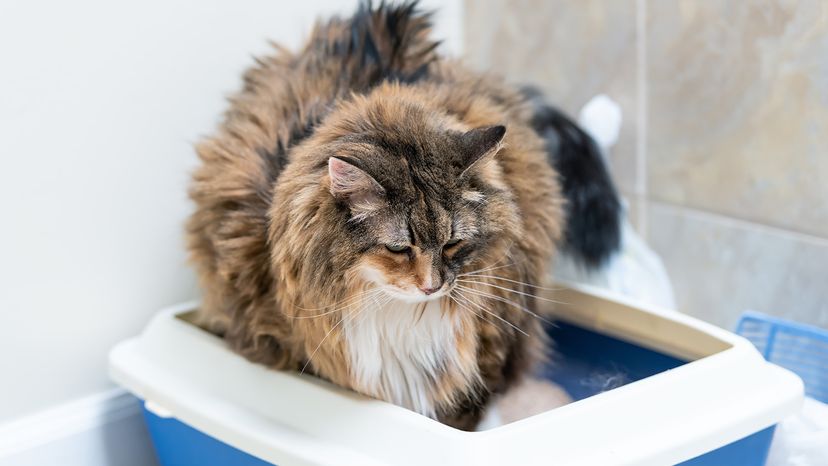
When it comes to the litter box, cats can demonstrate some perplexing behavior. Natasha Zakharova / Shutterstock
If you’ve walked in to find your cat laying in the litter box, you’re not alone—and you're probably wondering why.
The behavior may seem odd, but the question "why is my cat laying in the litter box" has several possible answers, ranging from quirky habits to serious health concerns.
Advertisement
Understanding your cat's environment, medical history, and recent changes is key to figuring out what’s going on.
Many cats are drawn to enclosed spaces because they make them feel safe, and a covered litter box can serve as a comforting hideaway when a cat feels stressed. In multi-cat households or multi-pet households, a cat may start lying in the litter to claim territory or avoid other animals.
In a new or unfamiliar environment, the litter tray may be the only space that smells like home territory. Kittens and new cats often spend significant time there until they find other comfortable resting spots.
Advertisement
Loud noises or the presence of new pets can also make a cat feel threatened, causing them to retreat to a secluded area like the litter box.
Medical Issues to Rule Out
When a cat spends time in the litter box without actively using it, something's amiss. Andriy Blokhin / Shutterstock
If your cat is spending an unusually long time in the litter box and also shows signs such as excessive licking of the genital area, loss of appetite, or crying out while trying to urinate, it could indicate an underlying health issue.
Urinary tract infections or other urinary problems can make cats feel a frequent urge to go, while digestive troubles or painful arthritis can cause them to linger in the litter box longer than usual instead of leaving immediately.
Advertisement
Basically, cats with urinary problems may associate the box with relief or may not want to stray far if they’re feeling unwell.
Older cats or those with chronic conditions might rest there due to discomfort or confusion. If this behavior persists or is accompanied by physical symptoms, a vet visit is the best course of action.
Advertisement
Behavioral or Territorial Reasons
Laying in the litter box can also reflect behavioral changes. In multi-cat or multi-pet households, territorial behavior can cause one cat to claim the litter box, especially if they feel their space is being invaded.
Changes in the household—like moving, a new baby, or a new dog—can trigger stress. Cats might seek out the litter box as a familiar, solitary space. Litter box habits often shift in response to environmental changes, even if they seem unrelated at first.
Advertisement
What You Can Do
Some cats just want some personal space. Ground Picture / Shutterstock
Observe closely: Note how long your cat stays in the box and whether they show other signs of illness or distress.
Check for health concerns: Monitor for urinary tract issues, mobility problems, gastrointestinal symptoms, or other signs that your cat's health might not be 100 percent.
Improve the environment: Ensure your cat has multiple comfortable resting spots in different locations.
Avoid crowding: In homes with multiple cats, provide extra litter boxes and keep them clean.
Visit the veterinarian: If behavior persists or you notice other concerning symptoms, consult your vet immediately.
Cats can be masters of quirky behaviors, but a cat sleeping in the litter or spending excessive time there often points to underlying issues—either in their health or their home life.
We created this article in conjunction with AI technology, then made sure it was fact-checked and edited by a HowStuffWorks editor.
Advertisement
Cite This!
Please copy/paste the following text to properly cite this HowStuffWorks.com article: