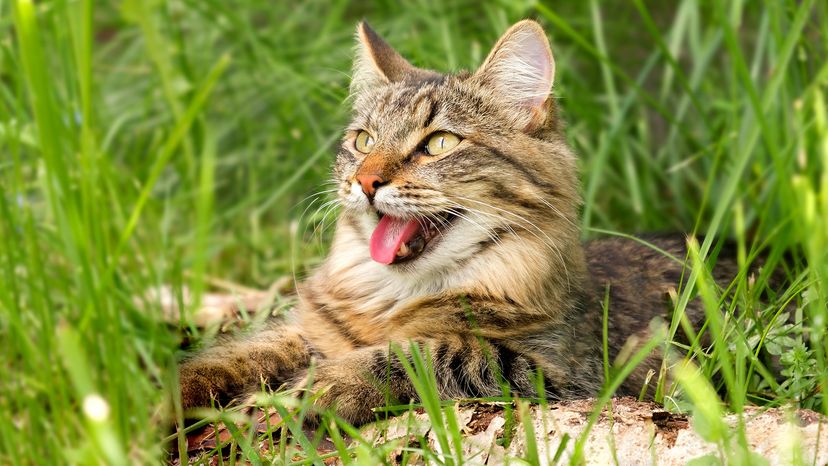
A panting dog is normal, but a panting cat? Not so much. Marina Demidiuk / Shutterstock
Why is my cat panting? Unlike dogs, panting in cats is not common — and it can be a red flag. If you notice your cat breathing heavily or with their mouth open, it’s time to pay attention.
While there are a few harmless causes, panting in cats can also signal a serious underlying condition that needs veterinary care.
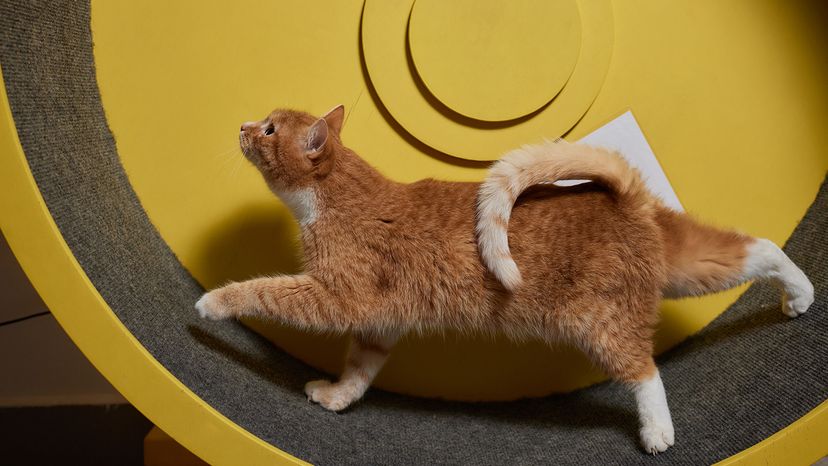
Non-worrisome reasons for panting include exercise, like running on a wheel. Vershinin89 / Shutterstock
Cats may pant briefly after strenuous exercise, especially kittens or young cats during intense play. Hot weather, excitement, or stress from loud noises can also cause normal panting. In these cases, panting should stop once your cat calms down.
To help, keep your cat cool, minimize stress, and provide fresh water. Most cats recover quickly, but it’s a good idea to monitor your feline friend closely.
Advertisement
When Panting Signals a Problem
Persistent or unexplained panting can indicate a serious cause. Cats don’t usually breathe with their mouths open unless something is wrong. If your cat is panting and showing other symptoms — like pale gums, loss of appetite, or lethargy — seek emergency veterinary care.
Heavy breathing or rapid breathing may be caused by:
Advertisement
Feline asthma: An asthma attack can lead to difficulty breathing and wheezing.
Respiratory infection: Viral or bacterial infections can inflame your cat’s lungs.
Congestive heart failure: Fluid buildup in or around the heart and lungs makes it hard for your cat to get enough oxygen.
Heatstroke: An elevated body temperature in hot conditions can trigger panting.
Inhaled object: A foreign object can obstruct your cat’s airways.
Older cats, especially those with heart disease or respiratory illness, are more at risk. If you suspect something serious, don’t wait.
Advertisement
Diagnosis and Treatment
A veterinarian may perform chest X-rays, blood tests, or oxygen saturation checks to find the underlying cause. In some cases, your cat may need oxygen therapy, intravenous fluids, or medications to reduce inflammation and treat any underlying anemia (low red blood cell count).
Prompt treatment is key. Some conditions, like feline asthma, can be managed effectively if treated early. Others, like heart failure or infectious diseases, may require long-term care.
Advertisement
What Should Cat Owners Do?
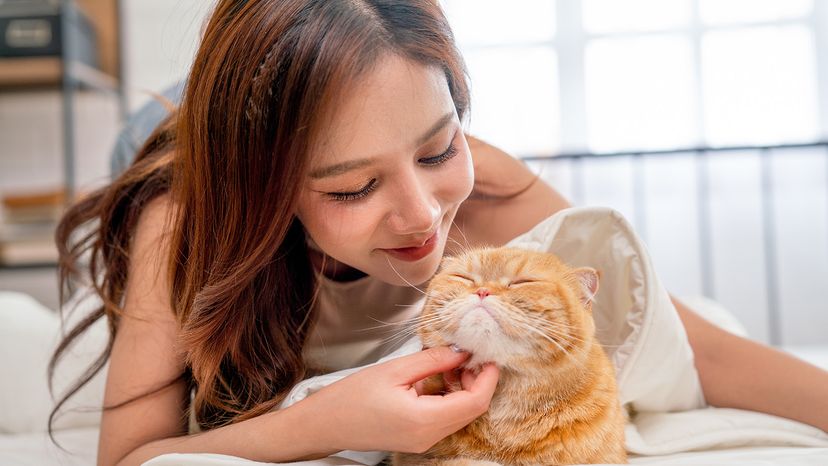
Responsible pet parents take their cat's needs seriously. SritanaN / Shutterstock
If you notice your cat panting or breathing heavily, stay calm but act quickly. Try to keep your cat comfortable and avoid triggering further stress. Note any other clinical signs and call your veterinarian immediately.
In emergencies, head to an emergency veterinarian as soon as possible. Cats can deteriorate quickly, especially when they aren’t getting enough oxygen. Early intervention can be life-saving.
Advertisement
In short, panting in cats is not normal in most situations. While brief panting may follow play or stress, persistent or unexplained panting could mean respiratory distress or heart and lung issues.
Cat panting FAQs often boil down to this: If you’re not sure, call the vet.
We created this article in conjunction with AI technology, then made sure it was fact-checked and edited by a HowStuffWorks editor.
Advertisement
Cite This!
Please copy/paste the following text to properly cite this HowStuffWorks.com article: