What Eats Frogs? Birds, Snakes, Lizards, and Even Other Frogs

By: Nico Avelle  | 
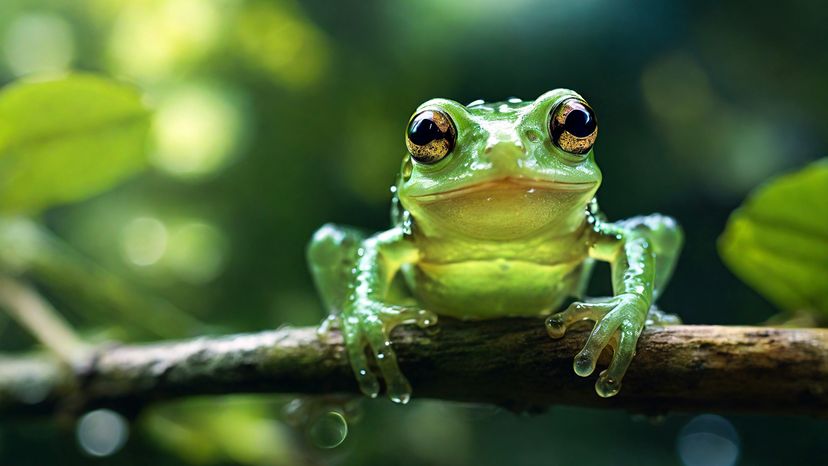
It's not easy being green. DCreator508 / Shutterstock

Frogs aren't at the top of the food chain. In fact, the list of what eats frogs is pretty long. These amphibians are on the menu for all kinds of animals across different ecosystems.

Their permeable skin and reliance on water make them sensitive to environmental changes. They're also tasty snacks for a variety of hungry mouths.

Advertisement
Birds That Eat Frogs

bird
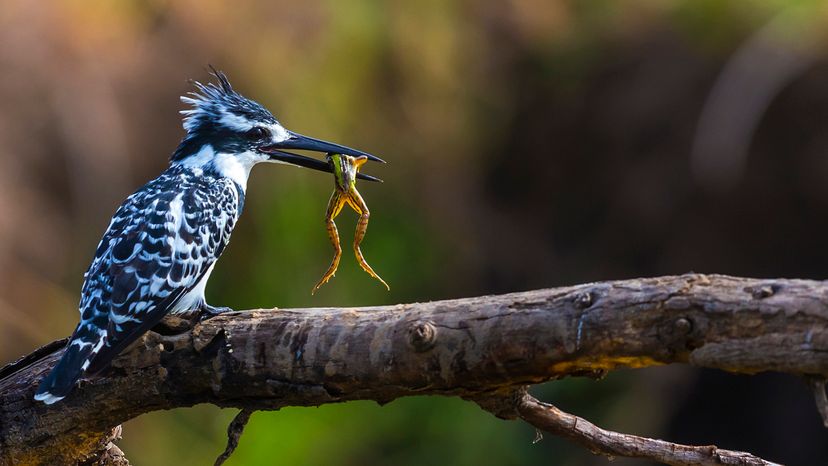
All sorts of animals eat frogs, including this pied kingfisher. Manoj Shah / Getty Images

Birds swoop in as some of the most common frog predators. Herons, storks, crows, hawks, and even ducks eat frogs. Some birds spot frogs from above while flying, others catch them near ponds or wetlands. Because frogs live in or near water, birds that fish tend to find them easily.

Herons use their sharp beaks like spears to snatch frogs from ponds. Crows, on the other hand, often flip rocks or leaves to find frogs hiding underneath. Frogs freeze as a defense, but that just makes them easier for sharp-eyed birds to see.

Advertisement

Reptiles on the Hunt

snake
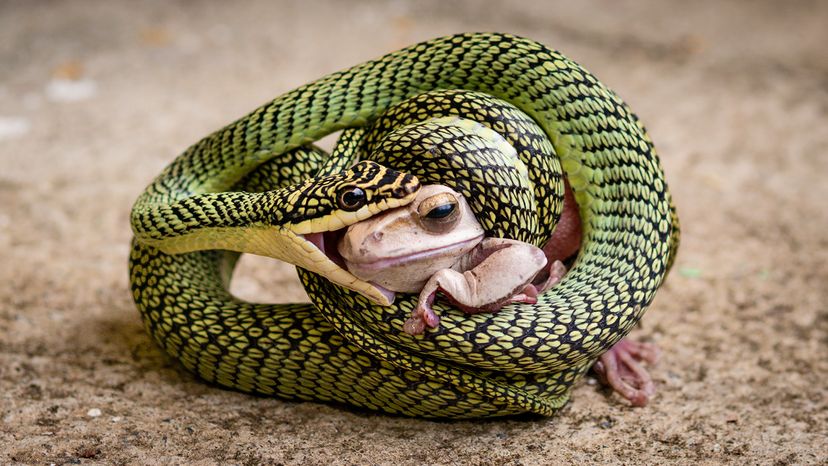
Small prey generally aren't safe around snakes. Boxyray / Shutterstock

Snakes, lizards and other reptiles eat frogs regularly. Garter snakes and water snakes both make frogs part of their diet. Some snakes use heat-sensing pits to detect frogs in the dark. Others rely on vibrations from the ground.

Monitor lizards and tegus also feed on frogs. These reptiles use stealth to sneak up and strike. Frogs often lack escape options, especially in dry land habitats where hiding spots are limited.

Advertisement

Amphibians Eating Their Own Kind

Frogs eating other frogs isn't rare. It's common in species like the African bullfrog or the American bullfrog. Larger frogs often eat smaller frogs, especially in environments where food options are limited.

Even tadpoles eat each other. It's a survival strategy when nutrients are low. This form of cannibalism isn't emotional—just another way frogs find food.

Advertisement

Mammals That Eat Frogs

Plenty of mammals eat frogs. Skunks, raccoons, otters, badgers, and wild pigs all snack on frogs when they find them. Some primates have also been observed eating frogs, particularly those that live near ponds or rivers.

In some cultures, frog legs are considered a delicacy. Humans catch frogs near lakes and wetlands, and farmed frog species are a common food source in many parts of the world.

Advertisement

Even domestic animals like cats and dogs may try to eat frogs. Unfortunately, the toxins secreted by many frog species can make pets sick, sometimes seriously.

Water-Based Predators

Frogs live in or around water, so aquatic predators are a constant threat. Fish like bass, trout, and catfish eat tadpoles and adult frogs. Crayfish and large snails consume frog eggs stuck to vegetation.

Water beetles, dragonfly larvae, and other aquatic insects attack young frogs. Leeches latch on to tadpoles, slowly draining their fluids. These interactions show how frogs are vulnerable in every form—from eggs to full-grown adults.

Advertisement

Insects, Crickets and Snails

Although frogs eat insects, some insects fight back. Giant water bugs, for example, can ambush and eat frogs several times their size. They inject enzymes to liquefy the frog from the inside.

Some snails feed on gelatinous frog eggs, disrupting the frog's reproductive cycle. Invasive snail species, in particular, have been linked to amphibian population decline.

Advertisement

Frogs and crickets are often linked in the food chain. Frogs hunt them as food, but in pet trade environments, crickets may carry parasites or diseases that harm frogs.

How Frogs Eat Things

Frogs catch prey with lightning-fast tongues. Their mouths are wide and flexible, able to swallow insects, small animals, and even birds in some cases. Some species have tiny teeth, but most swallow their food whole.

Their diet is varied. Frogs eat crickets, flies, ants, beetles, and some small mammals. They rely on movement to locate food, using their keen eyesight to detect anything that moves within range.

Advertisement

Oddly enough, frogs don't drink through their mouths. Instead, they absorb water through a patch of skin on their belly. This makes clean water sources important to their survival.

Where Frogs Live and Get Eaten

Frogs live in diverse habitats: rainforests, deserts, mountains, and backyards. Each habitat brings different predators. In the wild, the connection between frogs and their ecosystems helps regulate food webs.

In forests, birds and snakes are common threats. In wetlands, fish and insects pose more danger. On land, mammals and reptiles take over. Frogs are a common prey animal almost everywhere.

Advertisement

Frogs need moist environments to thrive. Their thin skin lets chemicals and water pass in and out. This makes them both efficient and vulnerable.

Why Frogs Matter in the Food Web

Frogs play important roles as both predator and prey. They control insect populations, provide food for birds, reptiles, mammals, and fish, and help transfer energy between water and land.

When frogs decline, it's a signal that something is wrong. Habitat destruction, pollution, invasive species, and climate change all contribute to population loss.

Advertisement

Protecting frog habitats helps maintain balance in ecosystems. Frogs are a vital part of many food webs, and their presence supports a wide variety of animals.

We created this article in conjunction with AI technology, then made sure it was fact-checked and edited by a HowStuffWorks editor.

Advertisement

Advertisement

Loading...