The National Bird of Mexico Is Also Found in Asia and Europe

By: Nico Avelle  | 
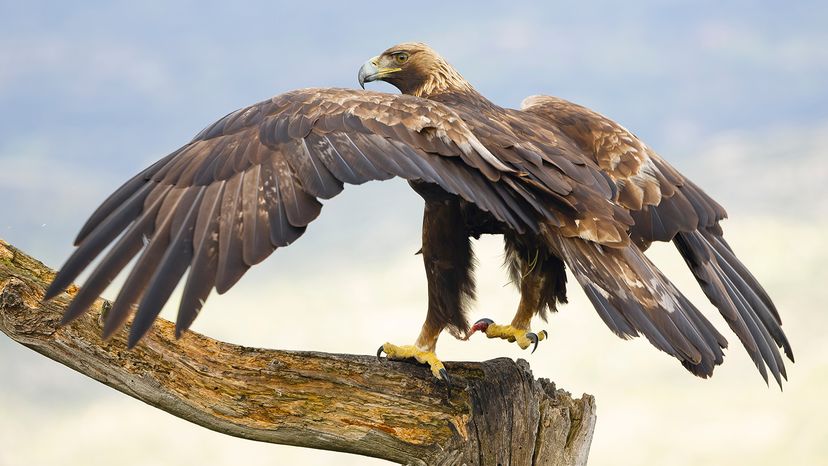
The golden eagle was formally regulated in Mexico's national coat of arms and flag in 1984. Jesus Giraldo Gutierrez / Shutterstock

The national bird of Mexico appears in one of the most recognizable national symbols in the world. At the center of Mexico's flag sits a powerful eagle perched on a prickly pear cactus while devouring a snake.

That image represents far more than wildlife. Mexico's national bird reflects centuries of Aztec history, mythology, and political symbolism tied to the founding of the Aztec capital.

Advertisement

Today the Golden Eagle serves as the official national bird of Mexico, though historians and ornithologists still debate whether ancient Aztecs may have originally described a different species.

The Golden Eagle: Mexico's Official National Bird

The Golden Eagle, scientifically known as Aquila chrysaetos, is the official national bird of Mexico. The government formally regulated the national coat of arms and flag in 1984, reinforcing a symbol that had already appeared on Mexico's coat of arms and flag for generations.

The bird is instantly recognizable on the Mexican flag. The eagle is shown perched on a cactus while eating a serpent, an image that appears at the center of the national coat of arms.

Advertisement

In Mexican culture, the golden eagle represents strength, courage, power, and wisdom. That symbolism stretches back thousands of years to Mesoamerican civilizations that viewed the eagle as a creature associated with the sun and divine power.

Golden eagles are also among the most widespread eagle species in the world. They live across North America, Europe, and Asia, including regions such as Alaska, New Mexico, and parts of central Mexico.

Advertisement

The Aztec Legend Behind Mexico's Flag

The famous eagle-and-snake image comes from a legend recorded in Aztec codices. According to tradition, the god Huitzilopochtli instructed the Tenochtitlan people to build their capital where they found an eagle devouring a snake while perched on a prickly pear cactus.

The Aztec people eventually saw that sign on an island in Lake Texcoco in central Mexico. They built their capital city, Tenochtitlan, on that site.

Advertisement

That moment became a foundational story for the Aztec civilization. Over time the symbol evolved into Mexico's coat of arms and later appeared on Mexico's flag after the country's independence war.

The imagery has deep religious meaning as well. The eagle devouring a serpent alludes to the victory of the Sun over its enemies.

Advertisement

The Crested Caracara Debate

Although the golden eagle is officially Mexico's national bird, some historians argue the original bird described in Aztec records may have been the Crested Caracara.

The crested caracara belongs to the falcon family rather than true eagles. It has long legs, a distinctive crest of feathers and lives across open country from southern Arizona through Central America and into parts of South America.

Advertisement

Naturalist Rafael Martín del Campo proposed that early images in Aztec codices may depict a crested caracara instead of a golden eagle. Over time, those drawings may have been interpreted as eagles when Mexico adopted its modern national symbol.

Some sources even refer to the crested caracara as the "Mexican eagle." The bird has been proposed by some researchers as a possible identification for the bird depicted in Aztec codices.

Advertisement

How Golden Eagles Live and Hunt

Golden eagles are among the most powerful birds of prey in the world. Adults are mostly dark brown with golden feathers around the head and neck.

Their wingspan typically ranges from 6 to 7.4 feet (1.9 to 2.3 meters). That large wingspan allows the eagle to soar over open landscapes while scanning the ground for prey.

Advertisement

Golden eagles mainly hunt small mammals such as rabbits and ground squirrels, though they may also capture animals like turtles, frogs, or fish when opportunities appear. Insects and carrion can occasionally supplement their diet.

They build large nests called eyries on high cliffs and rocky ledges overlooking open habitat. These elevated sites provide excellent views for spotting prey across large areas of land.

We created this article in conjunction with AI technology, then made sure it was fact-checked and edited by a HowStuffWorks editor.

Advertisement

Advertisement

Loading...