What Is a Group of Swans Called? Not a Flock

By: Nico Avelle  | 
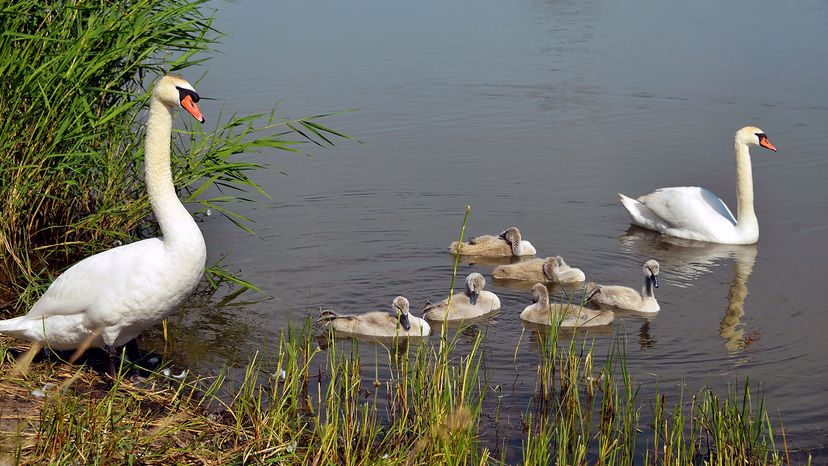
Don't get between a male swan and his brood if you value your safety. Fedor Baronov / Shutterstock

A group of swans goes by more than one name, and the right word depends on what the birds are doing. The question "what is a group of swans called" sounds simple, but English loves options, especially when birds get involved.

Swans are large waterfowl related to ducks and geese. Like many animals, they pick up different collective nouns as they move through land, water and air.

Advertisement
'Bevy' Is the Classic Answer

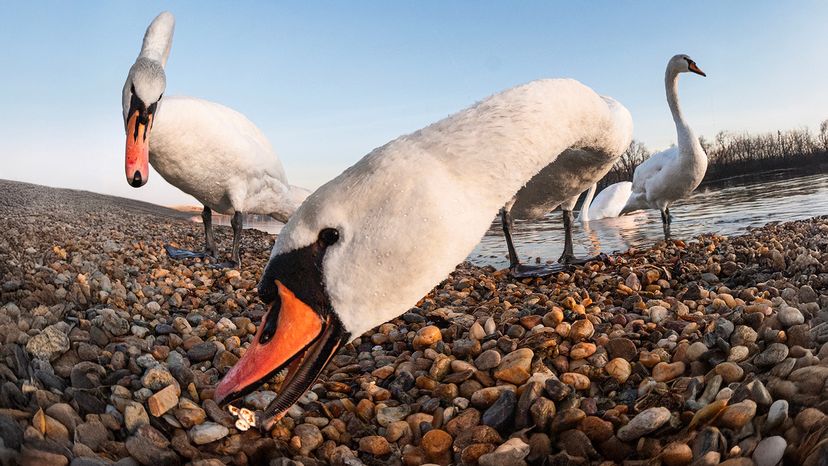
If you spot swans resting or feeding on the ground near a lake or shore, you are looking at a bevy. This is the most common and widely accepted word in dictionaries and wildlife guides.

The term fits swans well. Their long necks, bright whiteness and calm movements make a bevy look choreographed, like a slow ballet on land or water.

Advertisement

Bird guides often use "bevy" as a catch-all example when describing swans called together in one place.

'Flight' Describes Swans in the Air

swan
As is the case with many birds, a collection of swans in flight is called ... a flight. rock ptarmigan / Shutterstock

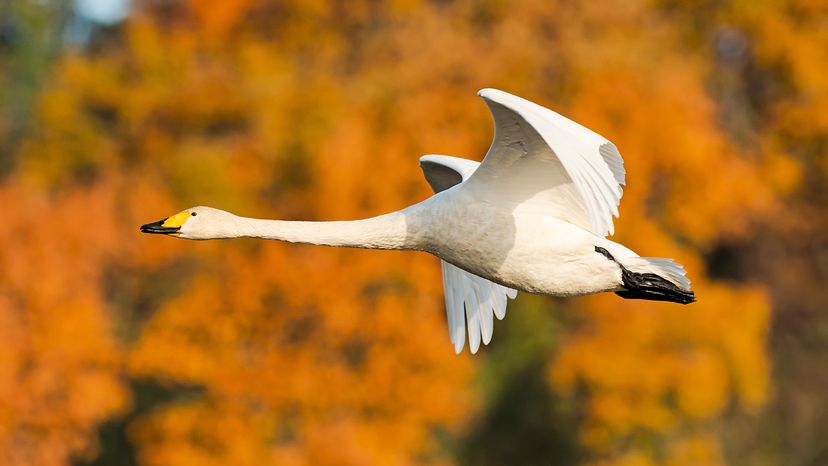
When swans fly, the collective noun changes to "flight." This applies whether the birds are migrating in winter, moving between feeding areas or lifting off with powerful wings into the wind.

Flying swans often form a wedge shape, similar to geese. That formation reduces air resistance and saves energy during long journeys, especially for migratory species such as tundra swans and Bewick's swans.

Advertisement

Families Get More Specific Names

swans
This is one family photo you definitely don't want to interrupt. studiavit / Shutterstock

Smaller groups of swans, especially parents with young swans called cygnets, are sometimes described as a brood. You may hear this word near a nest in spring, when eggs hatch and chicks stay close to the adults.

A pair of swans with cygnets can be fiercely territorial. Males will defend feeding areas on the water and nearby land, driving off other birds including ducks, geese, and even larger wildlife that wander too close.

Advertisement

Species Do Not Change the Collective Noun

Whether you are watching trumpeter swans, mute swan, whooper swans, black swans, or black necked swans, the group name stays the same.

A bevy on the ground is still a bevy, and a flight in the air is still a flight.

Advertisement

These terms apply across swan species, from Cygnus olor to Cygnus atratus, and from arctic regions to temperate lakes lined with trees.

Why So Many Collective Nouns Exist

Collective nouns grew out of observation and storytelling. People watched birds feeding, resting and migrating, then chose words that described sound, shape, or behavior.

Swans move differently than crows, ravens, parrots, hawks, or hummingbirds, so their group names evolved separately. Language reflects how humans notice animals interacting with their environment, whether on water, land or in the air.

Advertisement

We created this article in conjunction with AI technology, then made sure it was fact-checked and edited by a HowStuffWorks editor.

Advertisement

Loading...