Where Do Chickens Originate From?

By: Nico Avelle  | 
bird
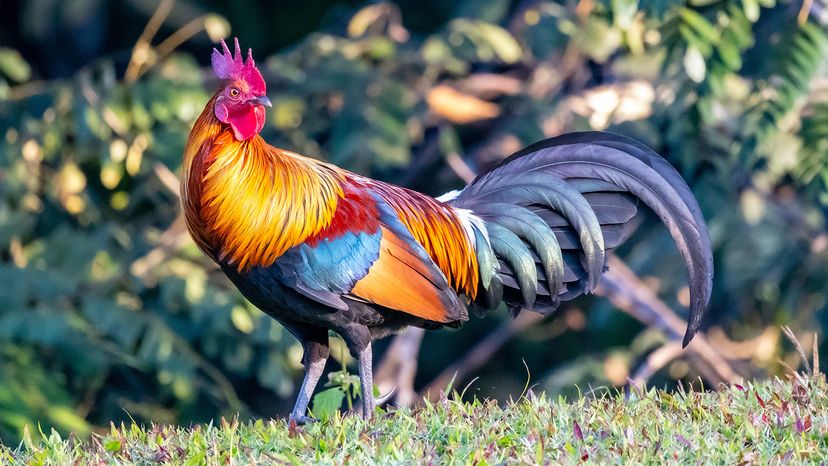
Why did the chicken cross the road? To chat with this red junglefowl. FOTO JOURNEY / Shutterstock

Ask someone where chickens come from, and you might hear "the farm" or maybe "the grocery store." But when someone asks, "Where do chickens originate from," they're looking for a deeper answer.

Chickens didn’t start out as domestic birds pecking at feed. They evolved from wild junglefowl in the tropical forests of Southeast Asia. Archaeological evidence and genetic studies both point to one scrawny, scrappy ancestor: the red junglefowl.

Advertisement
Wild Junglefowl Species

Before we had chicken nuggets or feathery domesticated animals, we had wild birds. The red junglefowl (Gallus gallus), still roaming parts of Southeast Asia, is the closest living relative of modern chickens.

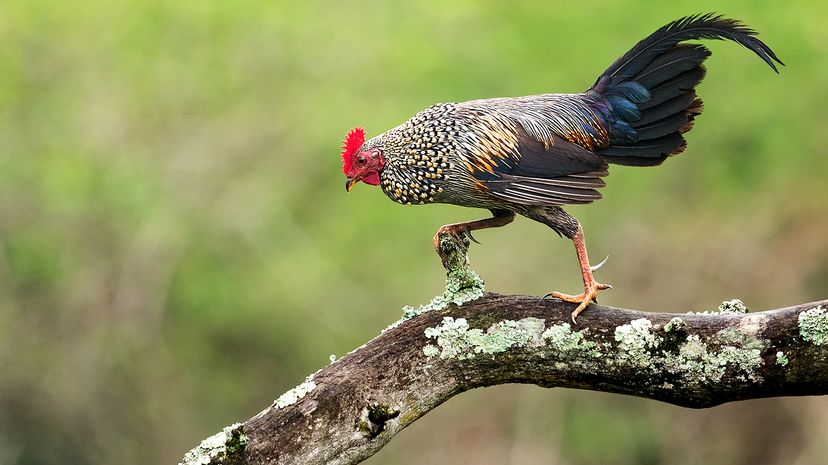
These wild birds have flashy feathers, loud calls and a tough attitude. They're not alone, either. Scientists say other junglefowl species like the green junglefowl and grey junglefowl may have contributed to the chicken gene pool.

Advertisement

In fact, genetic variation in chickens today shows that domesticated chickens have multiple maternal origins. That means the modern chicken wasn’t domesticated in just one place by one group of humans. Instead, chicken domestication was a repeated process across different regions.

The First Domestic Chickens

Archaeological evidence suggests chickens were domesticated in China roughly 8,000 to 10,000 years ago.

These birds weren’t kept for meat or eggs at first. Early farmers probably valued them for cockfighting, ritual use, or even as sacred animals. Some ancient societies considered chickens sacred and kept them for ceremonial purposes rather than for food.

Advertisement

chickens
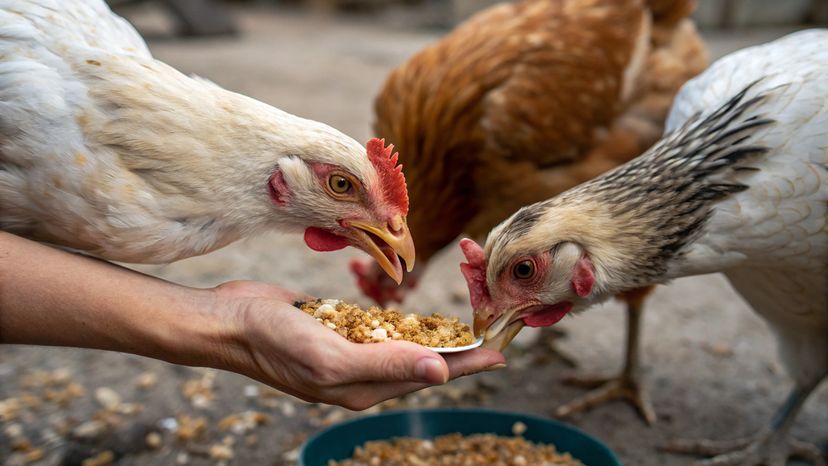
Between selective breeding and selective feeding, the domesticated chicken started to look a lot different from its wild ancestor.
Abir Hassan Official / Shutterstock

What changed? As people began breeding season after season, selective breeding kicked in. Farmers began developing methods to encourage the traits they wanted: birds that laid more eggs, were less aggressive, or grew faster.

That led to domesticated chickens we know today: birds with traits genetically distinct from their wild relatives.

Advertisement

Chicken Bones and Ancient Clues

How do we know all this? Because of chicken bones.

Archaeologists found ancient chicken bones in human settlements across Asia, South America, and eventually Europe. The bones show changes over time in size, shape and structure, telling us when and how chickens began to look more like domestic fowl than wild birds.

Advertisement

bird
Modern chickens get their yellow skin from grey junglefowl like this one.
Nimit Virdi / Shutterstock

One giveaway? Yellow skin. Yellow skin is absent in red junglefowl but common in domestic chickens due to a gene inherited from grey junglefowl.

Domestic chickens also carry a domestication-related mutation in the thyroid-stimulating hormone receptor (TSHR) gene affecting seasonal reproduction. The chicken genome tells a rich story of gene flow from wild populations and human-directed breeding.

Advertisement

Chickens Spread Worldwide

So how did chickens end up everywhere from New York to Nairobi? Trade, migration, and human curiosity: As humans moved, so did their animals.

Chickens likely traveled with early seafarers, moving from Asia into Africa, Europe and eventually the Americas. By the time chickens arrived in South America, they were already well-established as a global species.

Advertisement

Today, the global chicken population numbers in the tens of billions. Some, like the Rhode Island Red, are prized for egg production, while others are bred for meat. Modern layer hens now commonly lay over 300 eggs per year, a result of intensive selective breeding.

More Than Just Meat

We often think of chickens as food, but they’re also case studies in animal domestication. The chicken was the first bird to have its genome sequenced, and this analysis was noted to “fill a crucial gap” in understanding genome evolution and human biology.

Researchers have even discovered that Roman-era farmers fattened chickens by feeding them wheat bread soaked in wine or mixtures containing barley, cumin seeds, and lizard fat. Think of it as the first chicken buffet.

Advertisement

This creative approach may have helped wild chickens transition to life among humans—and eventually into domestic breeds we depend on today.

We created this article in conjunction with AI technology, then made sure it was fact-checked and edited by a HowStuffWorks editor.

Advertisement

Advertisement

Loading...