A Pet Seahorse Requires Extremely Specific Tank Conditions

By: Nico Avelle  | 
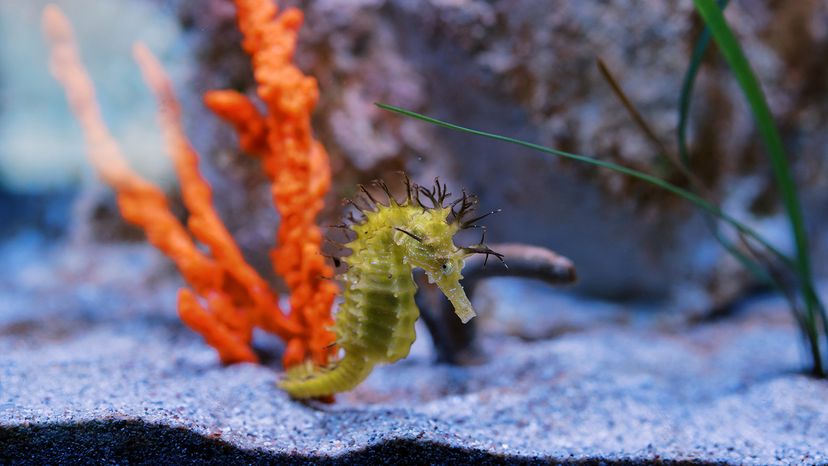
seahorse in an aquarium.
Different seahorse species are better suited for different degrees of aquarium expertise. Nadtochiy / Getty Images

A pet seahorse can be a rewarding marine companion, but keeping one healthy requires more than a pretty tank and good intentions.

These upright swimmers from the genus Hippocampus have unique care needs that set them apart from your average aquarium fish.

Advertisement

Seahorses rely on their prehensile tails and small dorsal fins to navigate, but they aren't strong swimmers. That means tank setup, water quality, and food options matter even more.
Choose the Right Seahorse Species

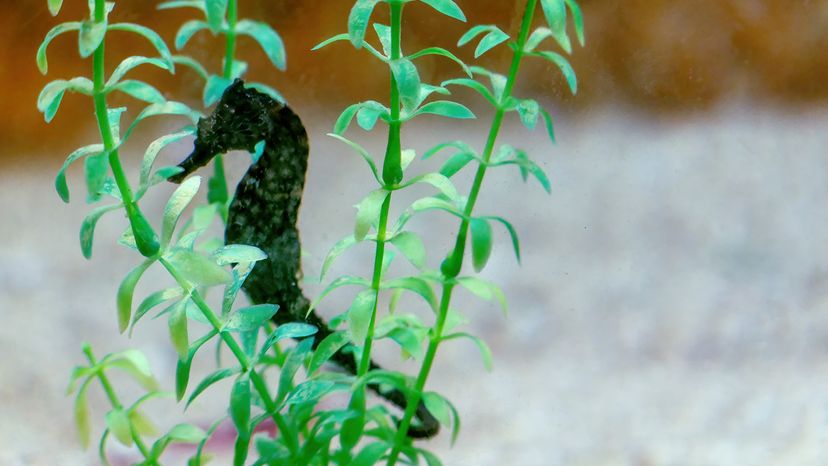
lined seahorse
The lined seahorse is a good species for beginners. Juan Jose Alvarado Mendieta / Getty Images/iStockphoto

Not all seahorses are created equal. For beginners, Hippocampus erectus (lined seahorses) are hardy and relatively easy to care for. Dwarf seahorses (Hippocampus zosterae) stay under 2 in (5 cm) and can thrive in small tanks, but they demand more attention, especially when feeding.

Avoid wild-caught animals. Instead, look for captive bred seahorses from reputable pet stores. Captive bred options adapt better to aquarium life and reduce pressure on wild populations.

Advertisement

Set Up the Seahorse Tank Right

A good seahorse tank mimics the gentle conditions of shallow reefs. That means low water flow, stable water parameters, and plenty of hitching posts like macroalgae or live plants.

Aim for at least 20 gallons (75 L) for a pair of medium seahorses. Dwarf species need smaller setups but stricter water quality. Use a sponge filter or similar gentle system, since strong currents can exhaust your pets.

Advertisement

Seahorses require top-notch husbandry. Water quality should be pristine, with parameters checked often. Ideal conditions include a temperature of 72 to 77 F (22 to 25 C), pH around 8.1 to 8.4, and specific gravity between 1.020 and 1.025.

Feeding Seahorses Is a Daily Job

Unlike most fish, seahorses eat slowly and frequently. Their digestive systems lack a true stomach, so they need small, regular meals to thrive.

In captivity, seahorses eat mysis shrimp and enriched brine shrimp—preferably live, but frozen foods work if accepted. Baby seahorses (called fry) mostly eat baby brine shrimp and copepods.

Advertisement

Feeding time can be tricky since food must reach the seahorse before tankmates gobble it up. That’s why peaceful tankmates and targeted feeding are essential.

Pick the Right Tankmates

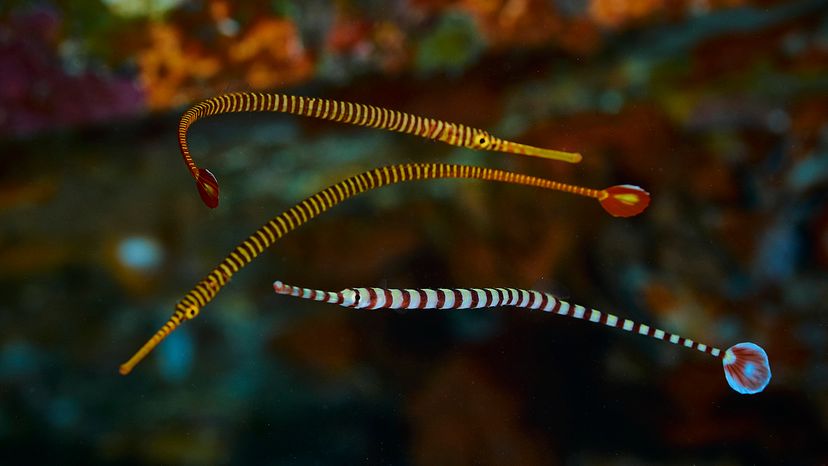
Banded pipefish
Banded pipefish are nice, chill tankmates for pet seahorses. Aleksei Permiakov / Getty Images

While any group of seahorses is called a herd, wild seahorses usually live alone or in pairs. In a home aquarium, they should be housed with other calm animals. Avoid aggressive or fast-swimming species that compete for food.

Good companions include pipefish, small gobies, and some soft corals. Just make sure every tank inhabitant is safe and won’t stress your seahorses.

Advertisement

Understanding Seahorse Anatomy Helps You Care Better

Seahorses have a horse-like head, fused jaw, and bony plates instead of scales. They swim using their dorsal fin and steer with pectoral fins near the back of the head.

Their iconic tail lacks a tail fin or caudal fin and is used to grasp objects like plants or decorations. Watching them curl that tail around a perch is part of what makes seahorses so mesmerizing to observe.

Advertisement

We created this article in conjunction with AI technology, then made sure it was fact-checked and edited by a HowStuffWorks editor.

Advertisement

Loading...