The Seahorse Diet Requires Stealth and Patience in the Wild

By: Nico Avelle  | 
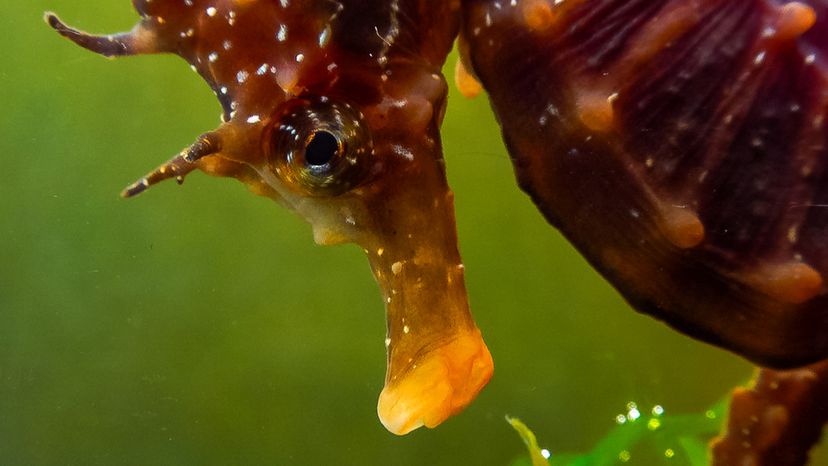
Adult seahorses have no stomach, so they need to eat constantly. Oleg Kovtun / Getty Images

When people picture marine predators, seahorses might not top the list. But make no mistake: The seahorse diet is all about stealth, patience and tiny snacks. These oddball fish have evolved a specialized way of eating that works perfectly with their unusual shape and behavior.

Seahorses swim upright, propelled by a tiny dorsal fin on their back and steered with even smaller pectoral fins on the sides of their head.

Advertisement

Because they’re poor swimmers, they rely on camouflage and stillness to ambush prey rather than chase it. Most species form territories and use their prehensile tail to anchor themselves to seagrass beds or coral reefs while they wait.
What Do Seahorses Eat?

Seahorses eat small crustaceans like copepods, mysis shrimp, ghost shrimp, and grass shrimp. They suck prey into their tubular snouts using rapid suction.

This prey capture technique makes them surprisingly effective hunters, especially for their size.

Advertisement

Unlike many fish species, seahorses have no stomach. This means food passes through their body quickly and must be replenished often.

Seahorses feed throughout the day and night. Captive bred seahorses are usually accustomed to frozen food, but wild caught specimens may refuse anything but live food.

Advertisement

Seahorse Fry and Baby Brine Shrimp

seahorses
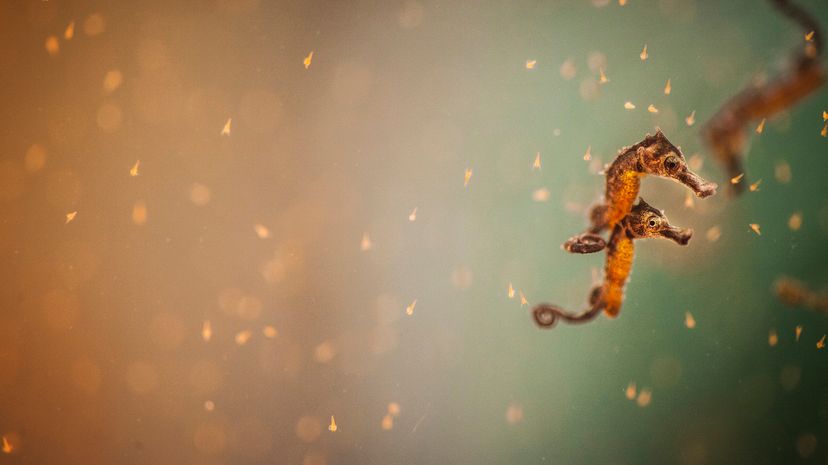
Young seahorses can eat baby brine shrimp. piola666 / Getty Images

Seahorse fry—newborns released from the brood pouch of male seahorses—start life feeding on their yolk reserve. But that reserve is short-lived. Within hours, they must begin to eat live food to survive.

Fish stores recommend feeding fry baby brine shrimp, which are easy to hatch and nutritionally appropriate for their size. Other viable options include copepods and special rotifer food.

Advertisement

To feed seahorse fry effectively, aquarists use turkey basters to deliver food directly and maintain feeding density.

Dwarf seahorses, one of the smaller species, require similar feeding methods throughout life. Adult dwarf seahorses still eat tiny crustaceans due to their small mouths and low mobility.

Advertisement

Feeding Techniques and Habits

Seahorses eat by ambushing prey. Thanks to their distinctive head morphology and binocular vision, they can lock onto moving targets with precision. They don’t chase. They wait, then strike fast.

Their upright swimming habits, poor swimming ability, and lack of caudal fins suited for propulsion mean they conserve energy by staying still. Their dorsal fin provides propulsion, while pectoral fins handle steering. This makes prey capture a matter of patience, not pursuit.

Advertisement

Feeding stations help captive seahorses get consistent meals. Keepers often place mysis shrimp, brine shrimp, or other food items in a set location where seahorses learn to feed. This technique minimizes food waste and ensures all seahorses eat.

Frozen vs. Live Food

Brine shrimp, especially adult brine shrimp, are a common offering in home aquariums. However, unlike adult brine shrimp, live mysis shrimp and copepods generally have higher nutritional value.

Frozen food, such as frozen mysis shrimp, can form the backbone of a captive seahorse's diet.

Advertisement

Some seahorses eat frozen food readily, while others may only eat live food. Fish stores recommend feeding a mix of both to ensure balanced nutrition. Ghost shrimp and grass shrimp offer good enrichment for variety.

Relying on only one food source can lead to deficiencies. Essential nutrients—those tiny vitamins and minerals—may be lacking in some frozen foods unless they are enriched.

Advertisement

Challenges in Captivity and the Wild

sealife
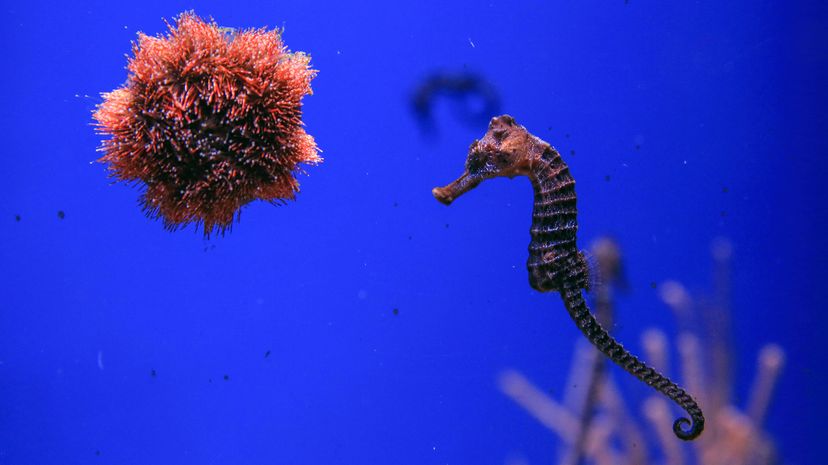
That sea urchin is way too big for this little seahorse to eat. Kseniia Mnasina / Getty Images

Feeding seahorses well is crucial to preventing health issues. Improper feeding (e.g. overfeeding or a poor diet) can contribute to swim bladder disorders; however, gas bubble disease in seahorses is usually caused by environmental factors (like gas-supersaturated water) rather than diet.

A lack of food variety or poor-quality frozen food can also compromise immune function.

Advertisement

In the wild, seahorses live in shallow temperate and tropical waters, typically among seagrass beds, mangrove roots, or coral reefs. But reducing viable habitats has made survival tougher. As marine species lose territory, their access to nutritious prey shrinks.

The genus Hippocampus includes many seahorse species, including the short-snouted seahorse and the spiny seahorse. All Hippocampus seahorses are marine species, and there are no true freshwater seahorses.

Project Seahorse, a conservation group, estimates millions of seahorses are caught each year, some of which end up in the aquarium trade. Observed eating habits in captivity suggest species of seahorses thrive best when diets mimic wild prey.

Advertisement

Building a Balanced Seahorse Diet

Here’s how to feed seahorses well.

  • Offer a mix of frozen and live food items.
  • Prioritize nutritious options like mysis shrimp and copepods.
  • Avoid relying solely on adult brine shrimp.
  • Use a feeding station to train captive bred seahorses.
  • Feed small meals several times a day.
  • Supplement frozen food to improve nutritional value.
  • Feed seahorse fry baby brine shrimp and rotifers.
  • Observe behavior to adjust portion sizes.

We created this article in conjunction with AI technology, then made sure it was fact-checked and edited by a HowStuffWorks editor.

Advertisement

Advertisement

Loading...