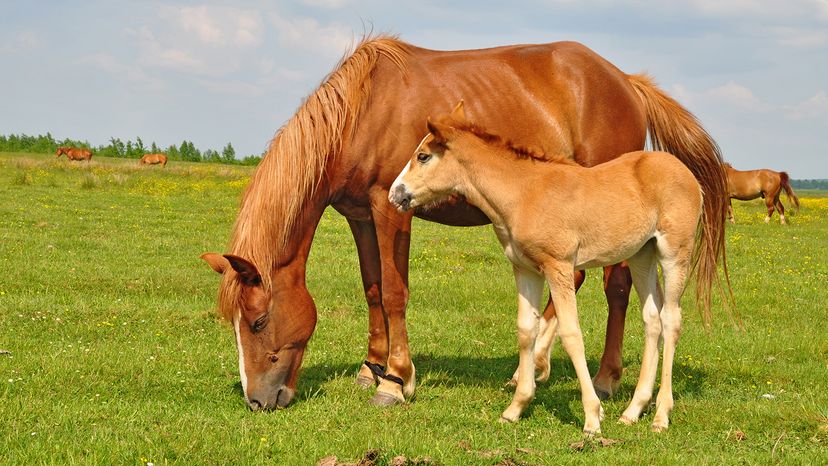
This mare plays a crucial role in her baby's life. smereka / Shutterstock
If you've ever visited a farm or watched an equine video online, you may have wondered, what is a baby horse called? Whether you're learning horse terminology or just curious about animal life, the answer is simpler than you might think.
A baby horse is called a foal. But that one word leads to a whole world of horse lingo, growth stages, and care essentials.
The word "foal" refers to any young horse, regardless of gender, typically from birth until about one year of age. If you're describing a male baby horse, the correct term is "colt." A female foal is called a "filly."
These terms stick until the horse grows older. After one year, the young horse becomes a "yearling." Most foals are weaned from their mothers around 4 to 6 months old, transitioning to solid food and independence.
Advertisement
Life Immediately After Birth
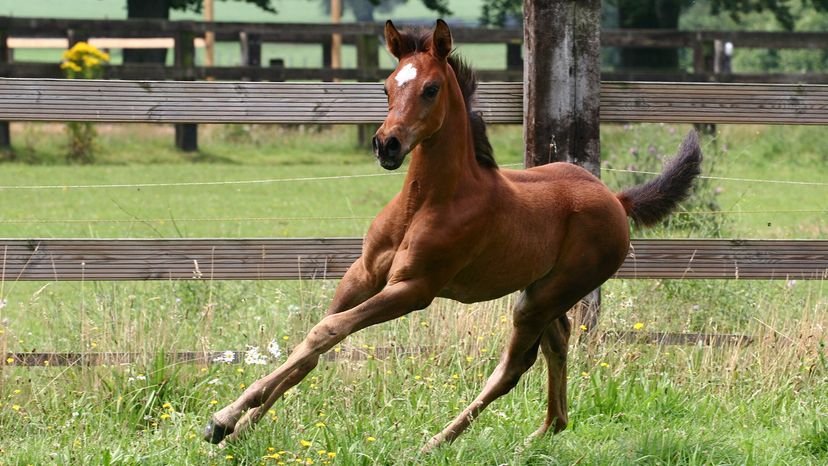
Foals have proportionally longer legs than adult horses, giving them an edge in agility and speed. Sabine Hagedorn / Shutterstock
Newborn foals can stand and walk within an hour or so of birth. That's essential in the wild, where predators are a concern. A foal's legs are nearly as long as an adult's at birth, giving it an advantage in speed and mobility.
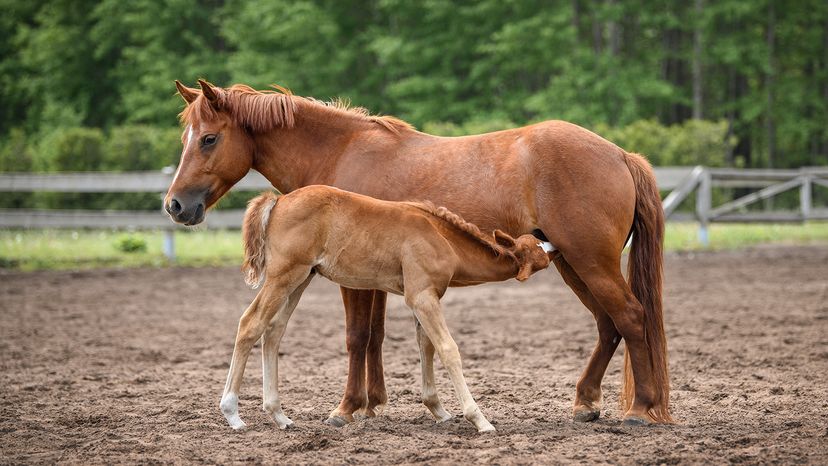
The mother (aka dam) nurses the foal and offers constant support during this early period. Nutrition is critical during this time. Foals drink their mother’s milk for nutrients that help bones, muscles, and organs develop properly.
Advertisement
Over the next few weeks, the foal begins to explore its environment, nibble on hay, and watch how other horses behave. Social learning in the herd lays the groundwork for training later.
From Foal to Riding Horse
As the foal grows, so do the labels. A gelding is a castrated male horse, while a stallion is an adult, uncastrated male often used for breeding. Ponies aren’t foals or young horses; they are a separate group of small-sized horses.
Training starts with basic handling. Young horses learn to accept a halter, respond to voice commands, and walk on a lead. Most horses do not begin under-saddle training until they are at least about two years old, when their skeleton is developed enough to safely carry a rider.
Advertisement
Horse training requires patience and familiarity. The earlier a horse learns positive associations with people, the easier it becomes to train for riding, services, or work.
Understanding the Herd
A mother will nurse its newborn horse for at least the first few months of its life. otsphoto / Shutterstock
In the wild or on ranches, foals learn herd dynamics quickly. They observe their mothers, older siblings, and other horses to understand hierarchy and behavior.
This early socialization period is crucial for foals to form healthy social bonds and helps prevent behavior problems such as nipping (biting) or becoming overly pushy with humans.
Advertisement
Foals rely on these early interactions to become well-adjusted adults. That’s why experienced breeders focus on proper weaning, nutrition, and early training. A well-raised foal is more likely to become a calm, healthy, and useful member of the equine world.
We created this article in conjunction with AI technology, then made sure it was fact-checked and edited by a HowStuffWorks editor.
Advertisement
Cite This!
Please copy/paste the following text to properly cite this HowStuffWorks.com article: