What Is a Group of Deer Called? More Names Than Simply 'Herd'

By: Nico Avelle  | 
deer
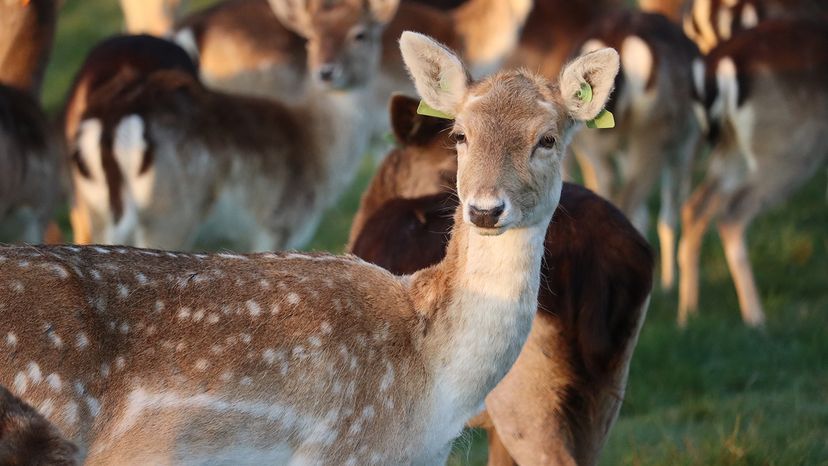
Even this doe thinks that's a good question. Jacek1708 / Shutterstock

If you’ve seen several deer grazing together in a field or darting across a forest path, you may have wondered: What is a group of deer called?

The answer is simple and surprisingly common: a herd.

Advertisement

While "herd" is the most apt term in modern usage, deer have inspired several collective nouns through history, literature, and regional tradition. Let's walk through some of these names and explore why the deer family (Cervidae) gets such poetic attention.
The Classic Collective: Herd

The word "herd" is widely used across North American deer species, including white-tailed deer, mule deer, and elk. In the wild, herds are usually seasonal, forming during migration or in winter.

A herd may contain female deer (does), young deer (fawns), and occasionally male deer (bucks). During the rut, or mating season, bucks may temporarily join the herd.

Advertisement

Lesser-known Collective Nouns for Deer

Besides herd, there are other terms used to describe a group of deer, including:

  • Bevy: Rare but historically noted in English literature
  • Mob: Occasionally used in hunting terminology
  • Parcel and brace: Archaic terms for smaller groups

These names are examples of collective nouns, the linguistic tradition that gives us terms like a raft of ducks, a gaggle of geese, or a sloth of bears. Deer join the ranks with a few options, depending on the context.

Advertisement

Other Members of the Deer Family

reindeer
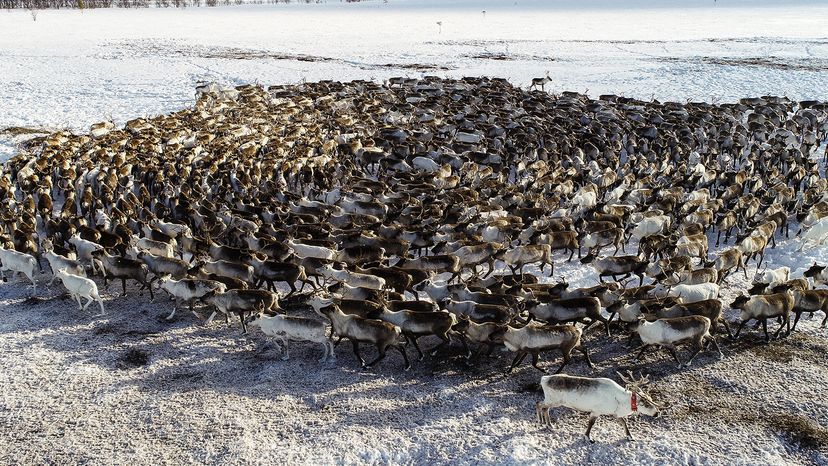
Reindeer migrate in really, really big herds. Iceskatinggrizzly / Shutterstock

The deer family includes not just deer but also moose, elk, reindeer, and caribou. Here’s how their group names break down:

  • Elk: Herd or gang, often seen together in open fields
  • Moose: Though usually solitary, applies when grouped
  • Caribou/reindeer: Often seen forming large migrating herds, especially in northern climates

These mammals share similar features: hoofed feet, velvet-covered antlers in males (and in both sexes for reindeer), and a herbivorous diet. Most species undergo seasonal migrations or shifts in behavior based on food availability.

Advertisement

What Are Different Parts of a Deer Group Called?

  • Male deer: Called bucks in most subspecies, bulls in larger ones like moose and elk
  • Female deer: Called does, or cows for larger species
  • Young: Fawns (for larger deer species like elk or moose, the young are called calves)

Advertisement

Chinese Water Deer

water deer
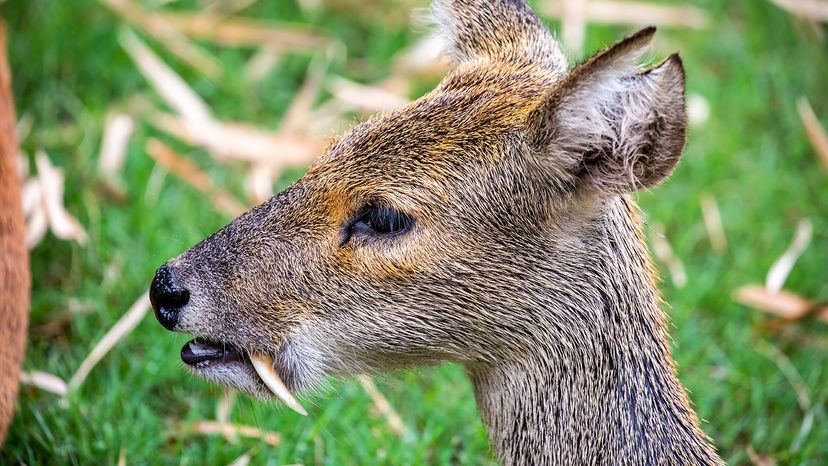
This water deer has tusks instead of antlers. Danny Ye / Shutterstock

All but one member of the deer family have antlers in the males (reindeer are the only deer with antlered females as well).

The exception is the Chinese water deer (Hydropotes inermis), whose males have no antlers and instead have tusks. Males grow them annually, and in species like reindeer, females do too. Antlers are covered in velvet and are shed after mating season. Unlike horns, antlers regrow each year.

Advertisement

Context Matters

In a university-led wildlife study or a Michigan field review, you may hear varying terms based on the behavior observed. These creative terms, while less official, reflect our human tendency to categorize the natural world.

So while a herd is the standard, the next time you spot a herd of deer in any given area, feel free to call them a bevy or a mob. Just know you’re participating in a centuries-old word game about the animal kingdom.

Advertisement

We created this article in conjunction with AI technology, then made sure it was fact-checked and edited by a HowStuffWorks editor.

Advertisement

Loading...