What Is a Group of Mice Called? Not Always a Colony

By: Nico Avelle  | 
If you hear movement in your walls, a mischief of mice might be the culprit. Paulpixs / Shutterstock

Ever hear something rustling in the walls or darting across the floor and wonder what to call more than one mouse?

First of all, if that kind of noise has prompted you to ask, "What is a group of mice called," we wish you the best with pest control. Secondly, the term you're looking for is "mischief."

Advertisement

A Mischief of Mice

Yep, it’s true: A group of mice is called a mischief.

It’s one of those delightfully odd collective nouns in English, like a murder of crows or a parliament of owls. The term fits, considering how mice seem to pop up unexpectedly and cause a bit of chaos, especially indoors.

Advertisement

You might also hear the terms "nest" or "colony" in scientific or pest control contexts, depending on whether the mice live in the wild or in your walls.

How Mice Live Together

mice
These captive mice have a brightly lit nesting area for their pups. MiViK / Shutterstock

Mice are social animals. In the wild, mice live in colonies composed of one dominant male and several females, with each female raising her litter in a separate nest chamber.

One nest might hold five to 12 babies, or pups, which are born hairless and blind. Mothers raise their young in dark, hidden places like woodpiles or burrows.

Advertisement

In domestic settings, like pet cages, groups of mice can also include unrelated individuals. In both cases, mice communicate through ultrasonic squeaks and scent trails.

What Makes a Mischief Tick

A mischief usually includes a dominant male, several females, and their offspring. The dominant male marks territory and aggressively wards off rivals.

Food availability and shelter determine group size, and when resources are scarce, fights can break out. Despite their size, mice are surprisingly territorial.

Advertisement

mice
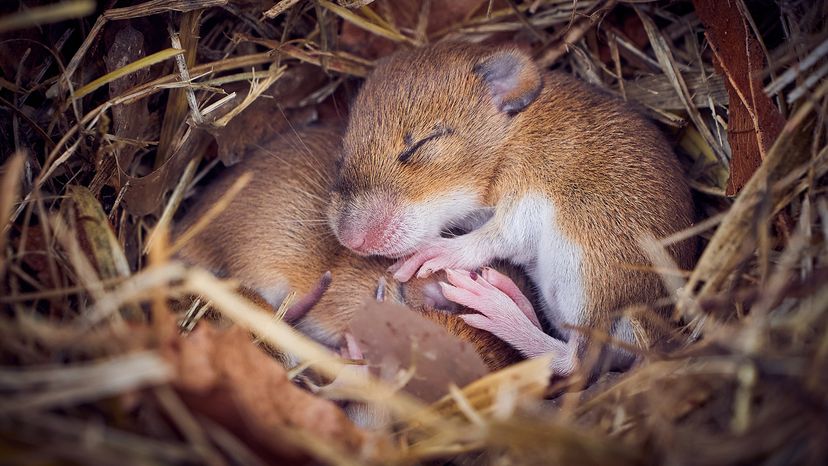
Baby mice look adorable in isolation, but you'd still probably be unpleasantly surprised to find them in your walls.
Adrian Eugen Ciobaniuc / Shutterstock

If you see more than one mouse inside, odds are there’s a whole mischief living nearby. They move quietly, often hugging walls or following scent routes, which makes them hard to spot.

Advertisement

When Mice Become Pests

When mischiefs take up residence indoors, they often chew wires, leave droppings, and multiply quickly. House mice reach sexual maturity at around five to seven weeks of age, and a female can produce a new litter approximately every 3 weeks under ideal conditions.

That means one pregnant female can lead to dozens of mice in a matter of weeks.

Advertisement

In these cases, pest control experts often use terms like "infestation" or "colony" rather than mischief. But the core idea is the same: a lot of mice, working together, usually without your permission.

Where You Might Hear 'Mischief'

The term "mischief" pops up in trivia games, fun facts books, and some animal behavior texts. It's less common in scientific literature, where "colony" or "population" are preferred.

But "mischief" has become a favorite in popular culture, especially among animal lovers and curious minds. Just like we call a group of kittens a "kindle," this quirky term adds personality to a group of rodents.

Advertisement

We created this article in conjunction with AI technology, then made sure it was fact-checked and edited by a HowStuffWorks editor.

Advertisement

Loading...