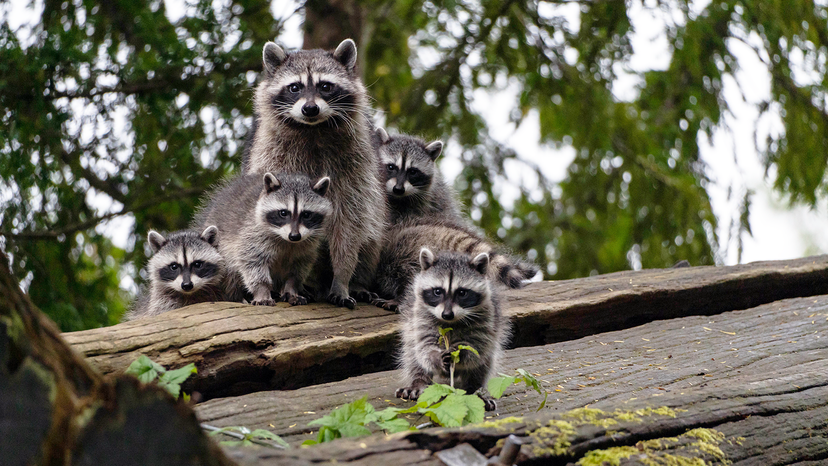
OK, now we understand why a group of raccoons is called a gaze. PawelTphoto / Shutterstock
You’ve probably seen them rifling through trash cans or sneaking across your backyard at night. But when you spot more than one, you might wonder, what is a group of raccoons called?
The answer is surprisingly poetic for such mischievous animals.
A group of raccoons is called a "gaze." That’s right: While they might be a common sight near dumpsters or trash cans, raccoons get a surprisingly elegant collective noun.
The term likely comes from their habit of locking eyes with humans and other animals, giving off an intense, maybe even intelligent stare.
Advertisement
You may also hear people call a group of raccoons a "nursery" when referring to a mother and her babies. These young raccoons are called kits, and during spring, you can often spot litters staying close to their den site.
The Nature of Raccoons in Groups
Raccoons are mostly solitary animal. A gaze typically forms when food sources like trash bins or public parks attract several raccoons at once.
They may share territories for a short time but don’t establish social hierarchies like dogs or wolves. Adult males tend to be the most territorial, especially during the breeding season.
Advertisement
Female raccoons will fiercely defend their kits and their dens. Young raccoons stay with their mother for several months to learn key survival behaviors such as climbing trees, scent-marking their path, and identifying safe shelters.
Raccoons in Urban Settings
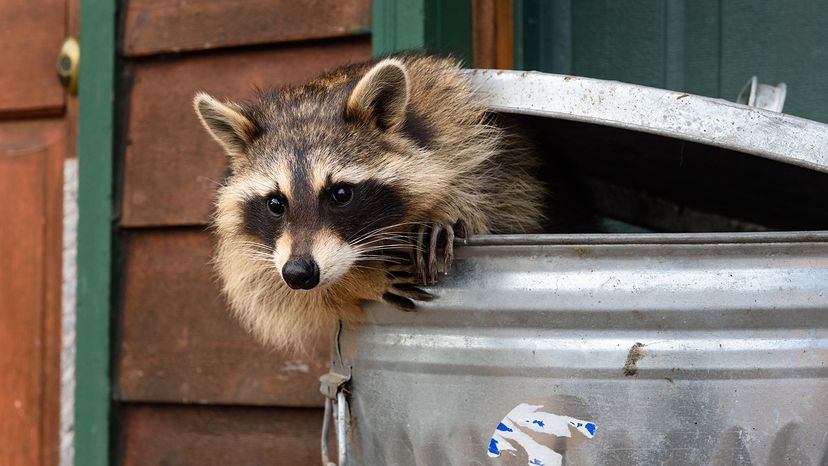
There's a reason raccoons are nicknamed trash pandas. Holly Kuchera / Shutterstock
Raccoons have adapted remarkably well to city life. In many areas, it’s uncommon to see a gaze of raccoons roaming neighborhoods.
Typically only small family units (a mother raccoon with her young) will forage in one area. Flashlights often catch their glowing eyes as they investigate trash bins or cross streets.
Advertisement
Their ability to understand human-made environments makes them an intriguing species in the animal kingdom. From scaling fences to opening latches, raccoons display problem-solving skills that surprise many who encounter them.
The Role of Scent and Sound
Smell plays a key role in raccoon communication. Individuals mark their territories using scent, helping to avoid unnecessary fights. Kits quickly learn to identify their mother's scent and follow it back to the safety of the den.
Sound is another important factor. Raccoons use over 50 different vocalizations to communicate including growls and chirps. These sounds help keep the group together when foraging in the dark.
Advertisement
The Evolution of the Term 'Gaze'
The word “gaze” as a collective term for raccoons dates back to the colonial era and has endured into modern times. It’s likely that early European colonists coined “gaze” for a group of raccoons, inspired by the animals’ peculiar staring behavior.
As colonists and hunters shared stories and knowledge, the term stuck. It’s now widely recognized in nature and wildlife literature as an accepted collective noun for raccoons. In Europe, raccoons are less common, but as they’ve expanded their territories globally, so has interest in their group behaviors.
Advertisement
Raccoons and the Internet
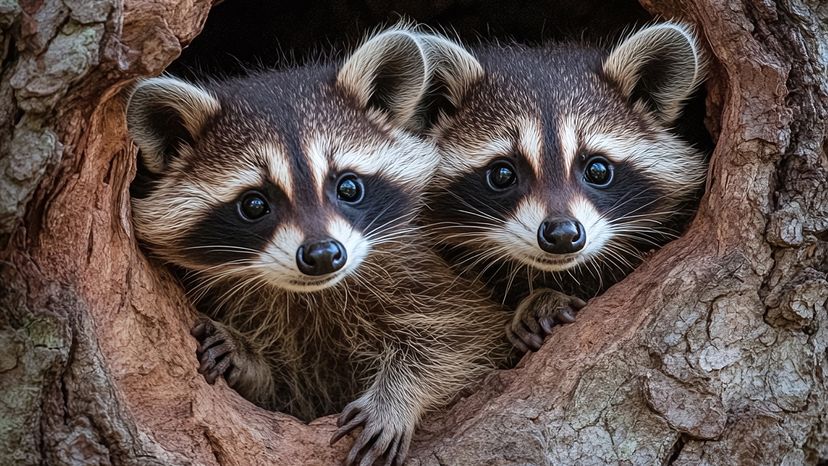
Look at these little Instagram stars in the making. Lee Sheng Han / Shutterstock
Videos and viral posts about raccoons often show them in groups, whether stealing pet food or causing chaos in suburban neighborhoods. Many social media accounts dedicated to animals showcase raccoons' antics, helping the term "gaze" become more familiar.
Kids and adults alike love to share clips of raccoons dunking food in water, opening containers, or gathering in backyards. Some even attempt to explain raccoon behavior in memes, creating new slang (like "trash panda") or jokes around their nighttime activity.
Advertisement
We created this article in conjunction with AI technology, then made sure it was fact-checked and edited by a HowStuffWorks editor.
Cite This!
Please copy/paste the following text to properly cite this HowStuffWorks.com article: