
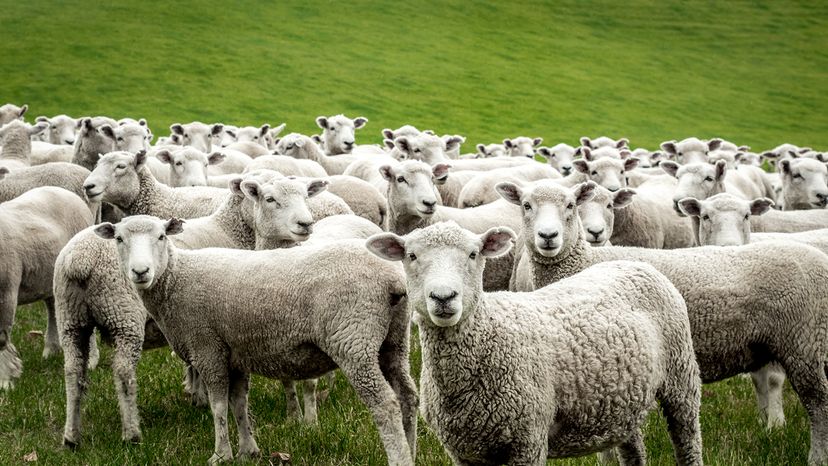
If you've ever driven past a pasture dotted with woolly creatures and wondered, "What is a group of sheep called," you're not alone.
Though many assume it's a herd, the word "flock" is actually the most accurate term.
Advertisement
If you've ever driven past a pasture dotted with woolly creatures and wondered, "What is a group of sheep called," you're not alone.
Though many assume it's a herd, the word "flock" is actually the most accurate term.
Advertisement
A group of sheep is generally referred to as a "flock." This term originates from Old English "flocc" (meaning a crowd or band) and was later used in Middle English to refer to groups of animals.
While "herd" is common for hoofed mammals like cows or deer, "flock" is the traditional and specific term for sheep, especially in British English.
Advertisement
Americans may use "herd" interchangeably, but farmers and shepherds around the world more commonly stick to "flock."
On larger farms or in areas with thousands of sheep, such as New Zealand or parts of the British Isles, you'll frequently hear this term used in both casual conversation and formal sheep breeding circles.
Advertisement
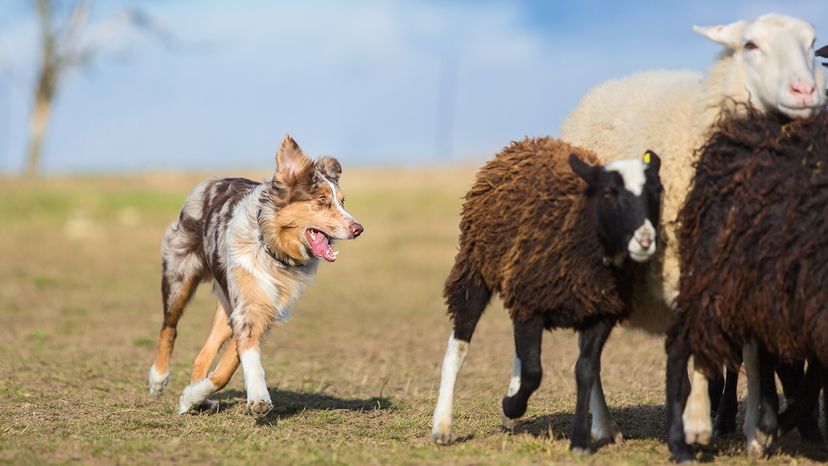
Although sheep are hoofed mammals, like goats or cattle, their behavior differs. They're known for sticking close together and moving as a unit. That makes them flock animals by nature.
The term "herd" can be applied broadly to domesticated animals, but it's more fitting for cattle or elephants than for sheep.
Advertisement
When discussing sheep specifically, using "flock" helps distinguish them from other livestock species. It reflects their social structure, grazing habits, and the way they respond to threats—by grouping tightly together, especially when predators like bears or dogs are nearby.
The language we use around sheep reflects centuries of farming culture, particularly in Western Europe. In England, where raising sheep for wool and mutton has long been central to rural life, shepherds have always referred to a group of sheep as a flock.
Domesticated sheep have been bred for thousands of years for their wool, meat (known as mutton), and milk. Their flocking instinct made them easier to manage in open land, especially before the advent of fences or modern enclosures. A single shepherd could guide hundreds of animals using dogs and voice commands.
Advertisement
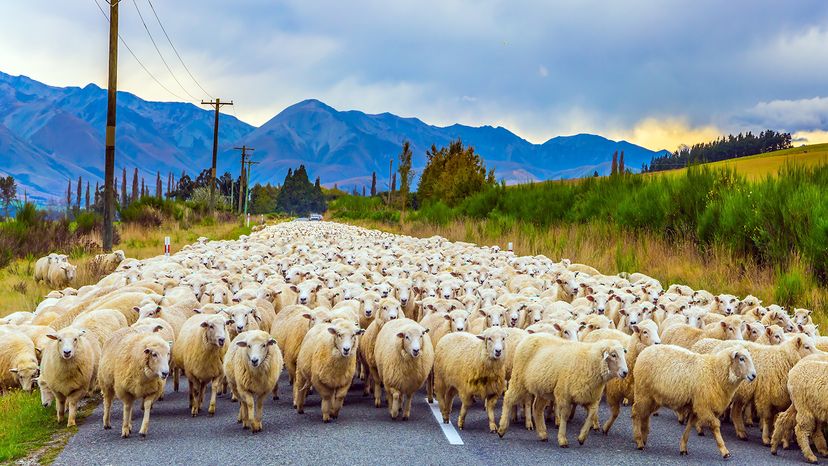
In some contexts, especially when distinguishing different breeds or purposes, farmers might refer to a "mob" of sheep, especially in Australia and New Zealand. This isn't incorrect; it’s just regional.
So, while flock is the most widely accepted term, context and location can create specific terms. Just as a group of fish is a "school" and a group of birds a "flock," sheep have their own precise terminology depending on who’s talking.
Advertisement
We created this article in conjunction with AI technology, then made sure it was fact-checked and edited by a HowStuffWorks editor.
Please copy/paste the following text to properly cite this HowStuffWorks.com article:
Advertisement