What Is a Group of Whales Called? Pods, Gams, Herds (but Not Schools)

By: Nico Avelle  | 
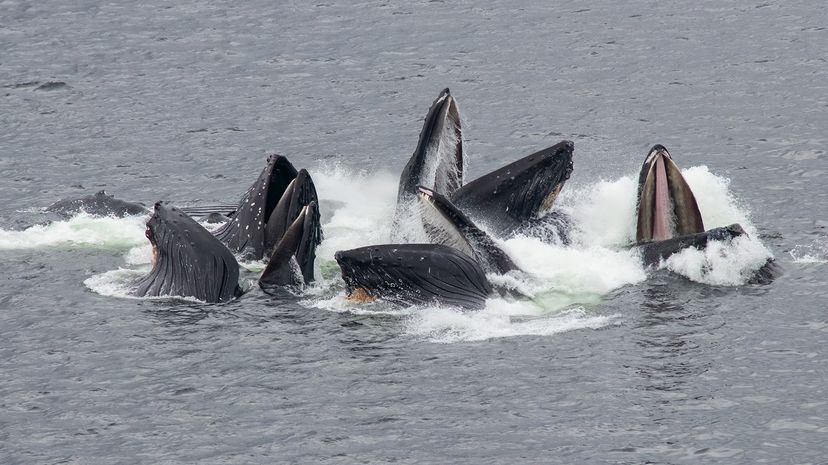
Humpback whales create frothing water during bubble net feeding. WGN Photos / Shutterstock

You’ve probably heard the term before, but what is a group of whales called? It’s not just trivia night bait; it says a lot about whale behavior. The word we use tells us how these massive marine mammals operate beneath the waves.

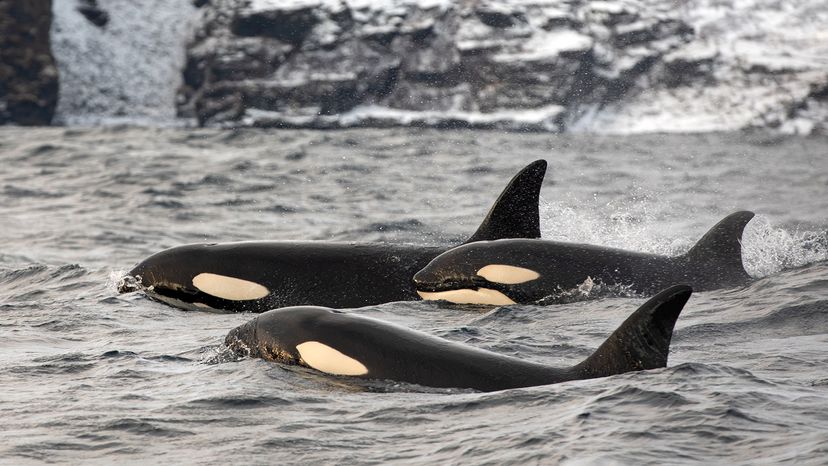
Most of the time, a group of whales is called a pod, especially when you're talking about small groups of whales like orcas. A pod usually consists of a few individuals, often related, swimming and surviving together.

Advertisement

It's like a tight-knit family road trip, only wetter and way more epic.
Pods, Gams, and Herds

The word "pod" is the go-to for biologists, but it’s not the only term floating around. Depending on the species or context, you might hear a group referred to as a gam or a herd.

The term "gams" tends to pop up in older nautical language, while "herds" is more common in modern language. All of these terms describe social units that help whales hunt, mate, protect each other and find food more effectively.

Advertisement

Why Do Whales Form Groups?

orcas
Orcas form lifelong family units. Kertu / Shutterstock

Whales are social animals, and their group behavior varies by species. Toothed whales like dolphins and sperm whales form tight pods because they hunt together and rely on echolocation.

Baleen whales, like humpbacks, are more independent but may still group up in feeding or breeding areas.

Advertisement

Some whale groups are just temporary, gathering in areas rich with food, or during migrations. Others, like orca pods, are lifelong family units.

In each case, grouping offers advantages: safety in numbers, more efficient hunting, and easier communication.

Advertisement

Whale Groups vs. Schools of Fish

Don’t call a group of whales a school; that term applies to fish swimming together.

While whales and fish both swim in groups, the structure and purpose are different. Fish in schools tend to move in perfect synchrony, often as a defensive tactic.

Advertisement

Whale pods, on the other hand, have formations that are looser, more strategic.

whales
Humpback whales create frothing water during bubble net feeding.
WGN Photos / Shutterstock

In fact, whales often coordinate their movements to corral fish into tight balls for easier feeding. That kind of teamwork requires smarts, not just instinct. And it’s a sign of just how socially complex these marine mammals are.

Advertisement

How Big Can a Group Get?

Most pods range from two to 30 whales, depending on the species. But under the right conditions, especially in rich feeding grounds or during migration, you might see superpods—groups of hundreds or even thousands of whales.

That’s not normal day-to-day behavior, though. These massive gatherings are usually temporary, tied to seasonal patterns or food availability.

Advertisement

Think of it like a whale convention: lots of mingling, but everyone eventually goes home.

What a Group Name Can Tell Us

The fact that whales have multiple group names—pod, herd, gam—is a clue to their diversity. These animals don’t all behave the same way. Some are loners, some stick with family, others roam in vast, shifting coalitions.

Understanding the word used to describe a group helps researchers communicate more precisely about behaviors and species. It's not just about labels; it’s about decoding how whales live.

Advertisement

We created this article in conjunction with AI technology, then made sure it was fact-checked and edited by a HowStuffWorks editor.

Advertisement

Loading...